NONGZAO Products • The Seed Project
Building a bridge between rural communities and urban life.
Original Text | Xu Gang • NONGZAO Field Notes
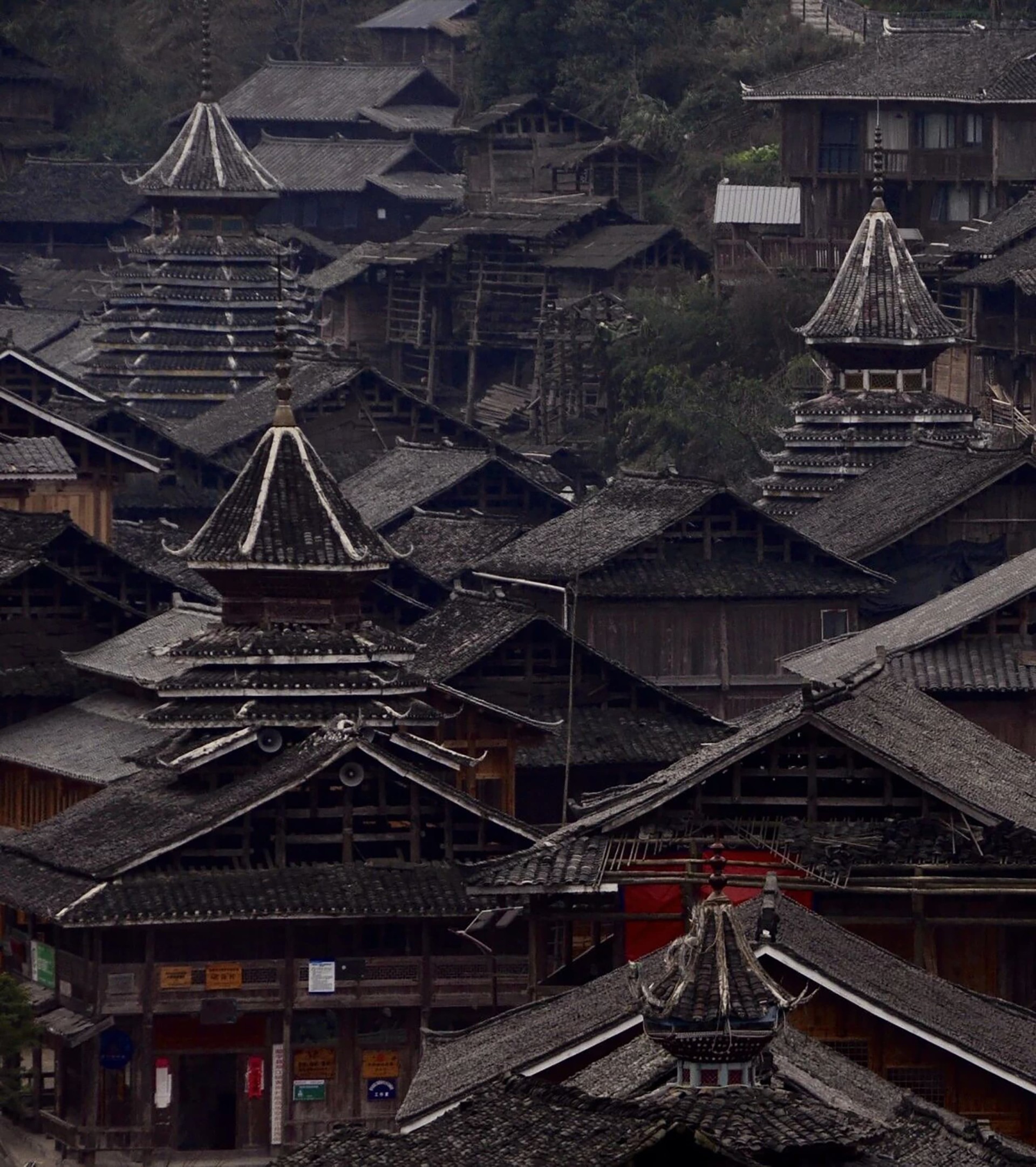
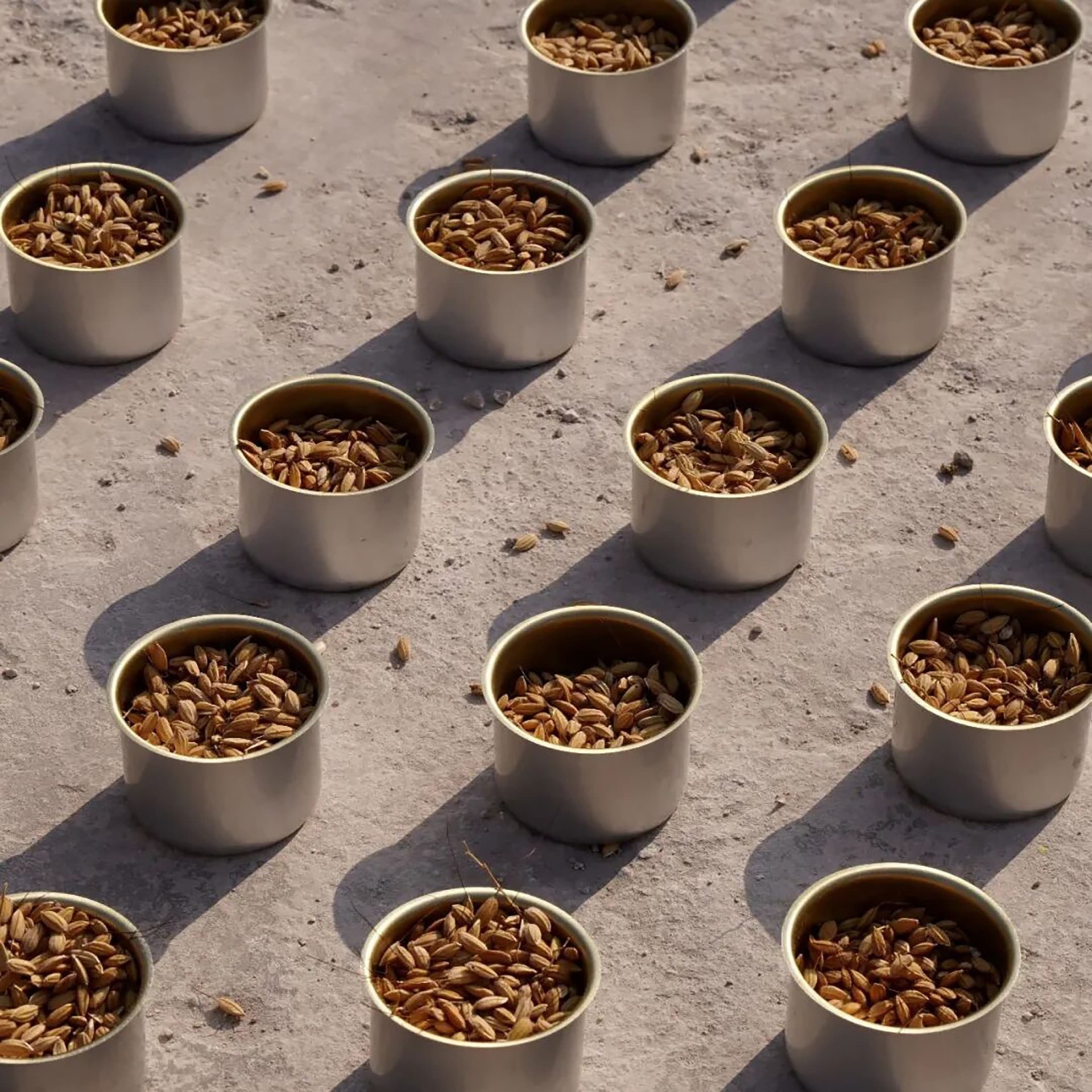
In April 2019, NONGZAO launched the Seed Project to identify and revive varieties of Xianghe nuo, a traditional fragrant glutinous rice, that had disappeared or were on the verge of being lost in Huanggang Dong Village. Among them was Gouyangdang, once grown year after year and kept by household after household. Its fragrance was celebrated in a local saying: “When one household steams glutinous rice, the whole village fills with its fragrance.”
We wanted to begin with a seed: to reconsider the value of traditional agriculture and explore how it might find a place in contemporary life.
In 2020, the project expanded to 32 farming households. Sixty-four glutinous rice varieties entered the seedling-growing stage; 34 successfully produced seedlings, and 28 survived after transplanting. The harvested fragrant rice was saved for future planting in Huanggang. Although the year's harvest was affected by weather, the return to cultivation achieved meaningful progress. According to the project's records at the time, the harvest of Gouyangdang was approximately 32,000 jin, or 16 tonnes.
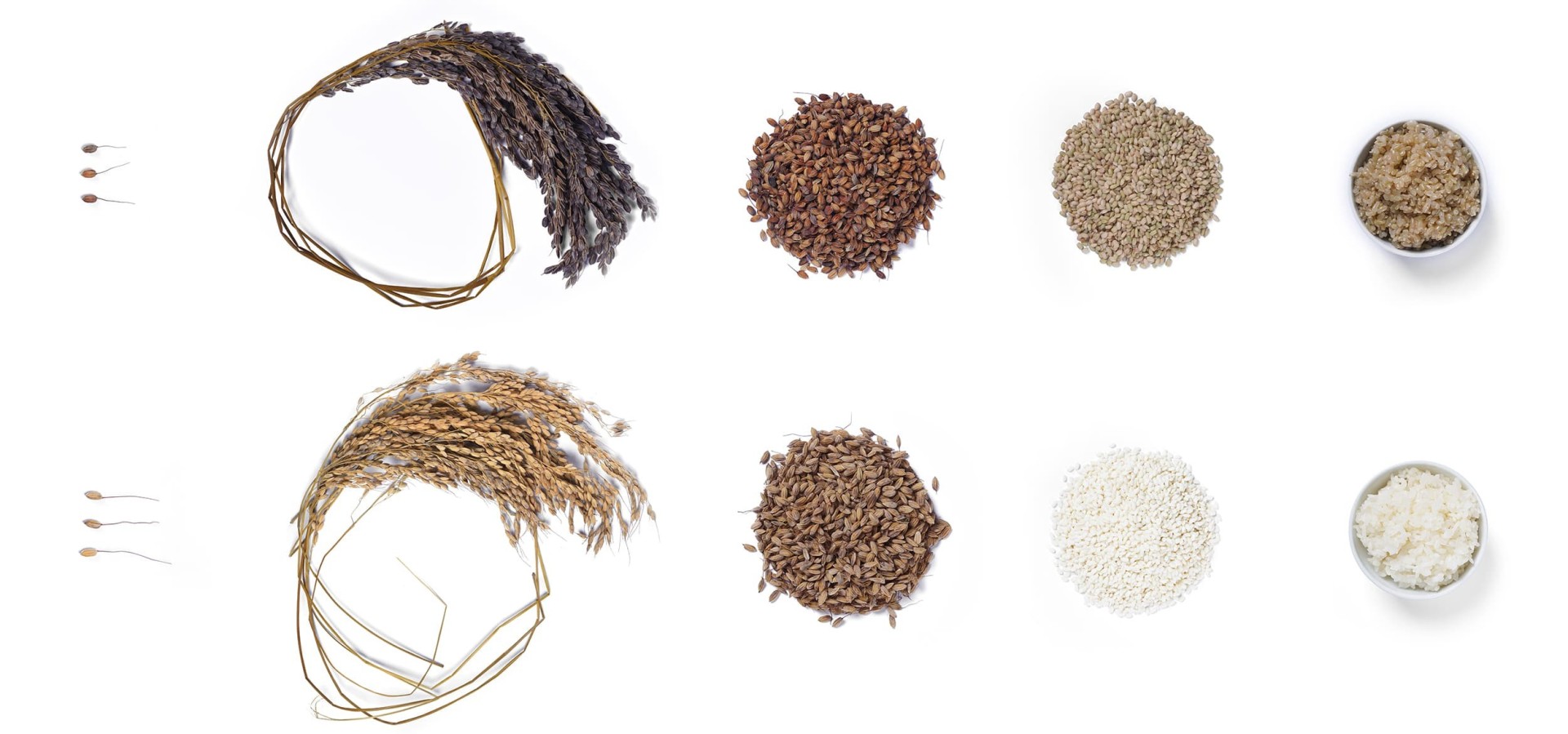
Seeds need to be preserved, but they also need to return to the soil. Only by passing once again through sowing, growth, harvest and seed saving can a variety become part of local agriculture again.
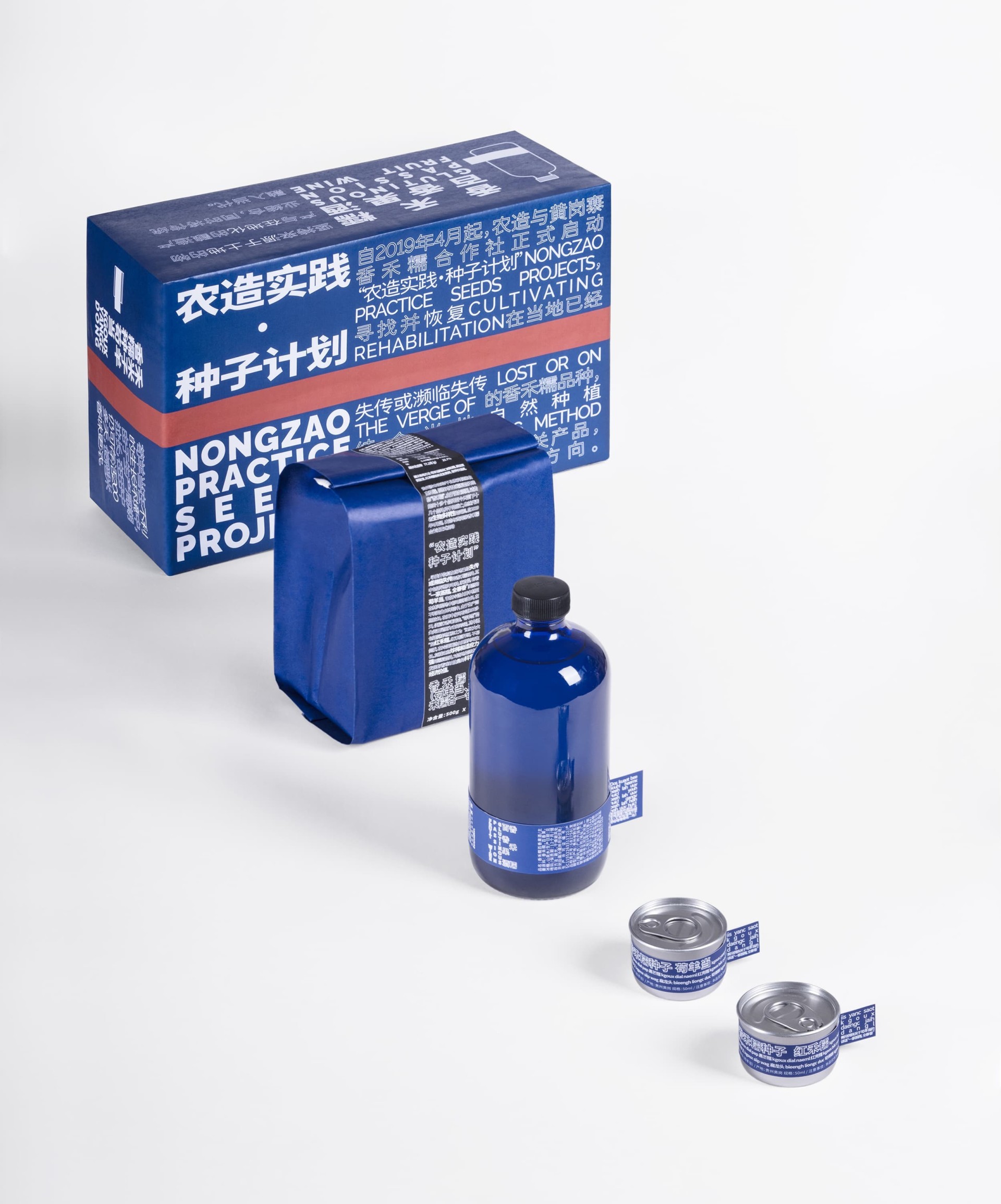
Alongside restoring cultivation, we developed products from the fragrant rice itself: Xianghe nuo rice and a passion fruit wine made with fragrant glutinous rice. From seed in the fields to rice on the table, and then to wine through fermentation and processing, these products offered another way for people to encounter Huanggang's agricultural traditions—and for local crops to enter new contexts of consumption.
This was an initial experiment in two related questions: how could the value of a local crop become better understood, and how might that understanding translate into tangible support for the people who grow it?
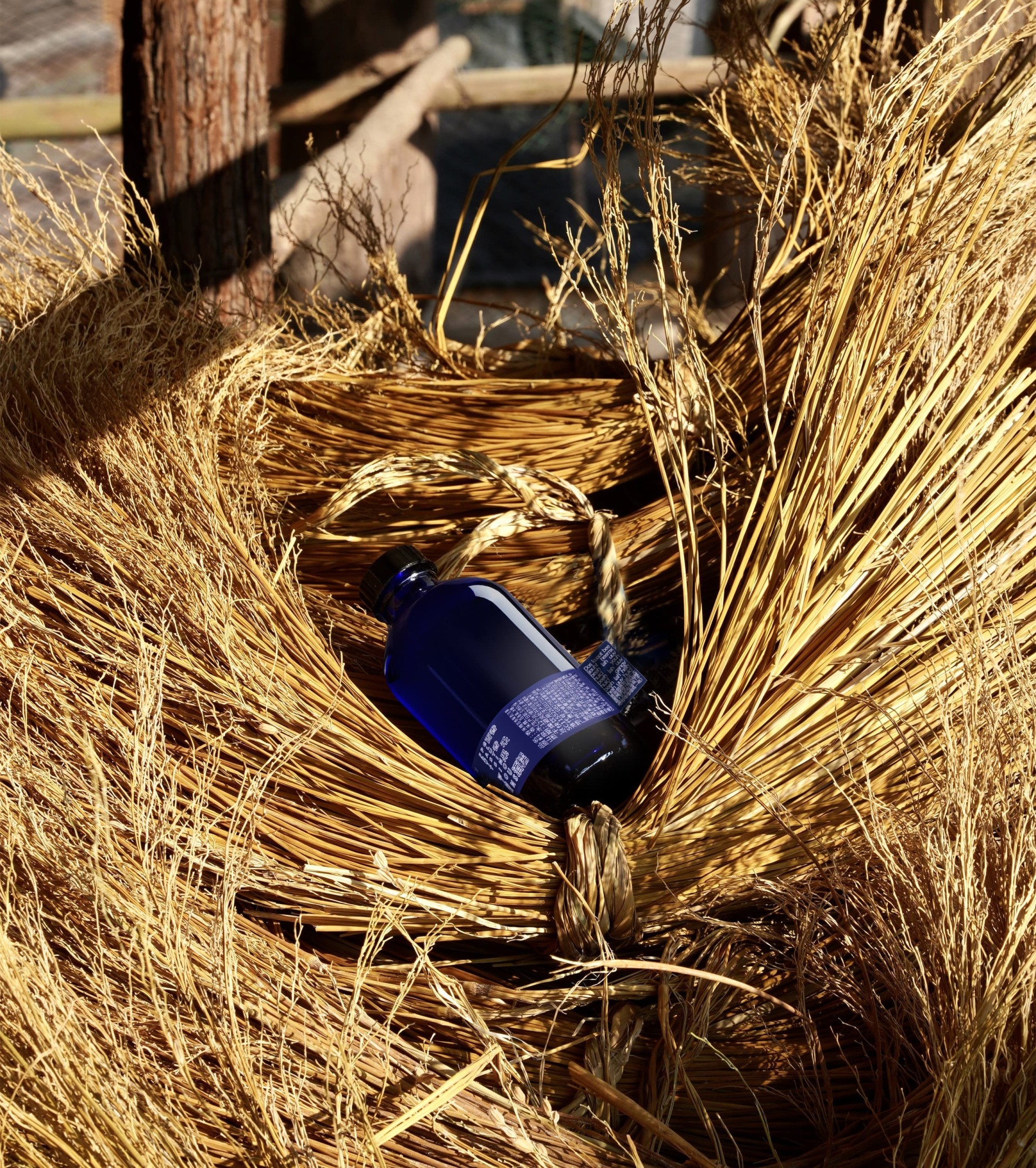


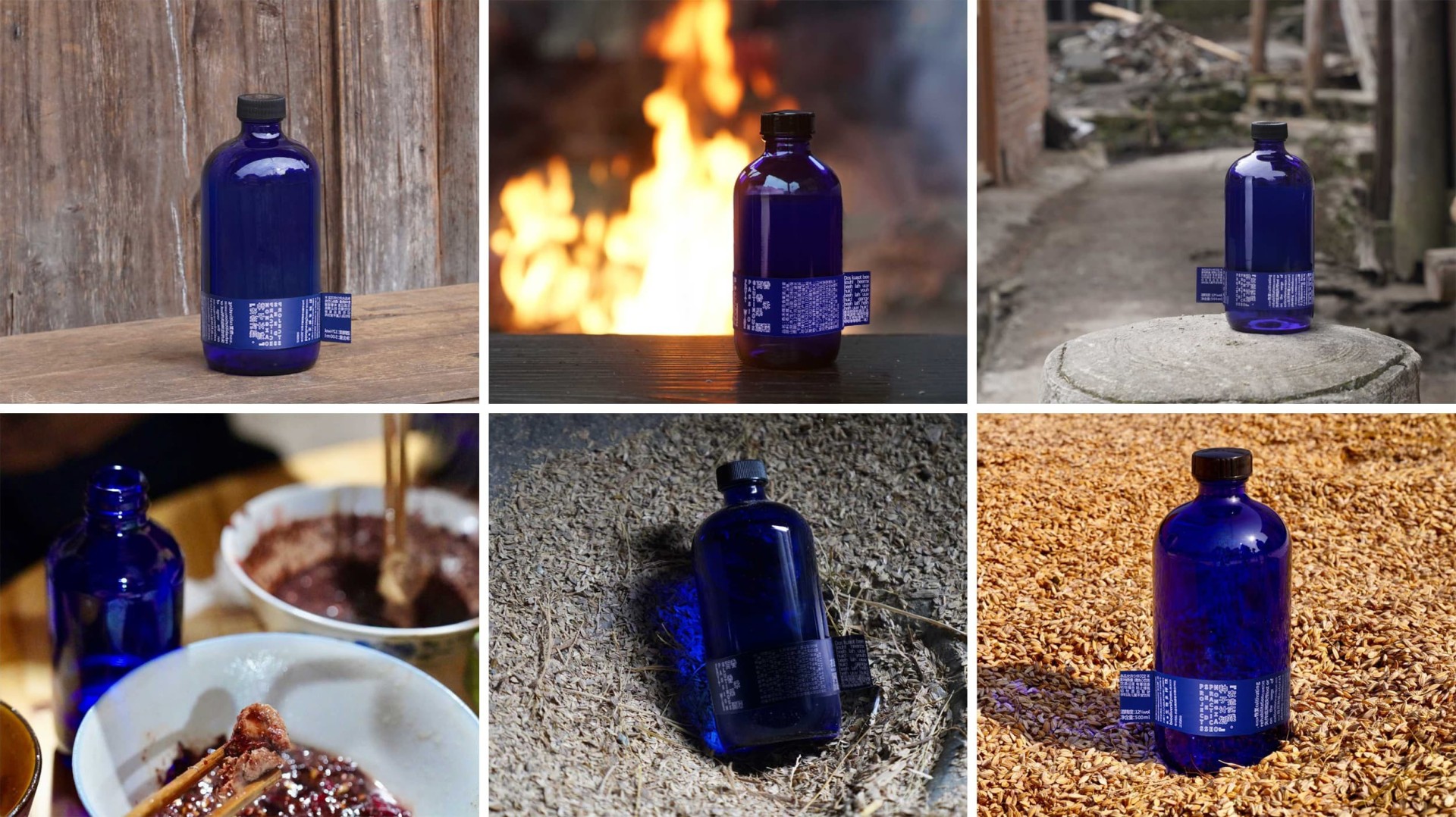
Xianghe Nuo Passion Fruit Wine
Grown locally. Brewed locally.
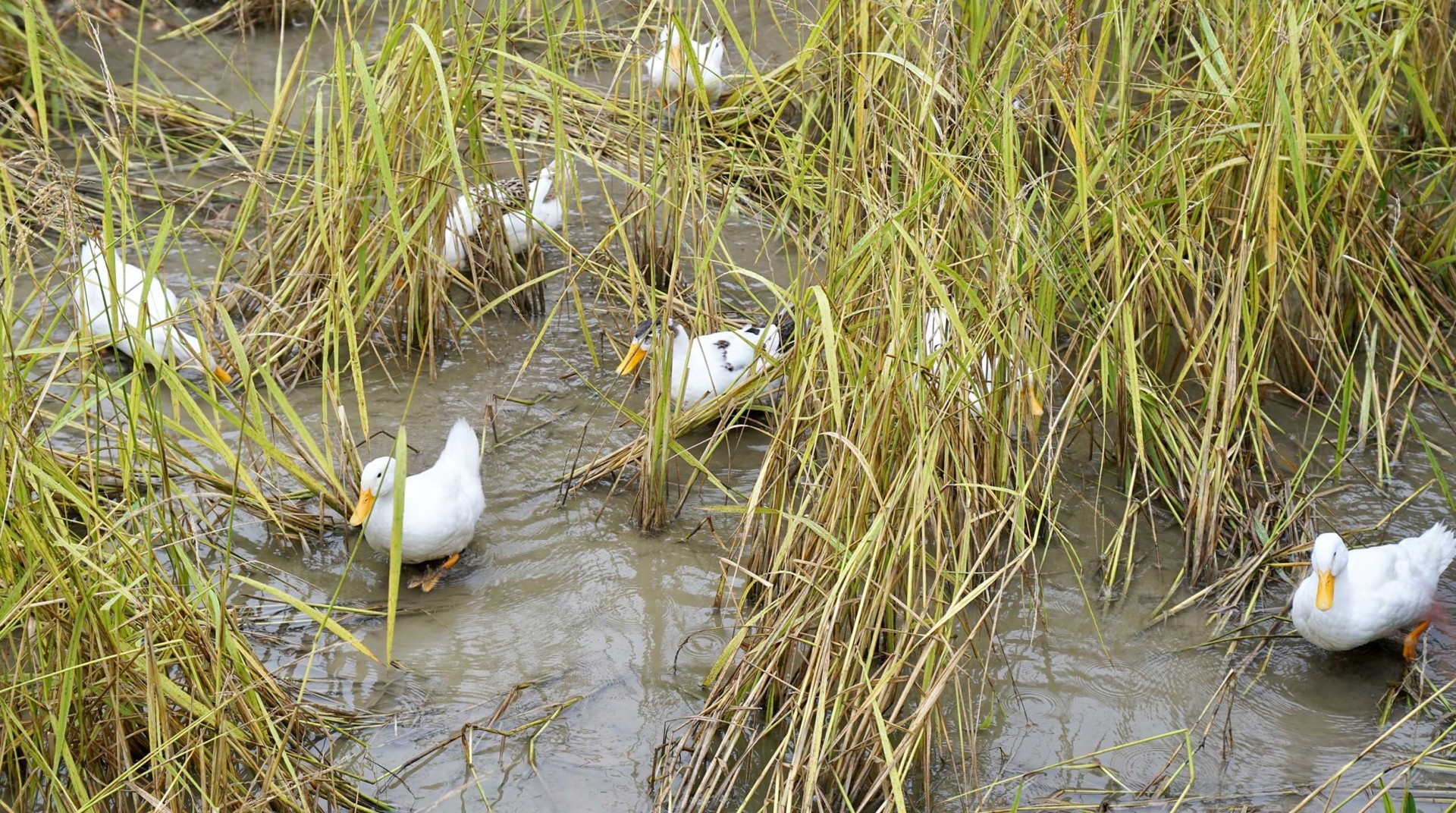
In Huanggang, traditional rice cultivation is closely coordinated with the raising of fish and ducks. After the rice seedlings have established themselves, fish fry are introduced. Ducks are released only once the fish have grown large enough to avoid being eaten. Timing matters: seedlings planted too recently can be damaged, while small fish are vulnerable to ducks.
When managed well, fish and ducks help loosen the soil and control weeds and pests. Their droppings also return nutrients to the fields. This integrated system depends on generations of observation and experience—an understanding of paddy conditions, crop growth and animal behavior, developed through the daily practice of farming.
Xianghe nuo is generally grown once a year, with a growing season that can last up to seven months. Its pace differs from the modern agricultural pursuit of high yields and rapid turnover. It retains a close relationship between local environmental conditions and traditional farming knowledge.
When one household steams glutinous rice, the whole village fills with its fragrance.
We wanted that fragrance, and the taste of the land behind it, to travel beyond the fields.
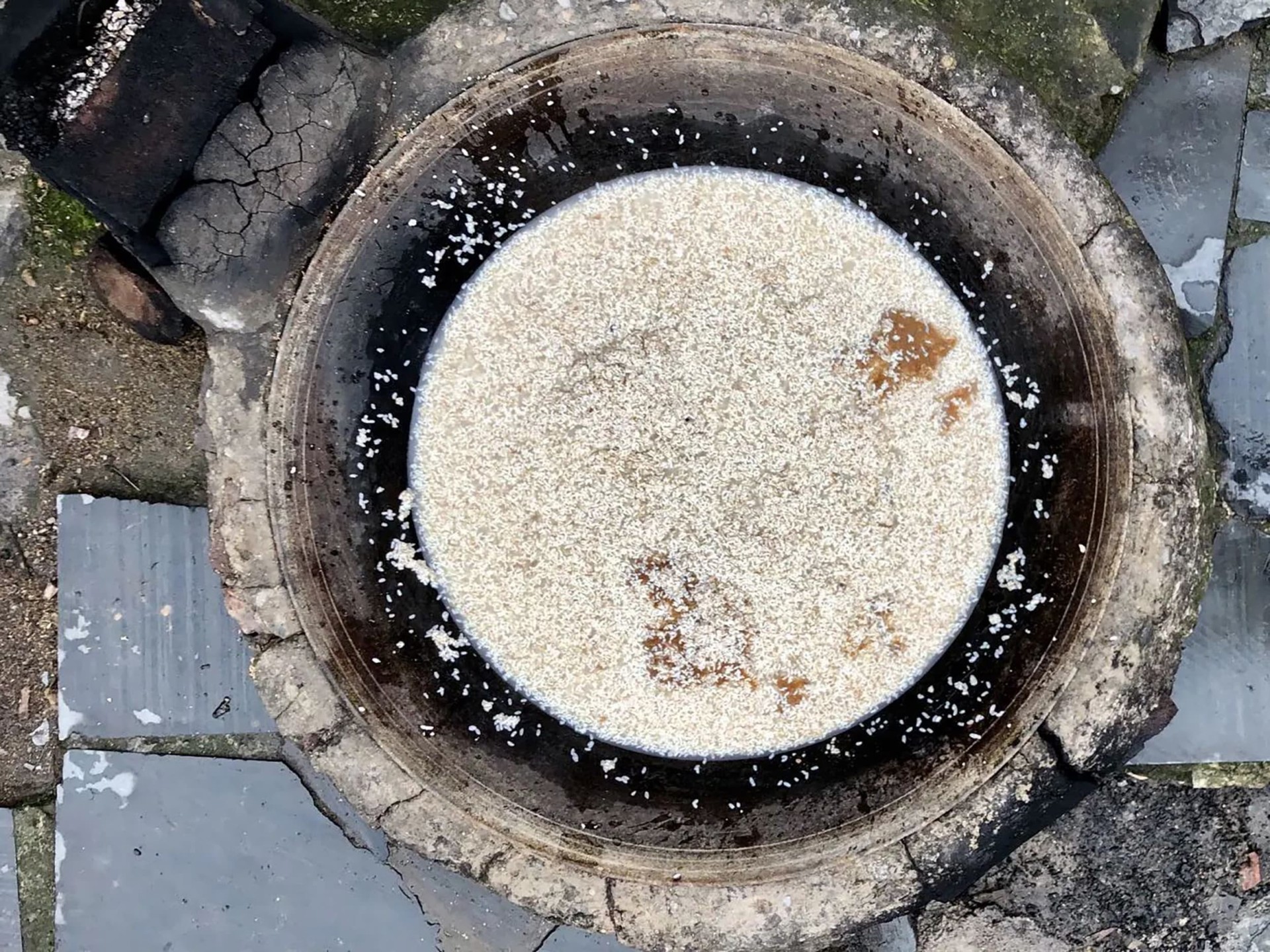
Nearly every household in Huanggang makes its own rice wine, following a long-established tradition of fermenting glutinous rice. Working with rice wine brewed by local families, we used modern distillation equipment and techniques to filter and refine it into a clear, clean base spirit with an alcohol content above 50% ABV.
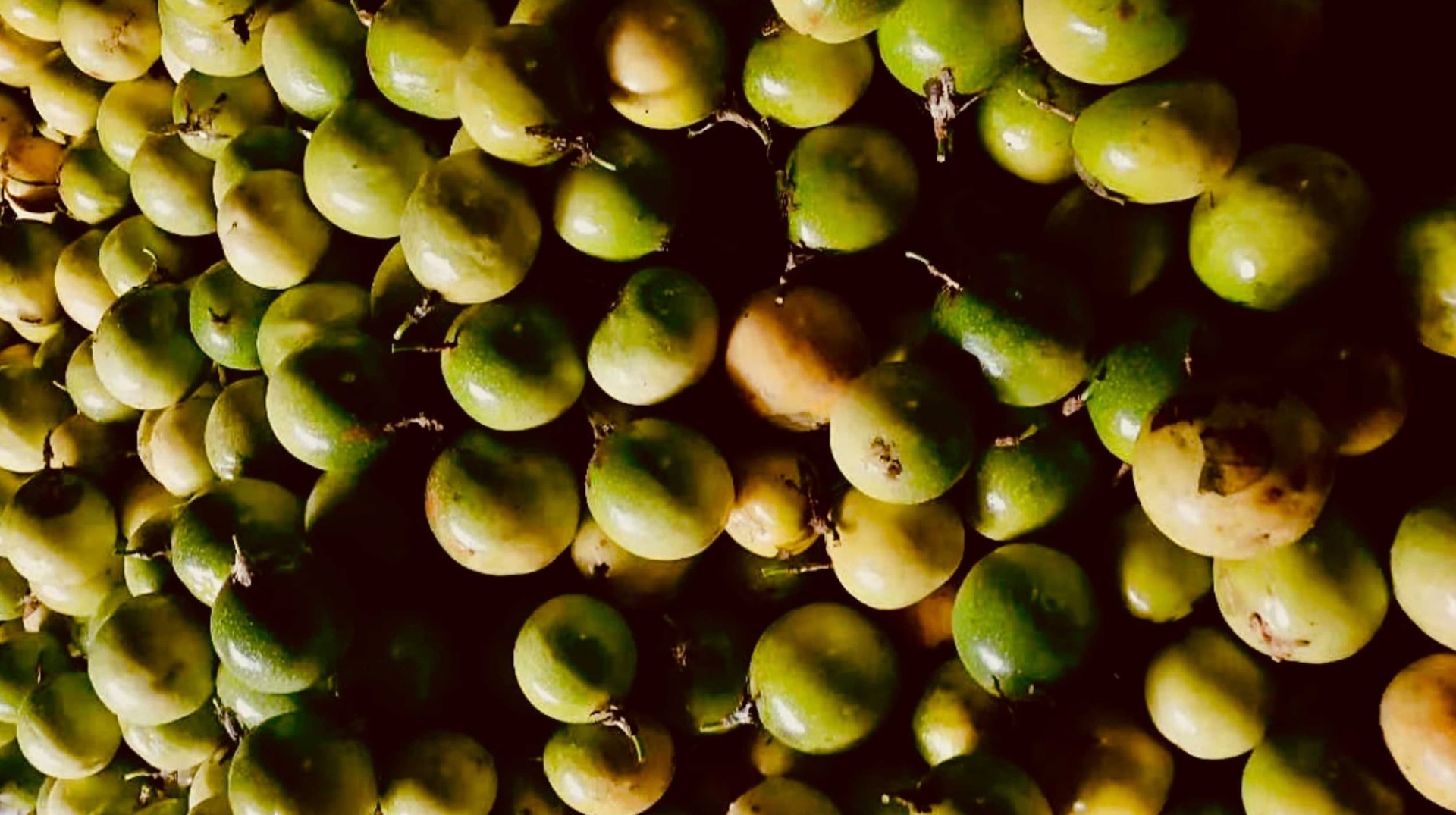
To create a drink better suited to contemporary urban tastes, we collected fresh passion fruit from orchards in Congjiang during the local harvest season and fermented it into a richly flavored, lower-alcohol fruit wine. Blending this with the high-proof Xianghe nuo spirit produced a drink in which the bright, tangy fruit comes first, followed by the deeper, rounded character of fermented rice. A gentle warmth lingers after each sip. The final alcohol content is 12% ABV.
The first time I drank this wine in a villager's home in Huanggang was on an evening after the rain. It was pale orange-yellow, poured into a small bowl. The first taste was the sweet-sour brightness of passion fruit. A few seconds later, the mellow richness of glutinous rice slowly rose back through the throat.

Che Jiu: The Sound of a Dong Village
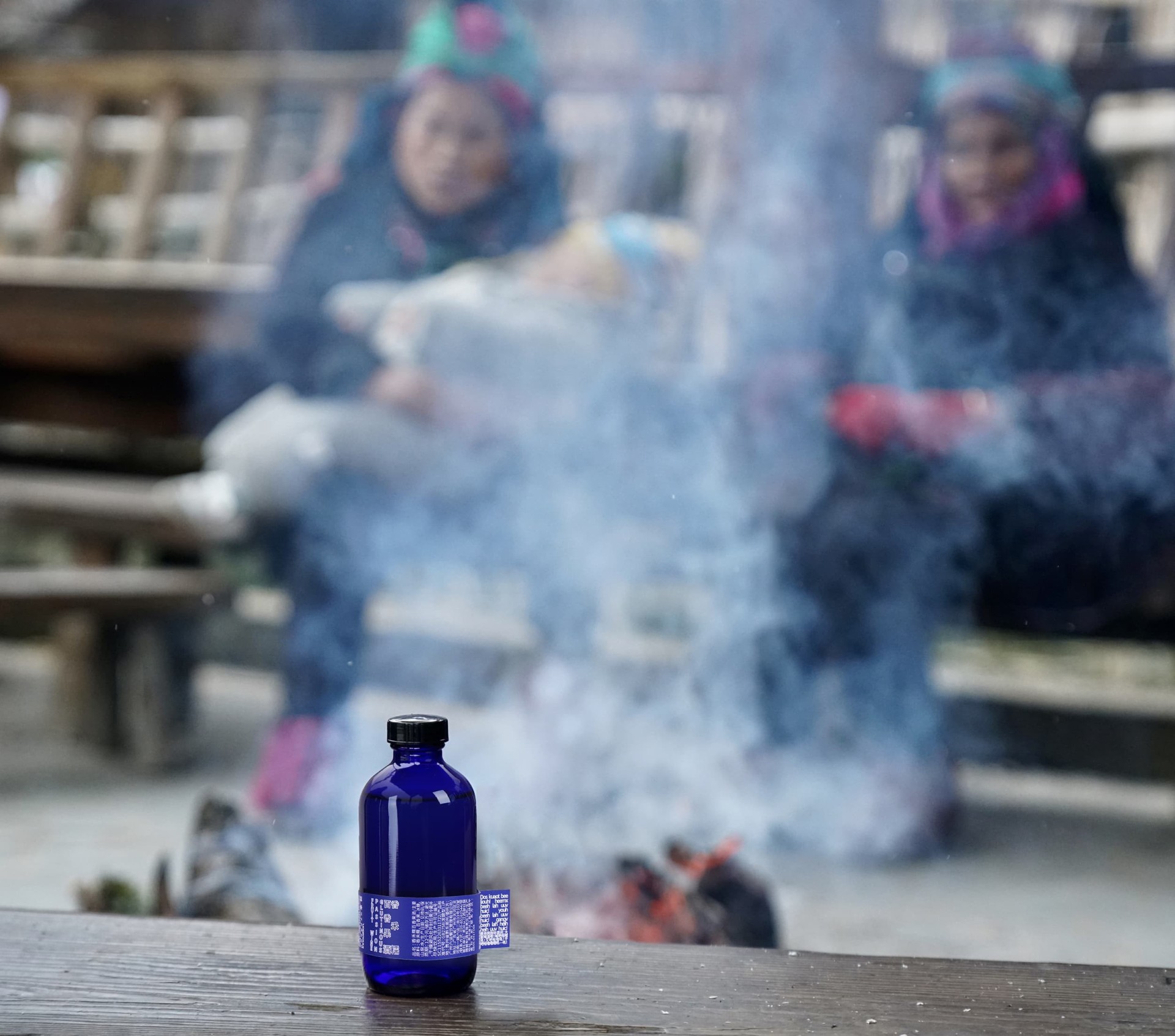
In a Dong village, wine is more than a drink. It is part of how people gather and spend time together. When the mood takes hold, someone may suggest that everyone “pull one together”—a local expression for che jiu, a communal drinking song.
Three, four or five people stand in a line, each placing the left hand on the shoulder of the person in front. They sway gently as the singing begins.
“Eiii~~~~ ya-ha-hei… e-ye~~~~~~”
The opening notes are low and sustained, unfolding slowly, as though rising from deep within the chest.
“Ei-ha! Ei-ha! Ei-ha!”
The sound suddenly grows sharper and more forceful. The rhythm gathers strength. People answer one another through the song, drinking and talking together. As the singing continues, the fatigue of the day seems to ease.
It is difficult to capture this sound in a bottle. But the taste of the wine can travel, giving people drinking in the city a small point of connection with the singing and shared conviviality of a Dong village.
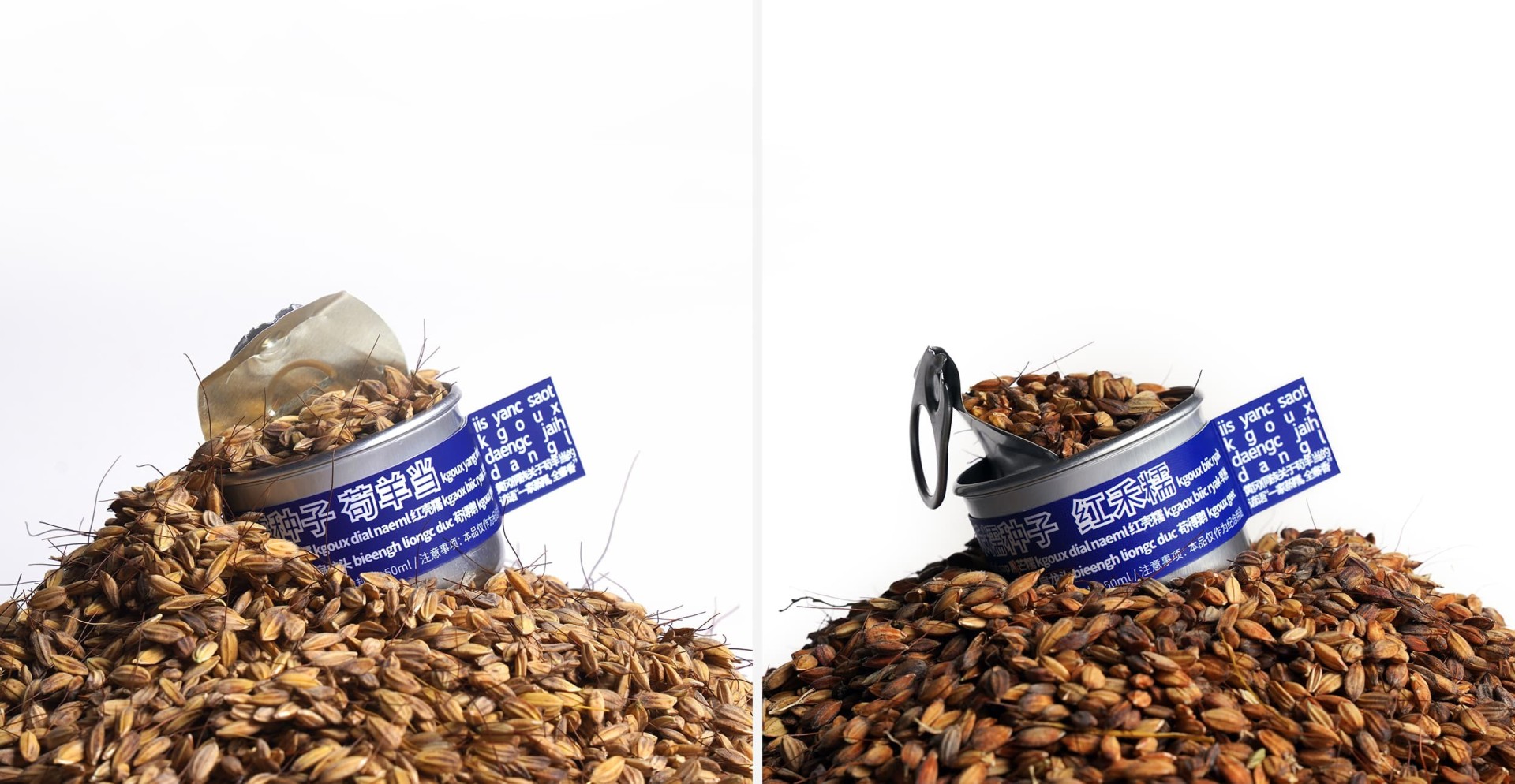

Xianghe Nuo Rice
Huanggang lies in a mountainous, forested region at relatively high elevation. Water can drain away easily, and some paddy fields have low water temperatures, shortening the period suitable for rice cultivation. Across fields with different elevations, water temperatures, light conditions and terrain, villagers have accumulated a detailed understanding of what grows where. Through seed saving, selection and exchange, they developed a diverse range of traditional glutinous rice varieties.
Among the varieties the Seed Project sought to restore was Gouyangdang, once widely cultivated in Huanggang but later lost from local production. According to local knowledge, it grows well in cold-water fields and in fields with iron-rich water, and can also survive in certain wet areas beneath forest cover. Its growing season can extend beyond two hundred days, and its grains have an unusually rich fragrance. When the rice is steamed, its aroma can carry across the field ridges.
One local account attributes the loss of Gouyangdang to the promotion of high-yielding indica rice and the resulting changes in traditional cultivation. Because Gouyangdang had such a strong fragrance, the story goes, its cultivation was easier to detect, and the variety became a target for removal. This account requires further corroboration through historical research. It nevertheless points to an important fact: changes in agricultural diversity are shaped not only by natural conditions, but also by policy, production targets and ways of life—all of which influence which seeds survive.
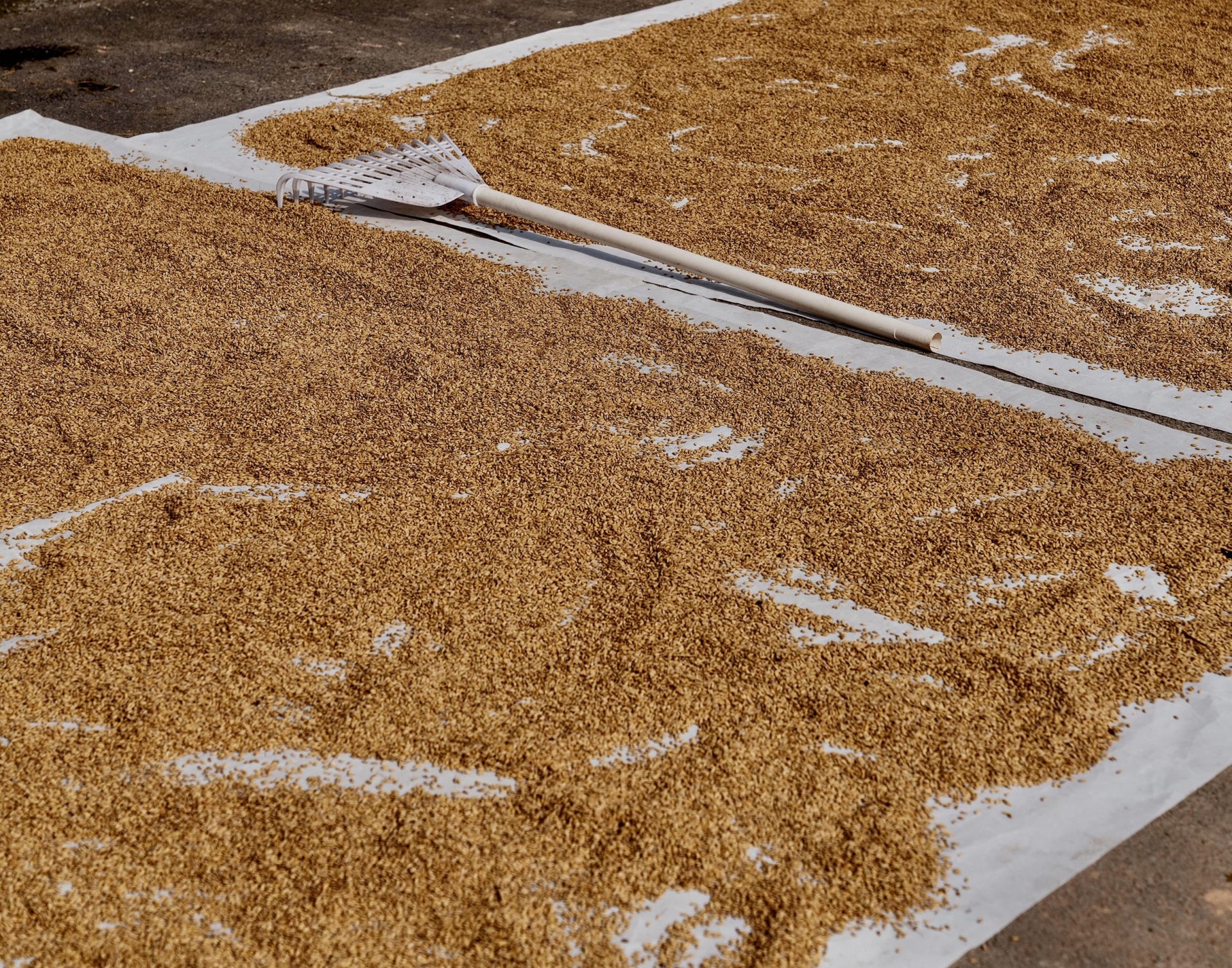
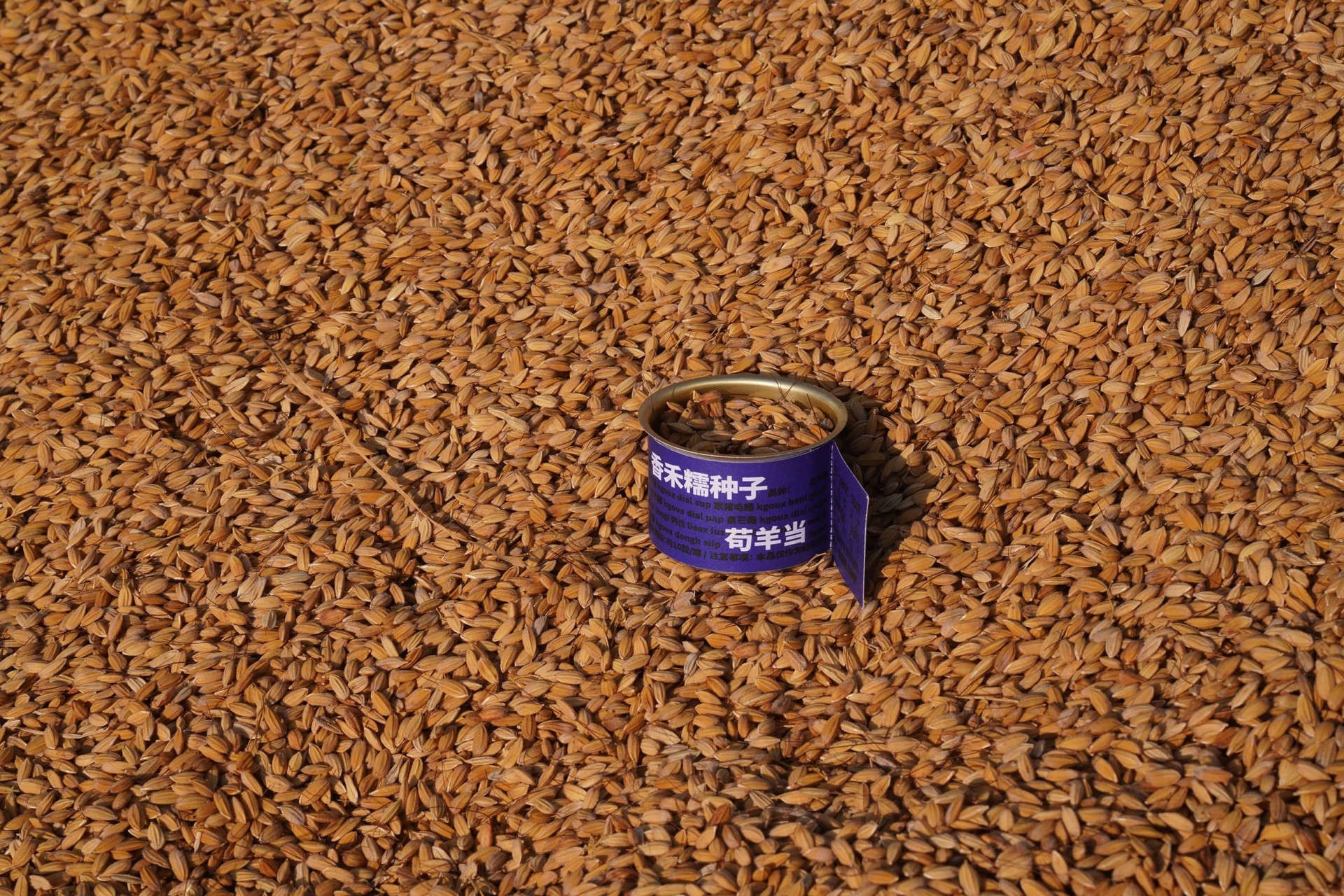
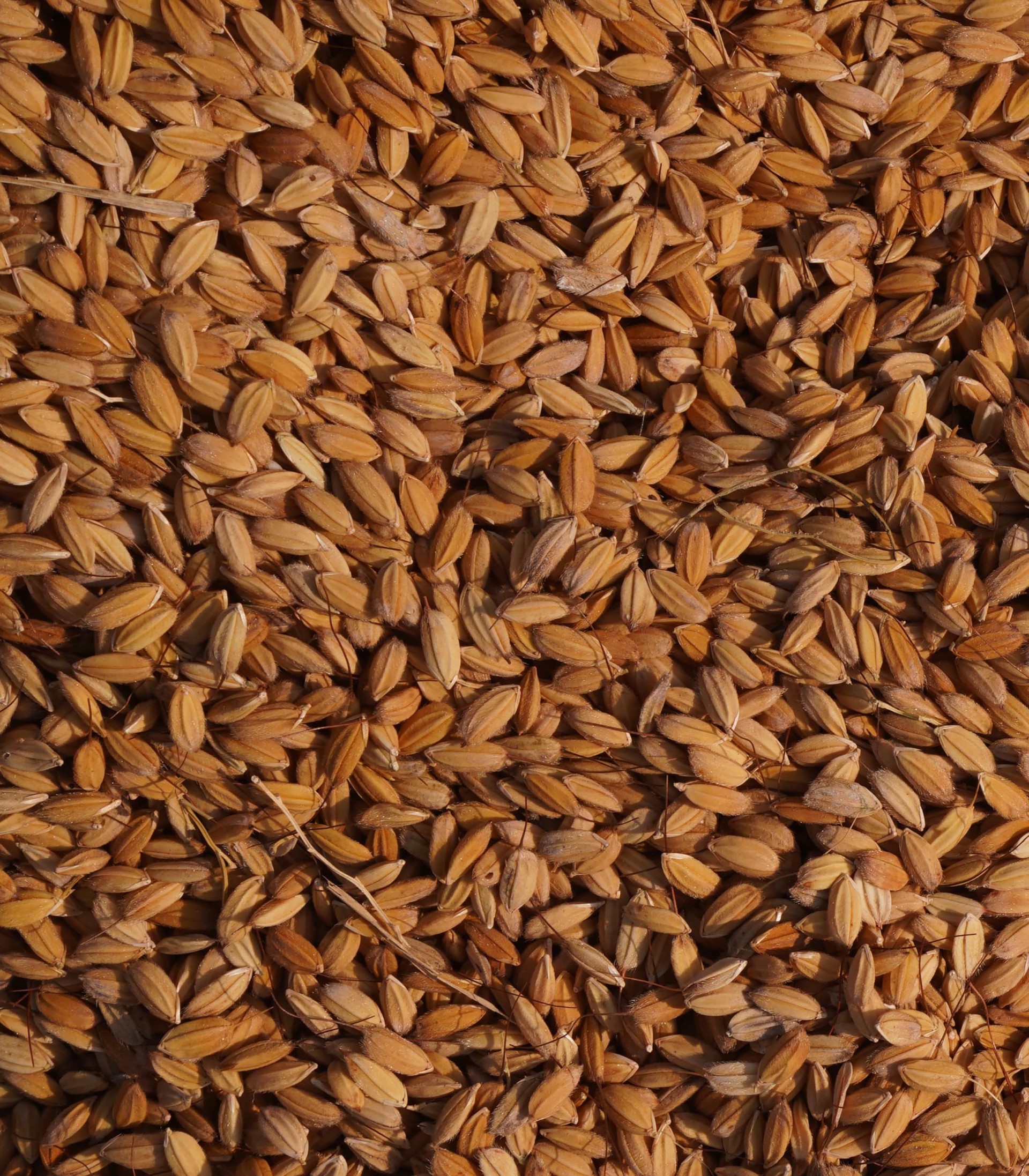
Another traditional variety is Honghe nuo, or red glutinous rice. Its stems are relatively strong and resistant to lodging, and it can tolerate the cool, damp conditions of fields with iron-rich water. Each variety has its own characteristics; together, they form part of the diversity of Huanggang's traditional glutinous rice.
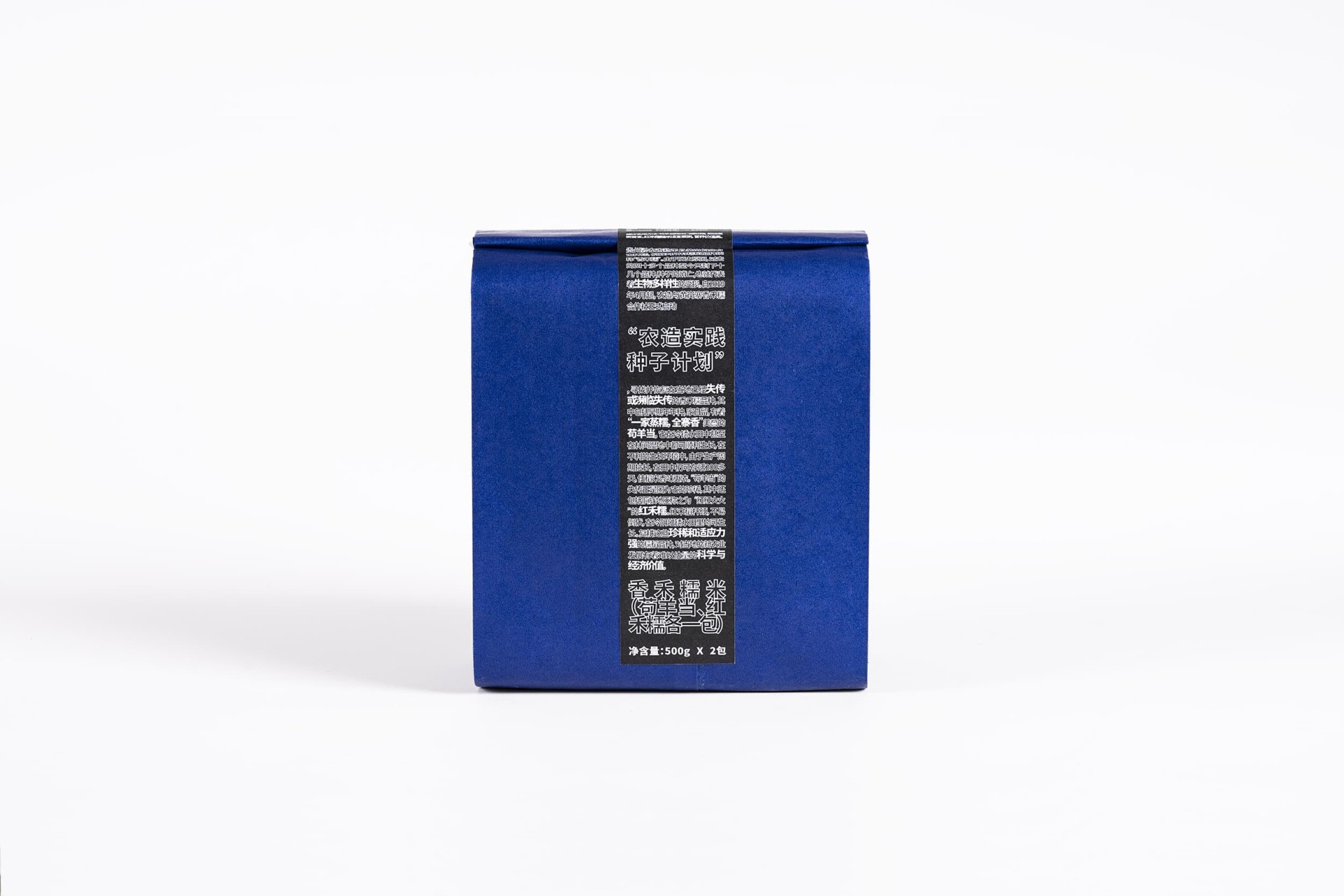
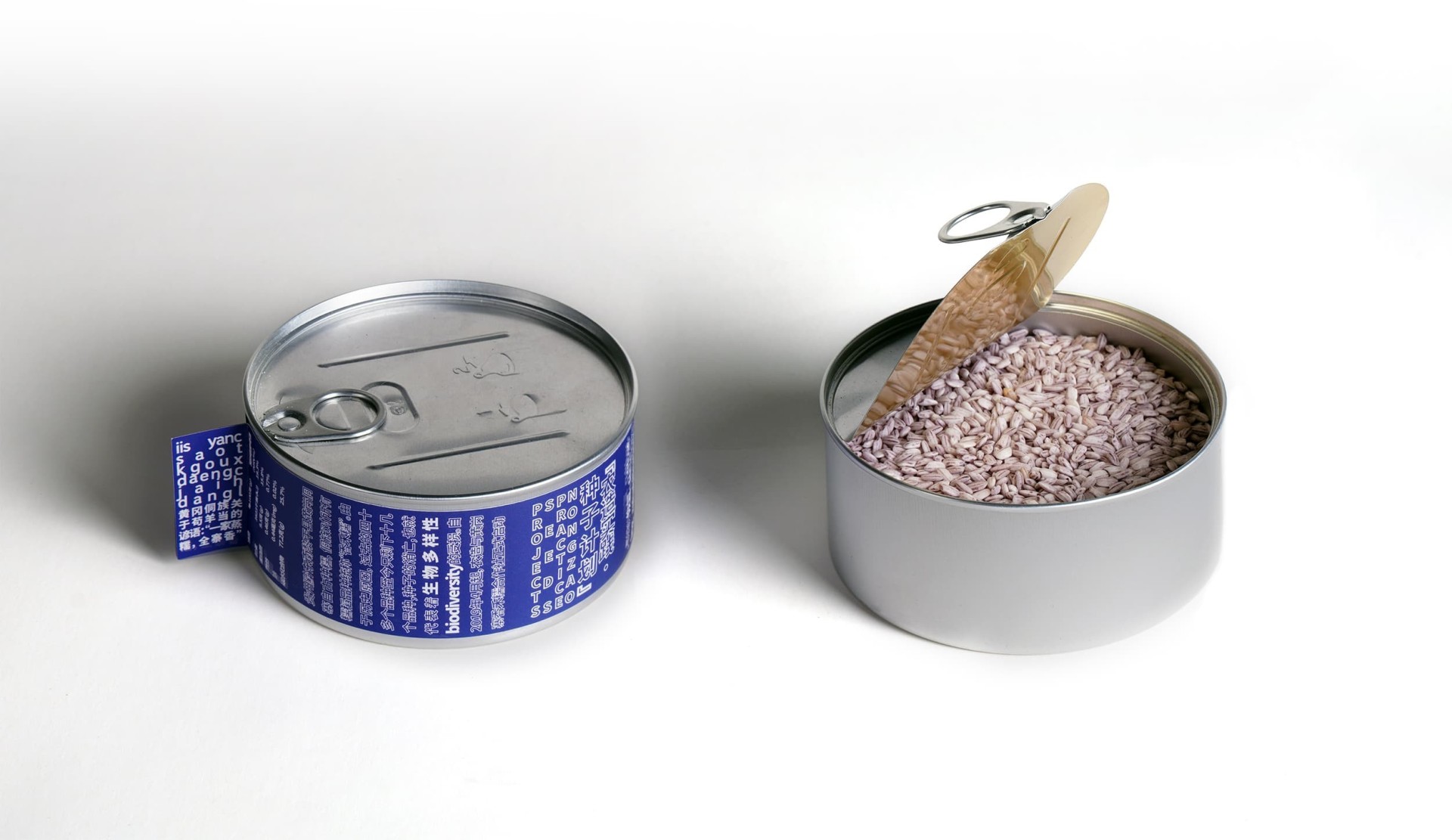
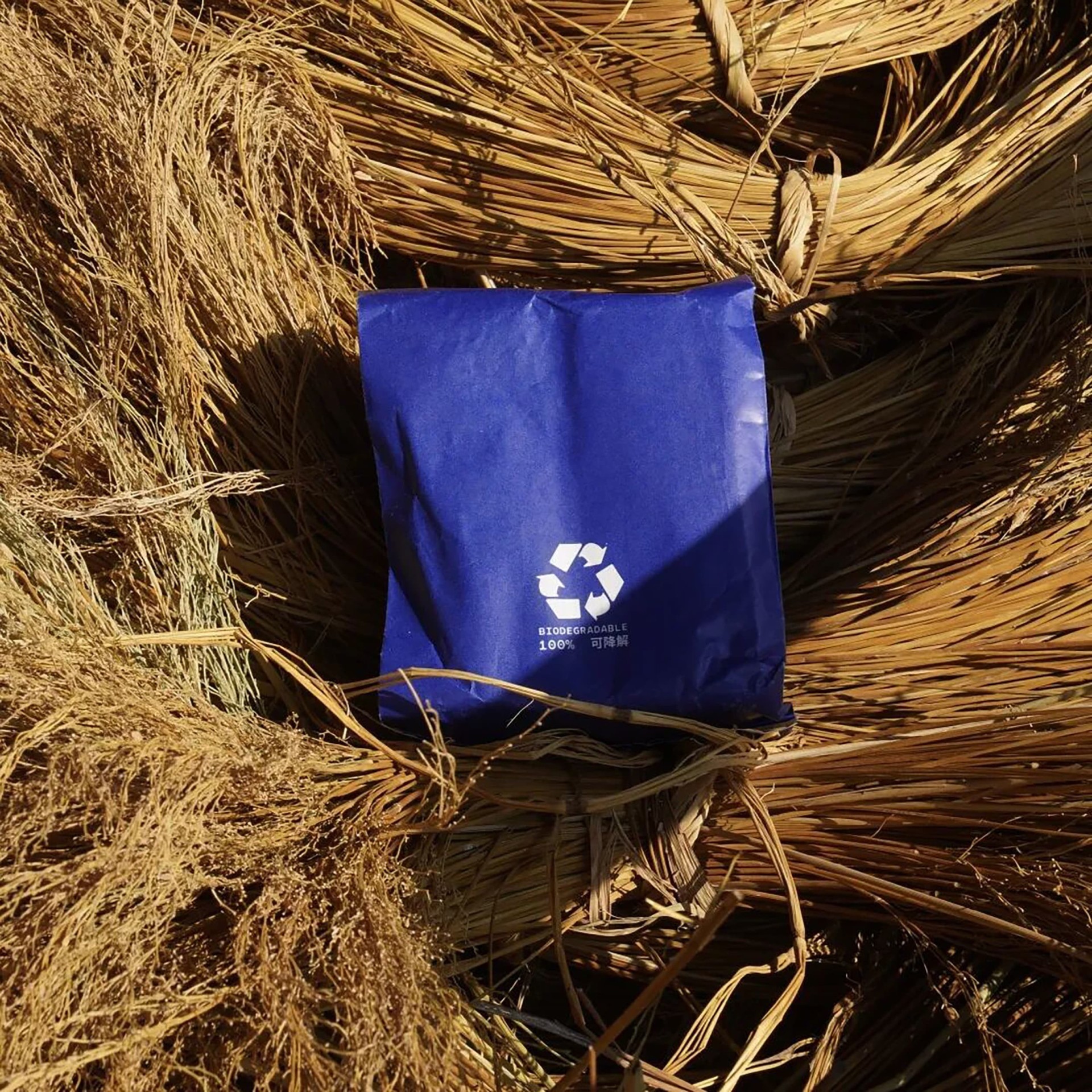
Following the return to cultivation, we processed Gouyangdang into polished white rice and Honghe nuo into brown rice, allowing each variety's distinct texture and character to come through. The packaging carries forward the blue palette developed for the Xianghe nuo passion fruit wine and uses materials described for the project as 100% biodegradable.
Packaging serves not only to protect and present a product, but also to reflect the production values the project seeks to explore. Seed preservation, cultivation, processing, transport and consumption all remain part of the questions this work must address.
In an urban kitchen, glutinous rice need not be limited to its role as a staple food. The simplest method is to steam it: the grains become soft and sticky, with a satisfying chew, bringing to mind the saying, “When one household steams glutinous rice, the whole village fills with its fragrance.” It can also be used to make glutinous rice with cured meats, traditional rice cakes or even glutinous rice ice cream.
The aim is not simply to sell Xianghe nuo as a product with a local story attached. It is to make it part of what people actually eat. Only when a traditional crop is cooked, shared and given a place in new everyday settings can it find a life beyond preservation and display.

The Seed Project began by searching for seeds. Through the return to cultivation, seed saving and product development, it has sought to reconnect local agriculture with urban life.
Building this bridge does not mean preserving traditional agriculture exactly as it was, nor does developing a product mean that the work of sustainability is complete. It is an ongoing inquiry: how can we understand the knowledge embedded in traditional agriculture, allow that knowledge to inform production today, and create ways for the value generated by products to find its way back to the land and the farming households?
A seed can grow again. For it to keep growing, it needs land, knowledge, cultivation and people working together.
— Product development: 2020