
NONGZAO Practice • Other Food
Design is an act of listening to what cannot speak.
Original Text | Xu Gang • NONGZAO Field Notes
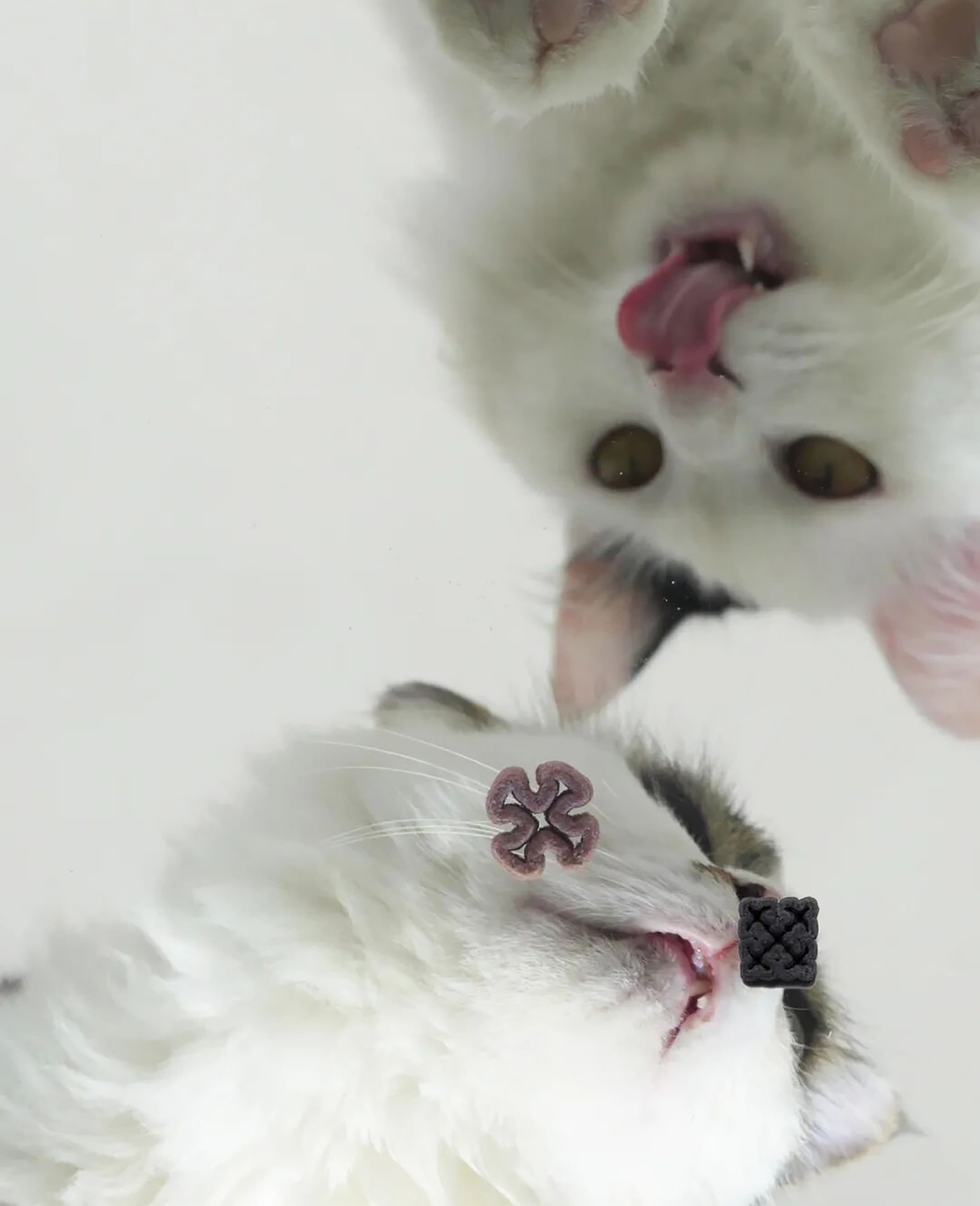
Beginning with Food
Food is fundamental to the sustenance of life. It is also one of the ways in which humans and animals form bonds with one another.
In everyday life with companion animals, feeding is often treated as a functional act. Food provides nourishment; eating meets the needs of survival. Design, when it enters this relationship, tends to focus on formulations, forms and packaging. For animals, food can seem little more than something to be consumed.
Yet eating involves more than the intake of nutrients. Sniffing, searching, touching, pawing and tearing, along with the entire process of obtaining food, are all part of an animal’s everyday behaviour.
What if food were no longer understood solely as a carrier of nutrients, but as a material to be explored and manipulated? Could design intervene more deeply in the relationship between an animal and its food?
This research takes pet food as its starting point, exploring the possibilities of materials, forms and methods of fabrication. Through 3D printing, it seeks to move food away from fixed, familiar shapes towards structures that can be deliberately designed. When the form of food and the means of obtaining it change, might an animal’s behaviour change as well?
This is an experiment that begins with food and follows the relationships between materials, behaviour and life.
01 / Rethinking the Form of Food
The forms of conventional pet food are generally shaped by factors such as formulation, processing methods, nutritional requirements and production efficiency. Food must meet the demands of manufacturing, storage and consumption, and its design has largely developed around these conditions.
Three-dimensional printing offers a different way to explore the form of food.
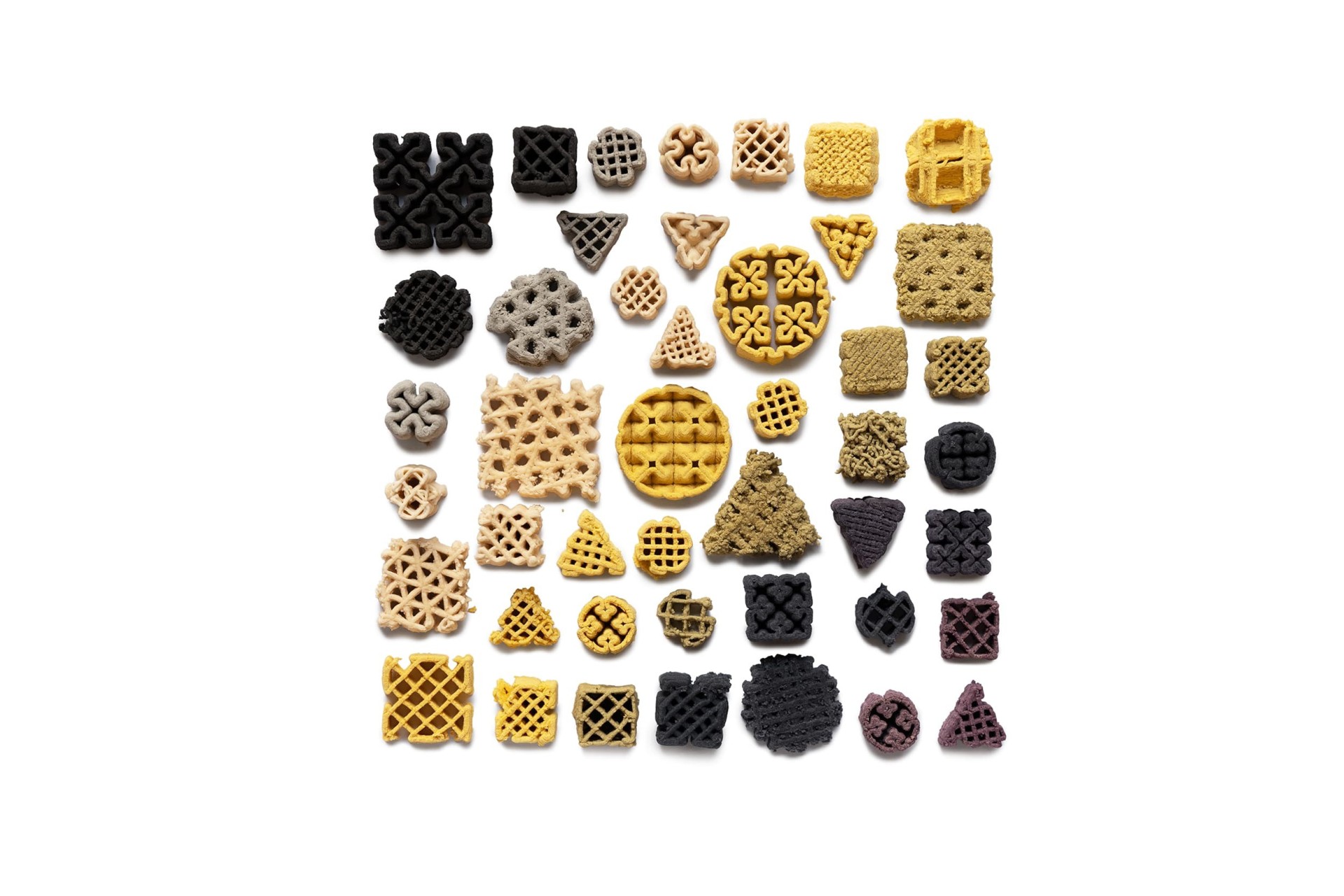
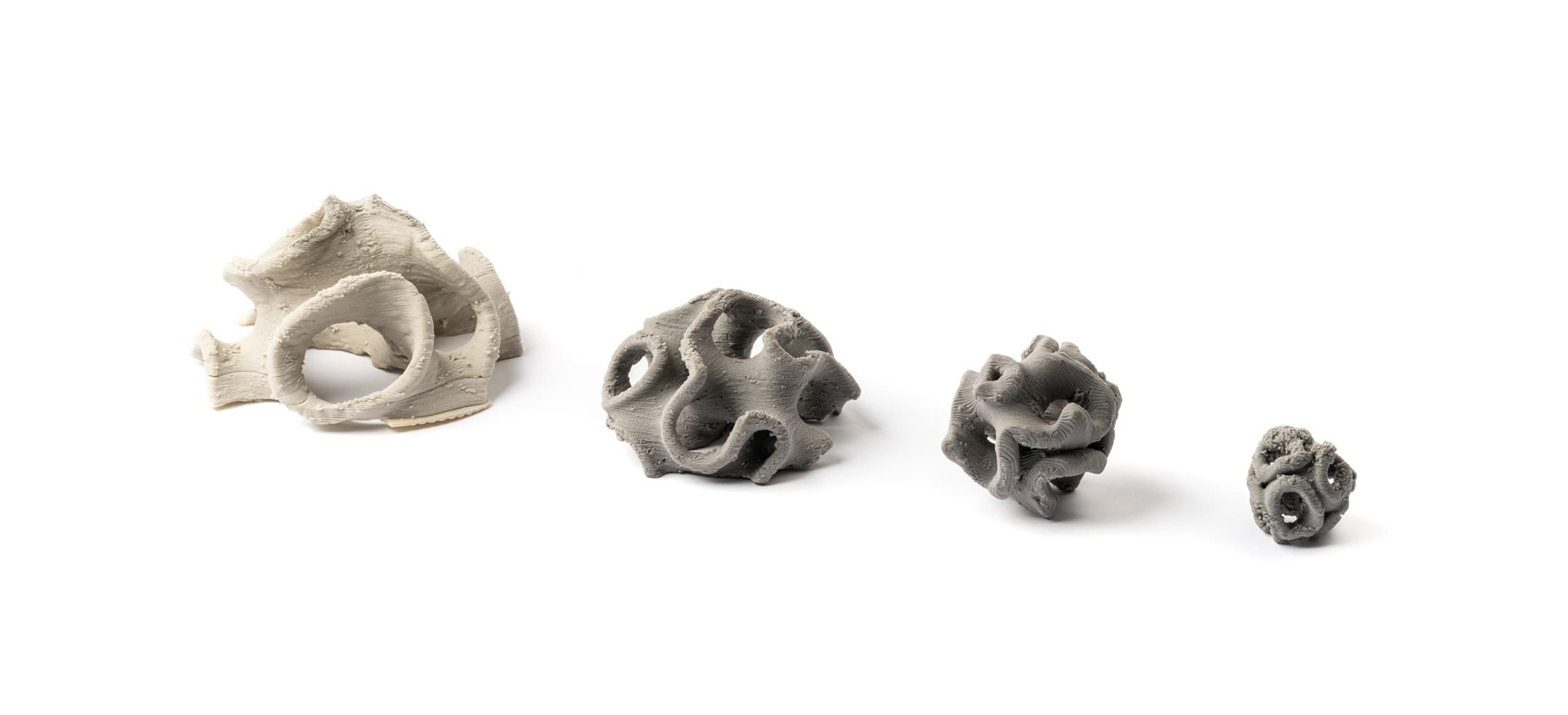
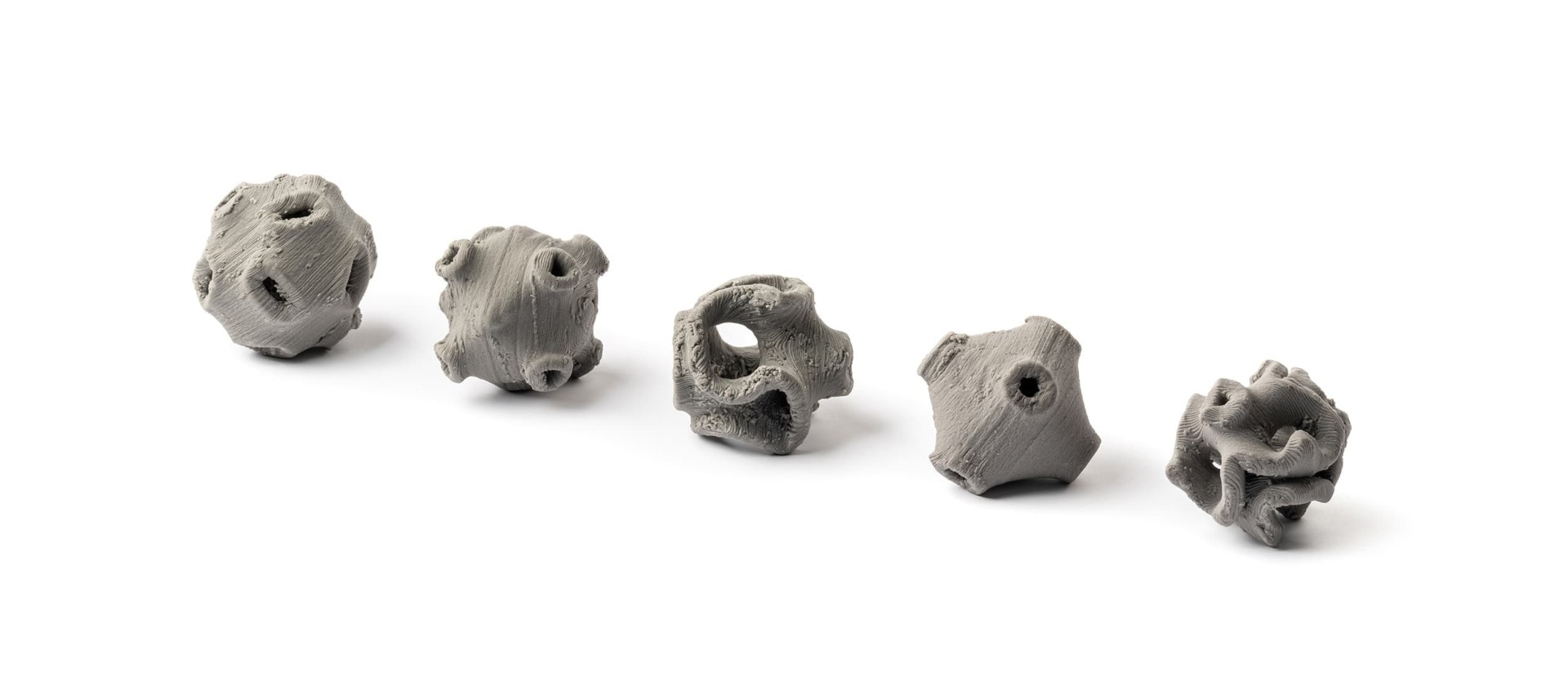
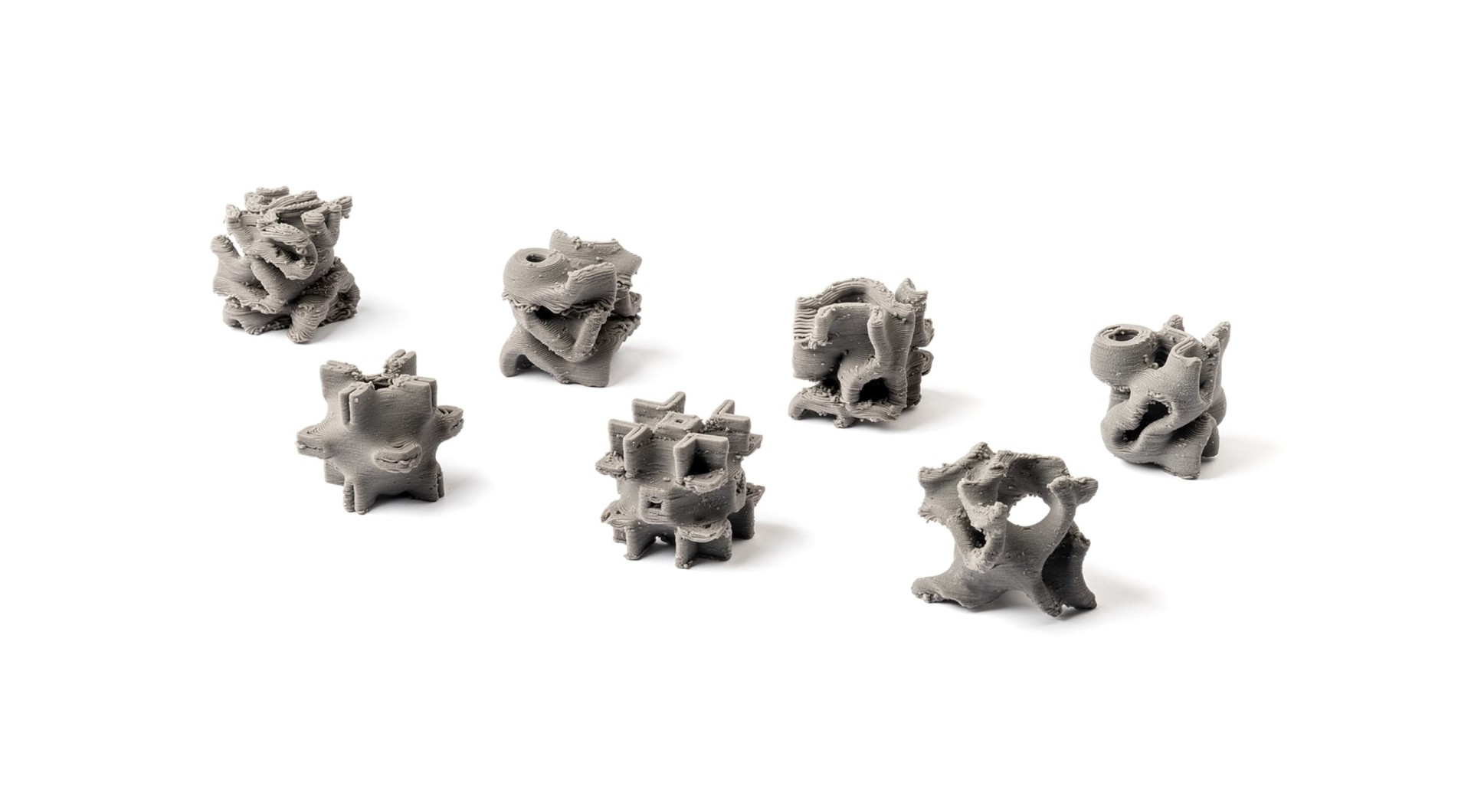
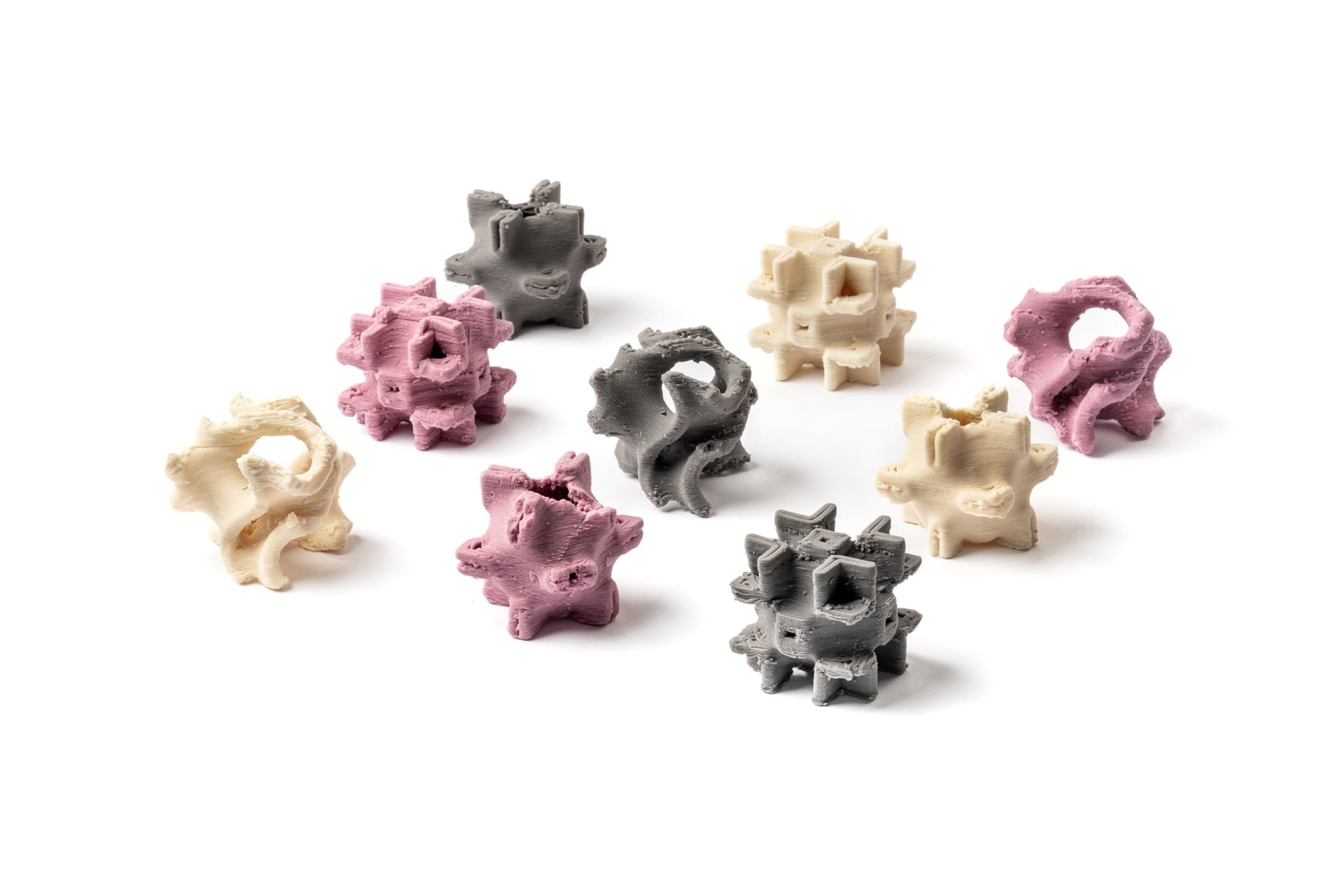
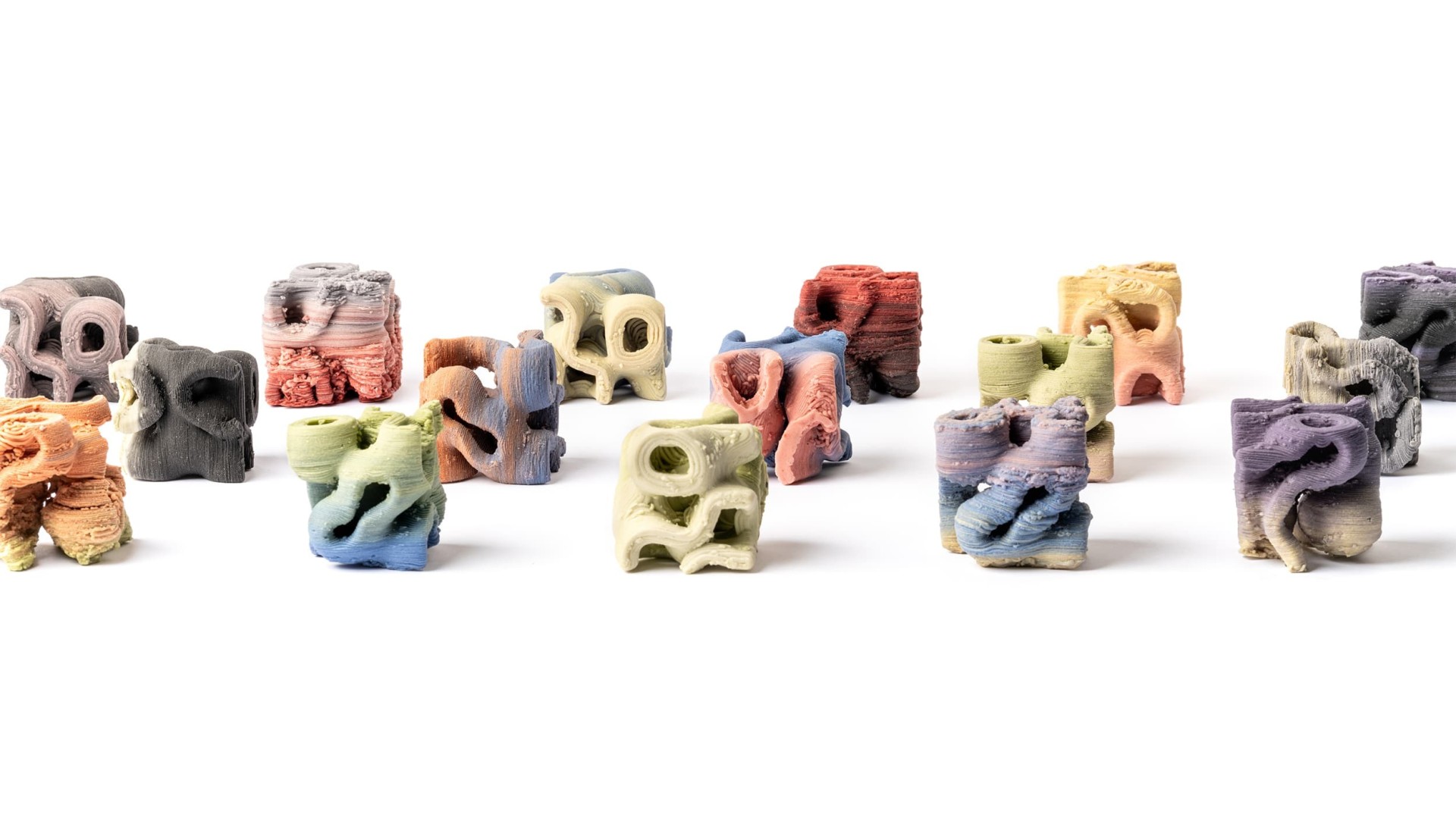
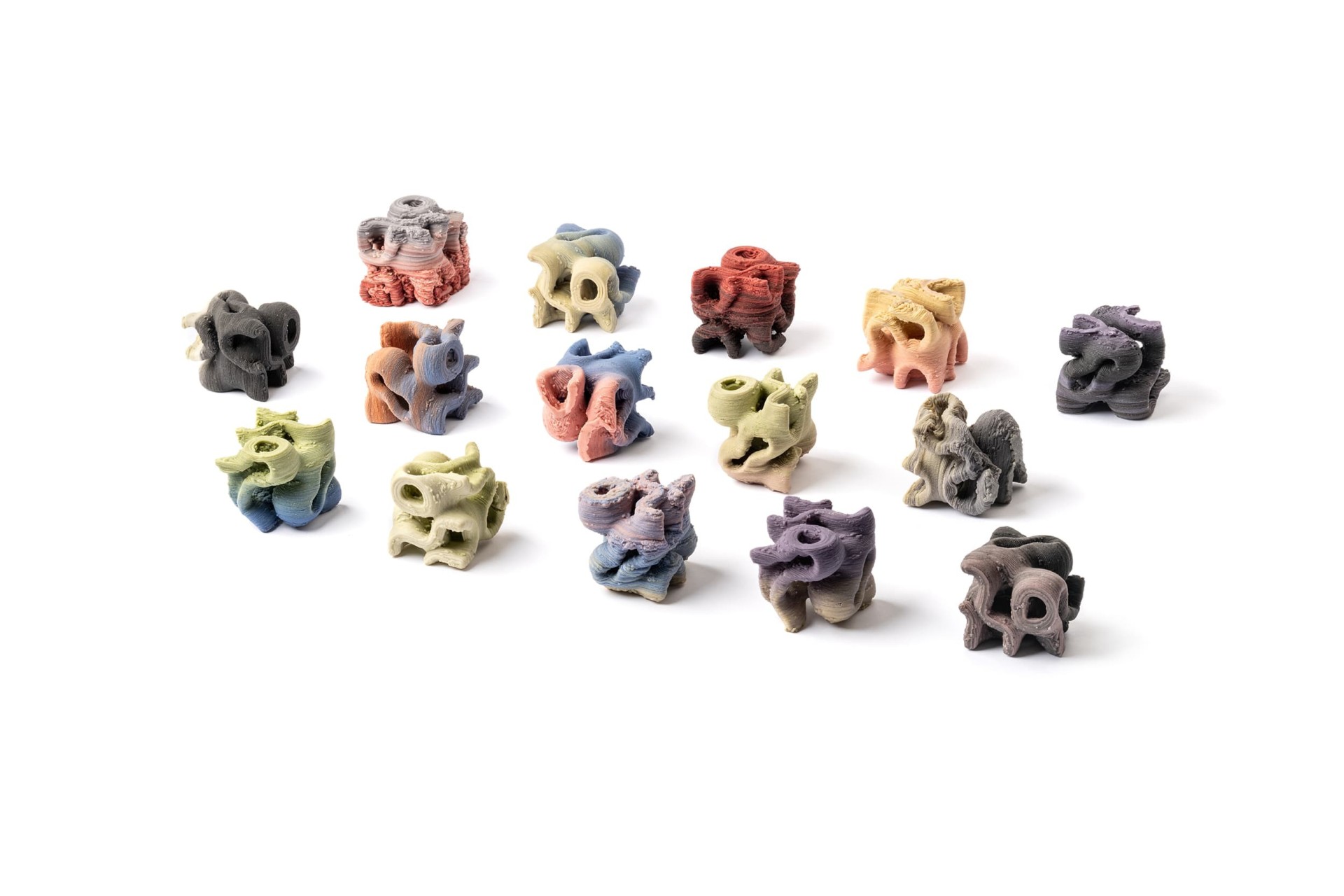
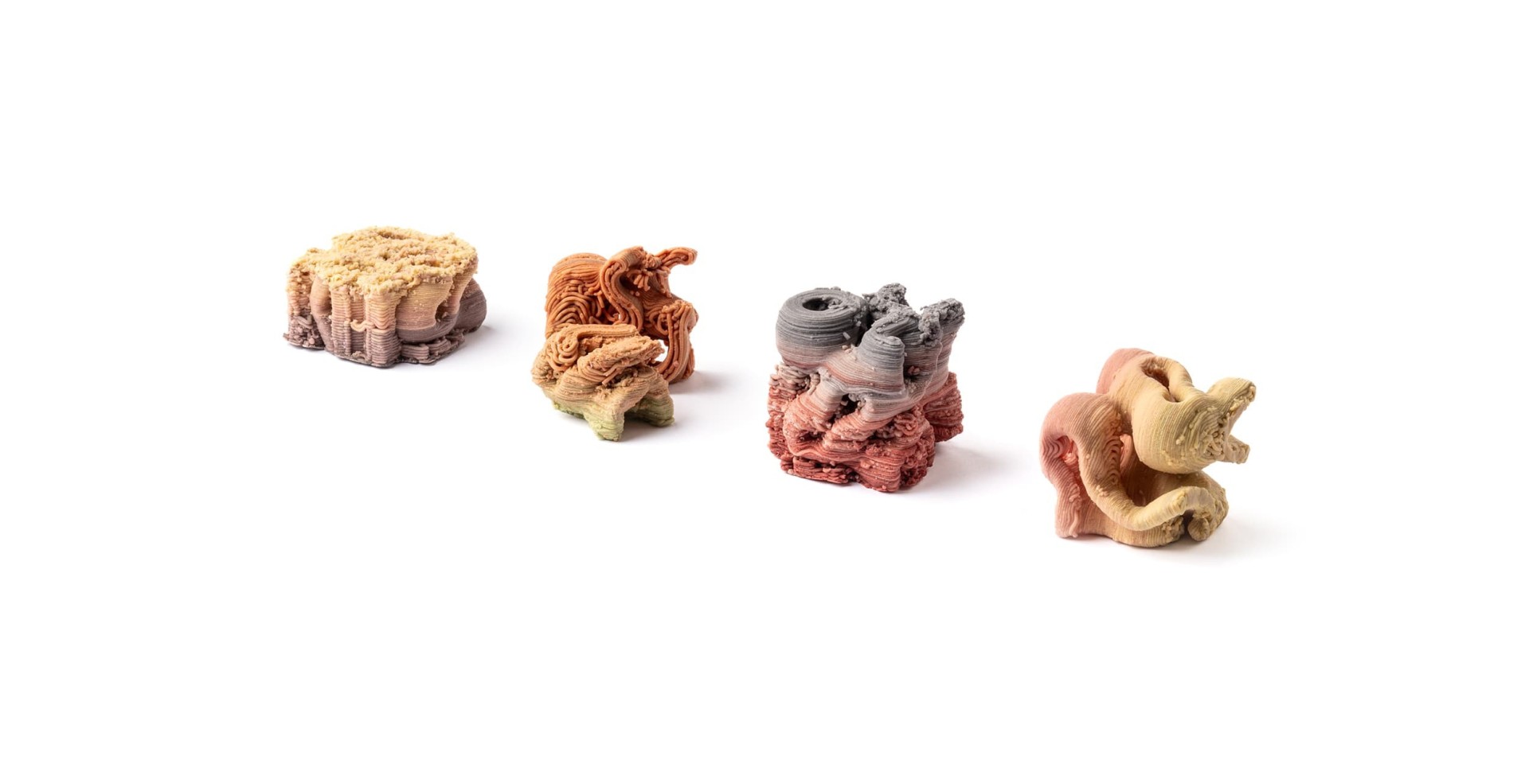
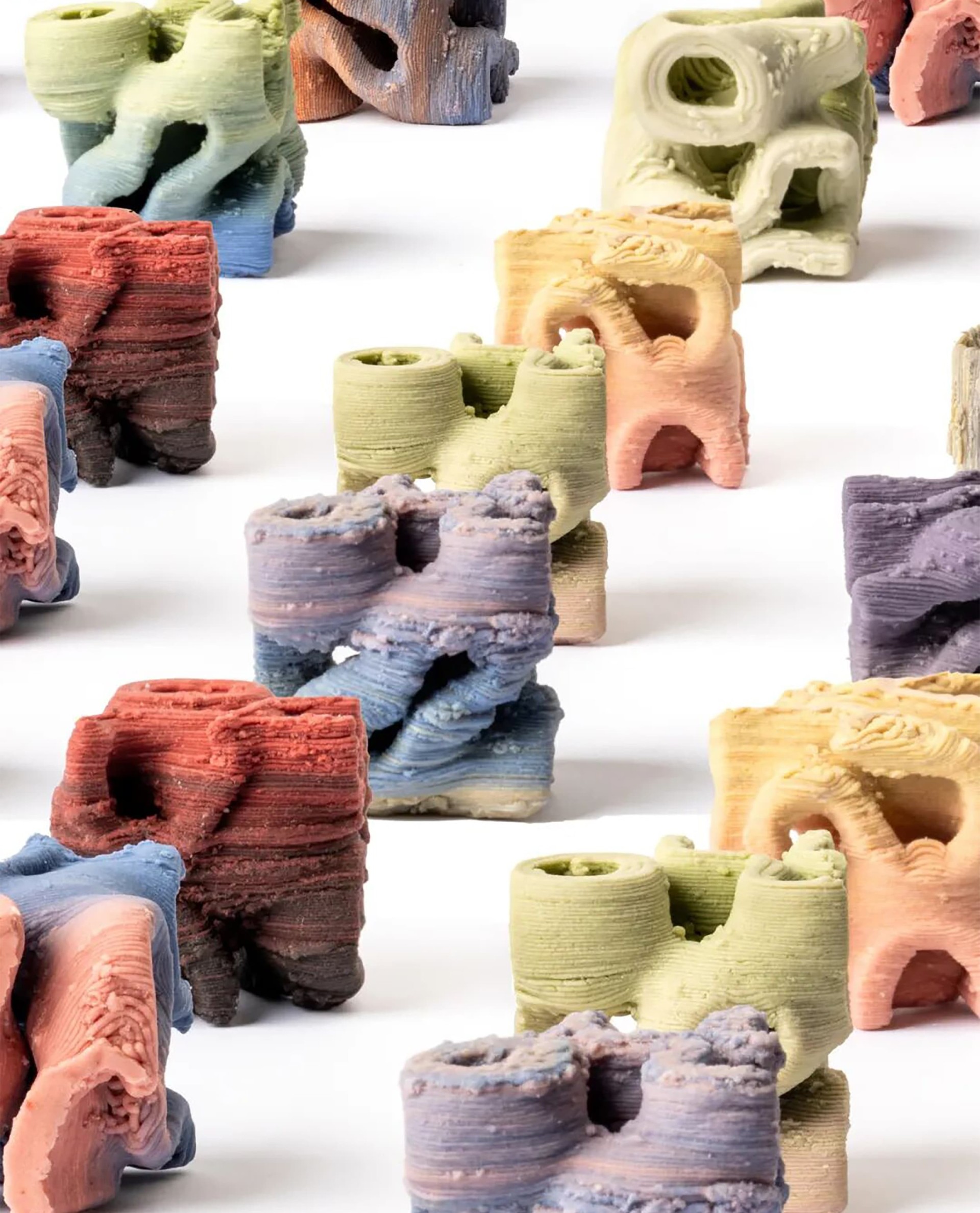
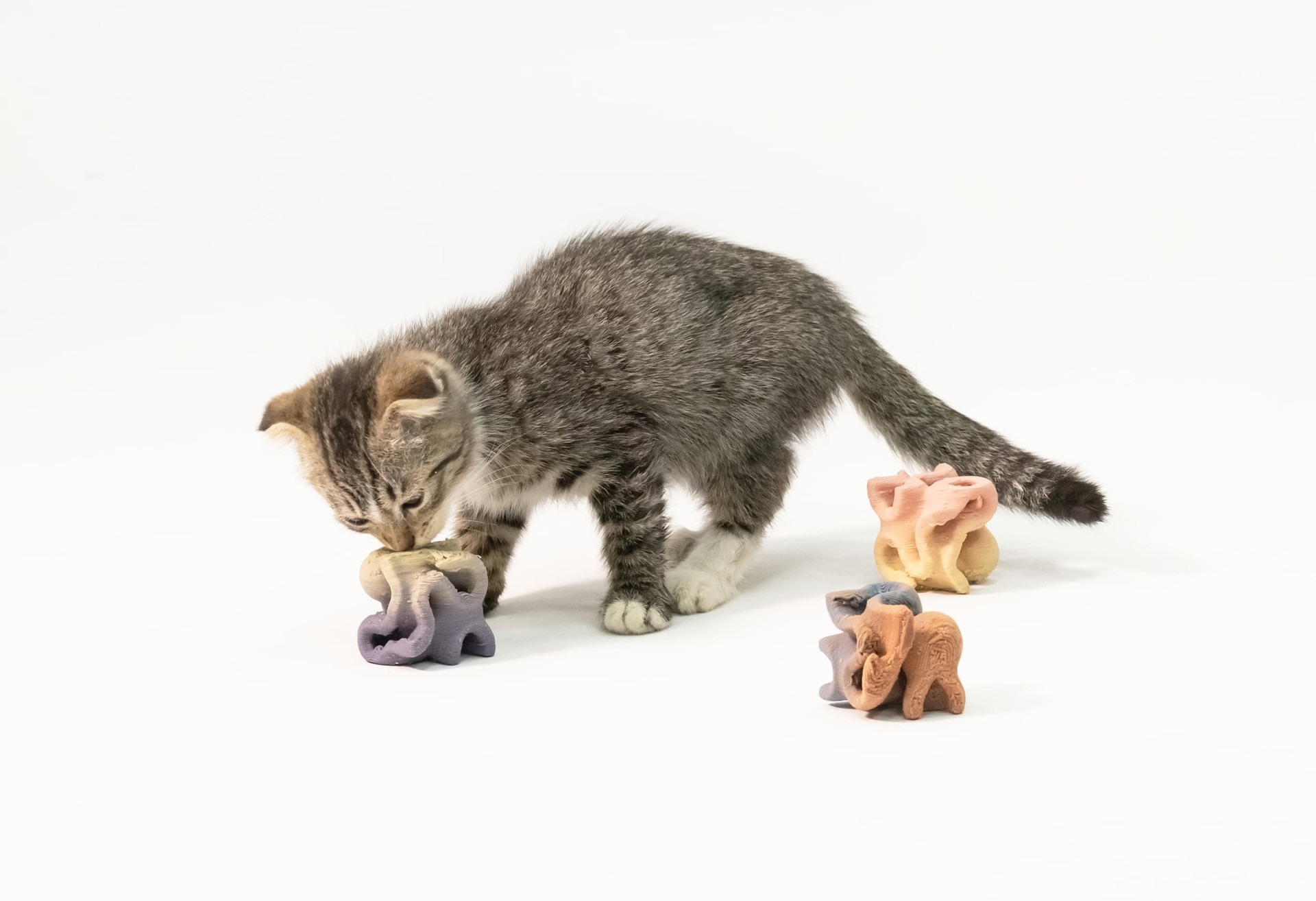
Through digital modelling, food is no longer confined to familiar pellets, blocks or flakes. Openings, grooves, surface textures and internal cavities can all become variables in the design, brought together to form an organised spatial structure.
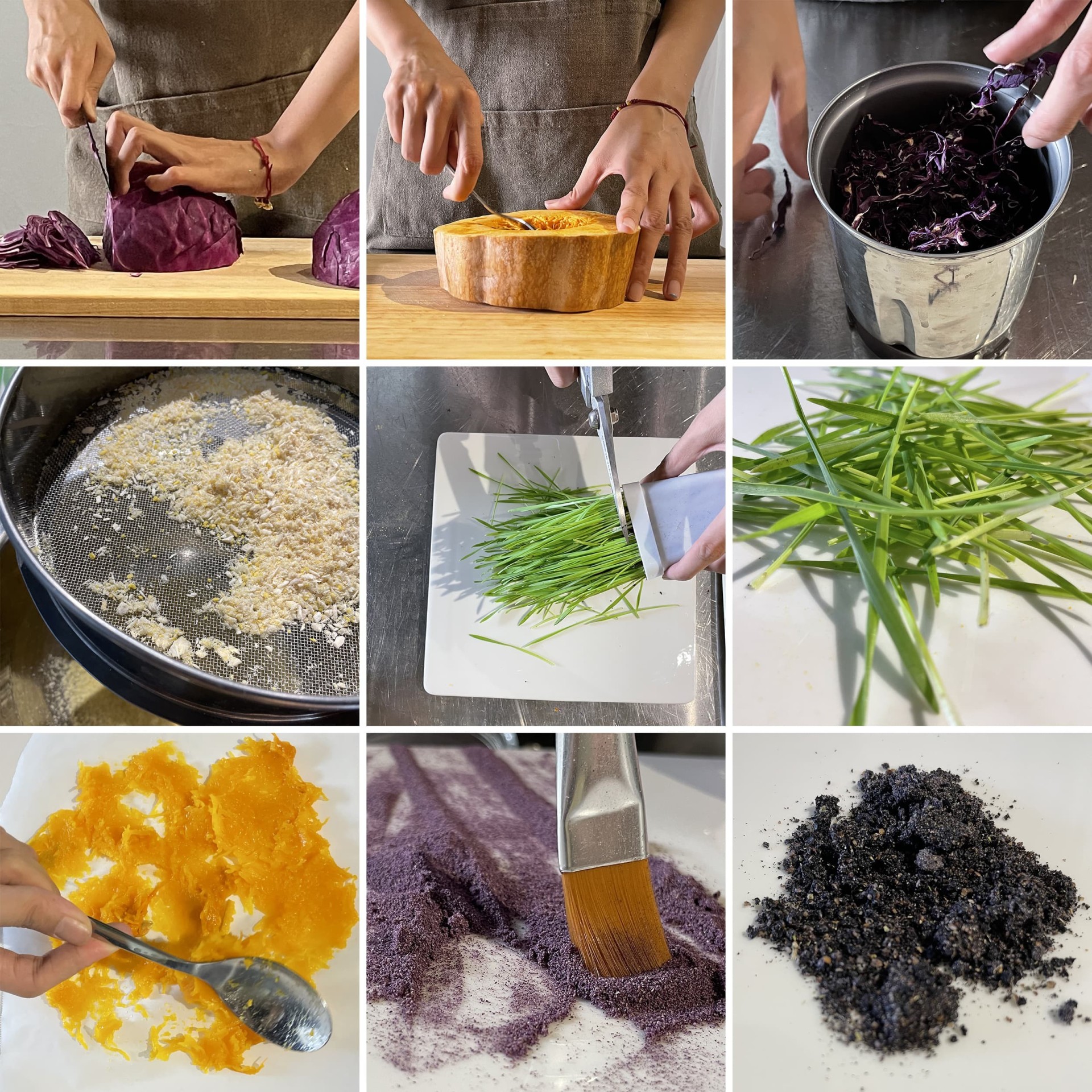
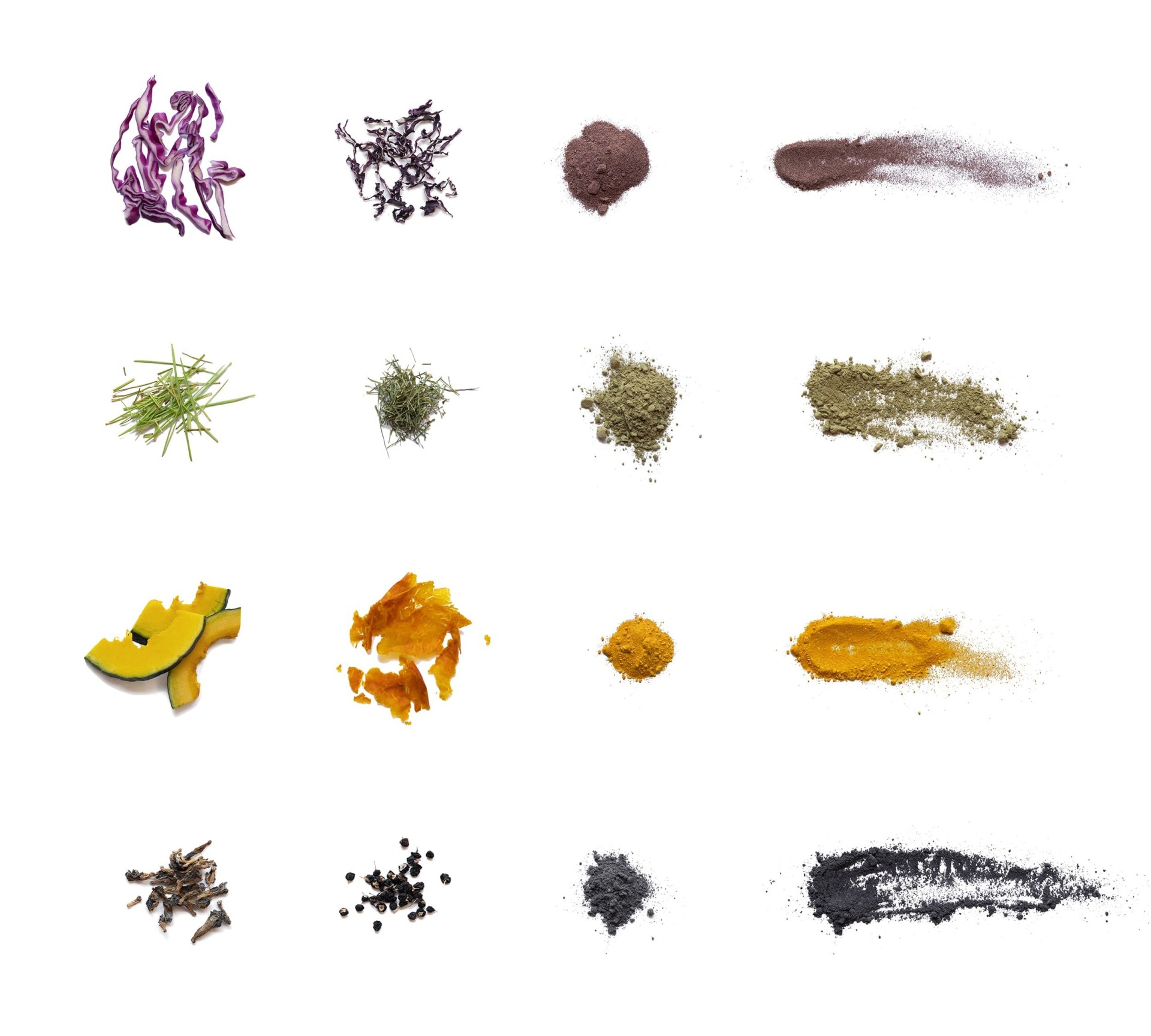
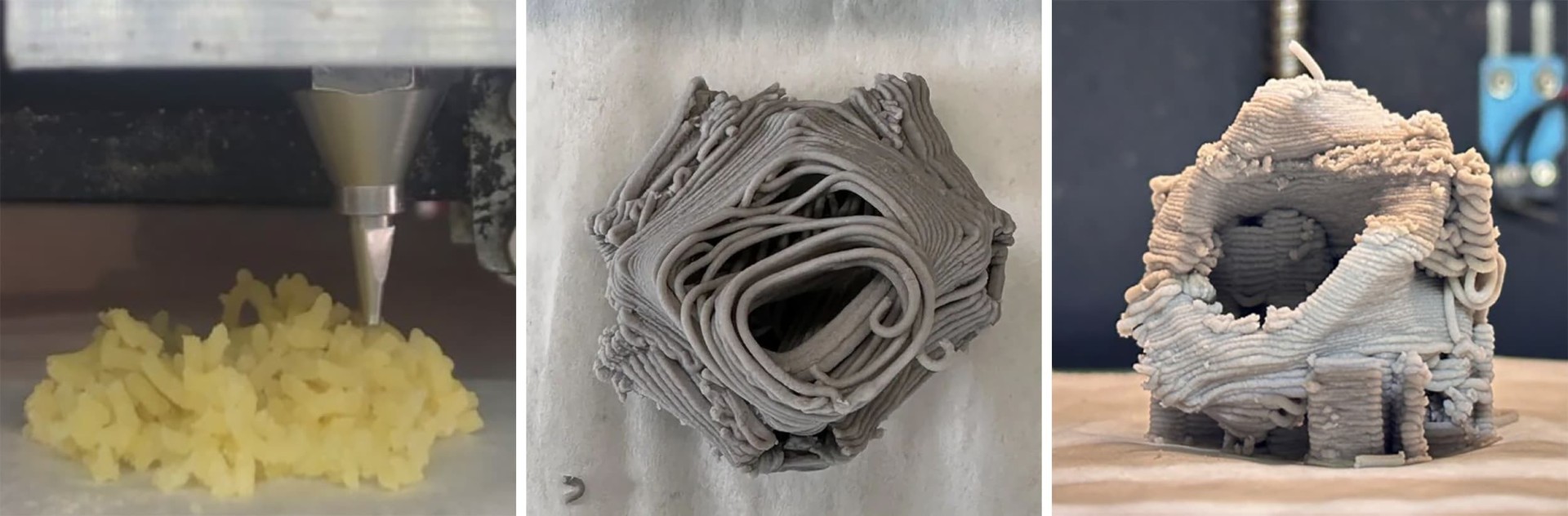
Throughout the experiments, material ratios and fabrication conditions were repeatedly adjusted to test the feasibility of printing food into different forms.
The flow of the material, its stability after shaping, and its behaviour during use all had to be worked out through hands-on experimentation. A digital model can define a structure in advance, but it cannot fully anticipate how a material will behave during fabrication. Only when an idea enters the process of making do its possibilities and limitations begin to emerge.
02 / Material and Form
The form of food is inseparable from the properties of the material itself.
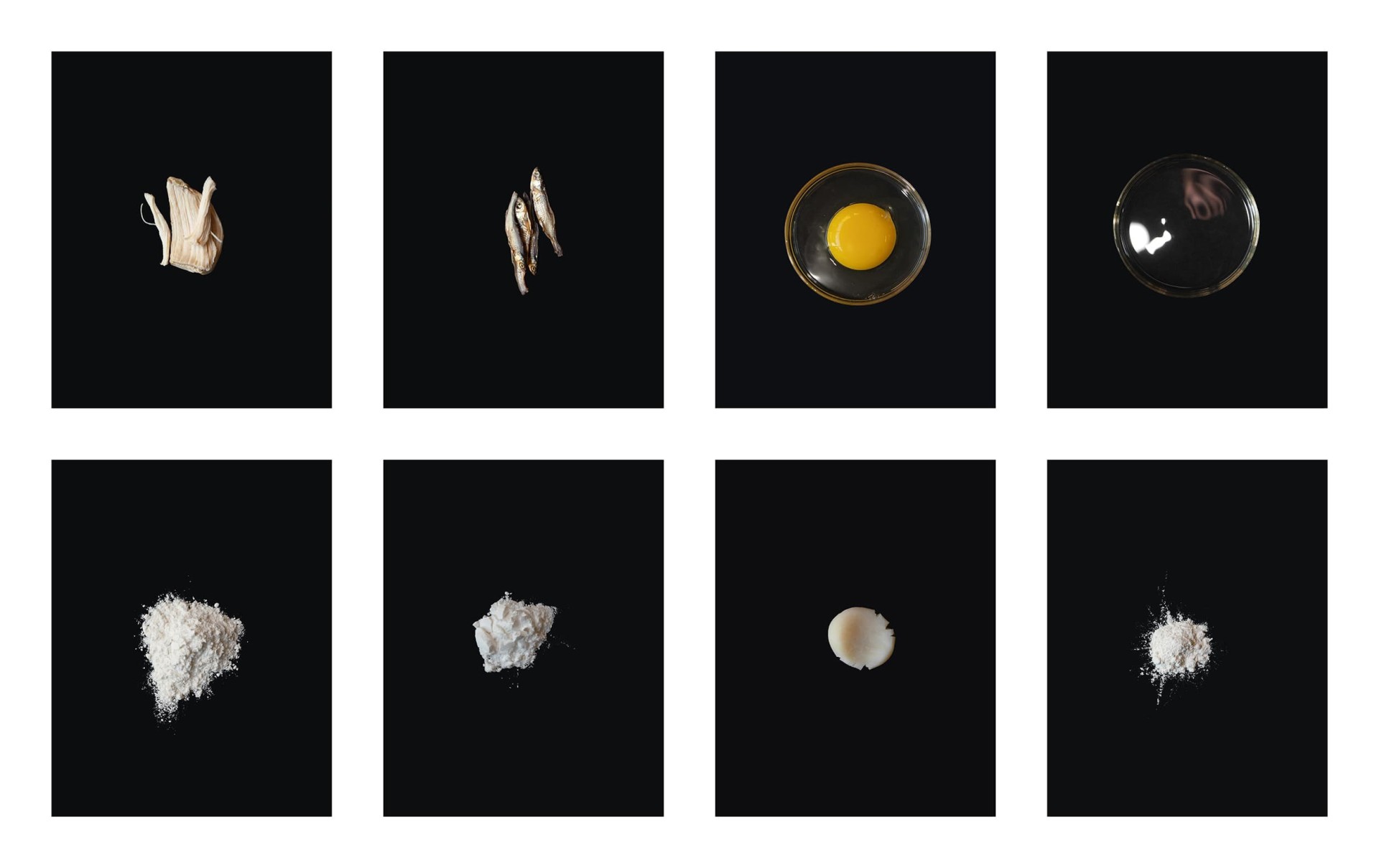
Whether a structure can be printed successfully depends on the material’s composition, its flow characteristics and its performance after forming. With edible materials, nutritional composition, food safety and storage stability must also be considered. These requirements pull in different directions; none can simply stand in for another. If the mixture is too thin, it will not hold its shape. If it is too thick, the nozzle may clog. Finding a viscosity that is just right requires repeated adjustment.
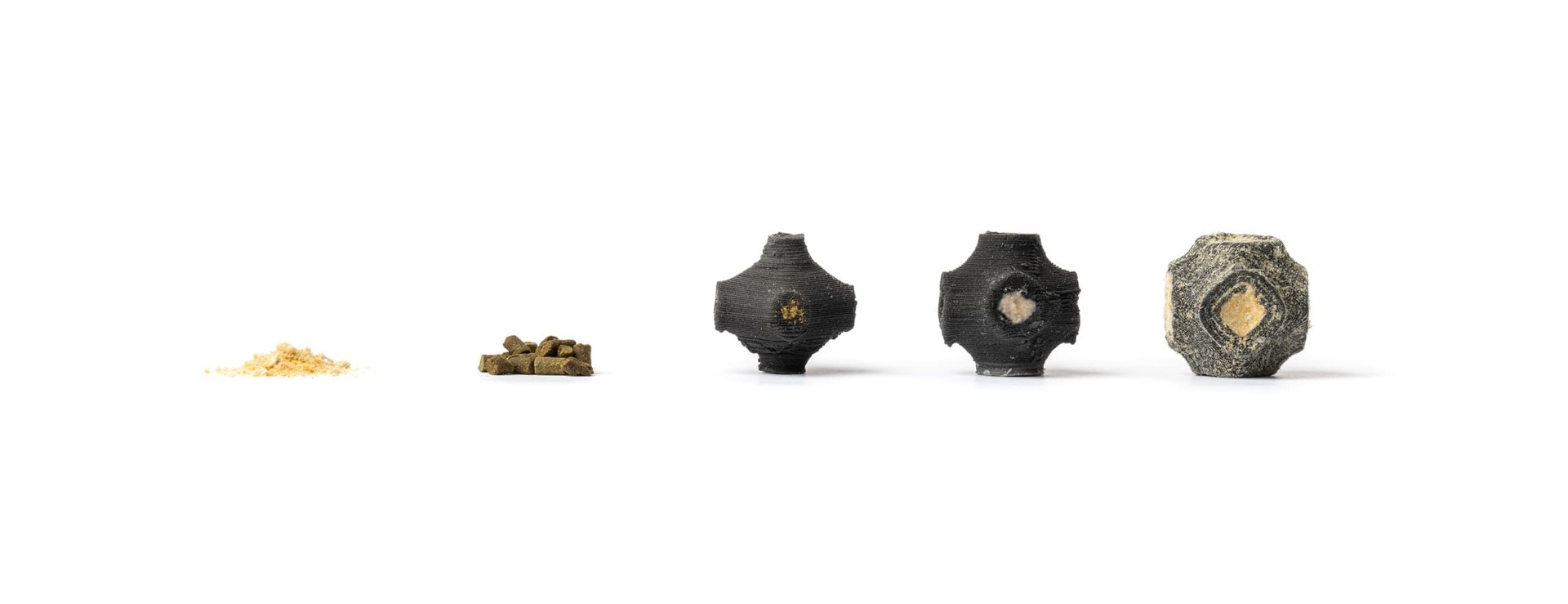
The Other Food experiments use formulation trials and 3D printing to seek a balance between material composition and the behaviour of the printed form.
As the experiments progressed, the properties of the materials themselves became increasingly important. Whether these properties might open up new directions for research remains a question for further investigation.
PHA (polyhydroxyalkanoate) is a family of polyesters synthesised by microorganisms. It can be broken down in the body into 3-hydroxybutyrate, a naturally occurring ketone body. This points towards a possible role in metabolic regulation. The material’s properties, together with its biological potential under specific conditions, drew our attention to a question: might there be meaningful connections between the origins of a material, its molecular structure and the processes of biological metabolism?
The presence of a particular biological property does not mean that a material will necessarily offer nutritional or health benefits to animals. Nor does the fact that a material can degrade under certain conditions mean that it is suitable for ingestion. Edibility, physiological effects and environmental behaviour are distinct questions, each requiring separate examination.
Material exploration, then, involves more than determining whether something can be formed. It also asks under what conditions a material can function as intended, and where the limits of our current understanding lie. These questions will also shape the direction of future design work.
03 / From Eating to Interaction
If the form of food can be designed, could the process by which an animal obtains it also become part of the design?
With this question in mind, the focus of the experiments shifted from materials and forming techniques towards behavioural observation.
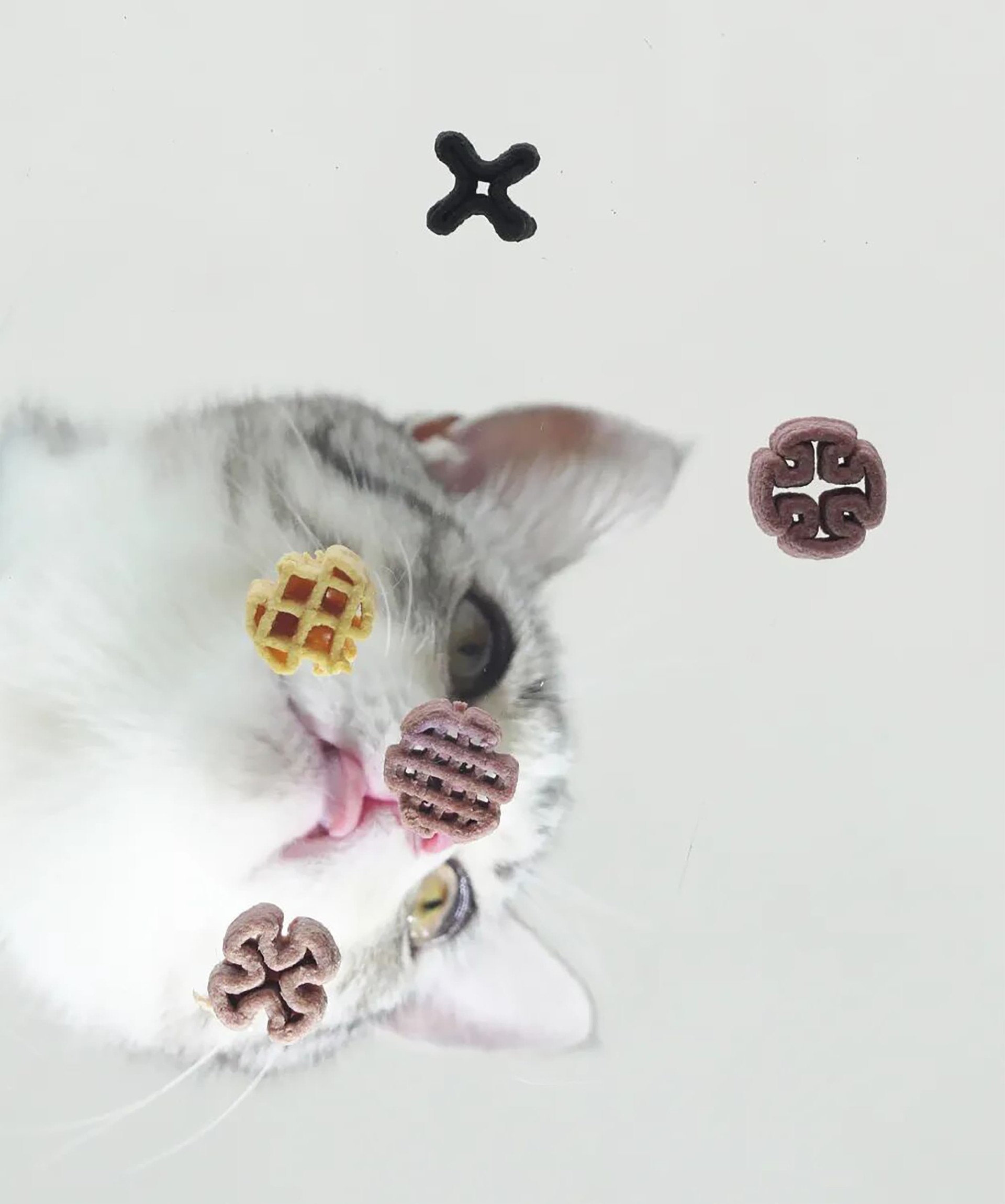
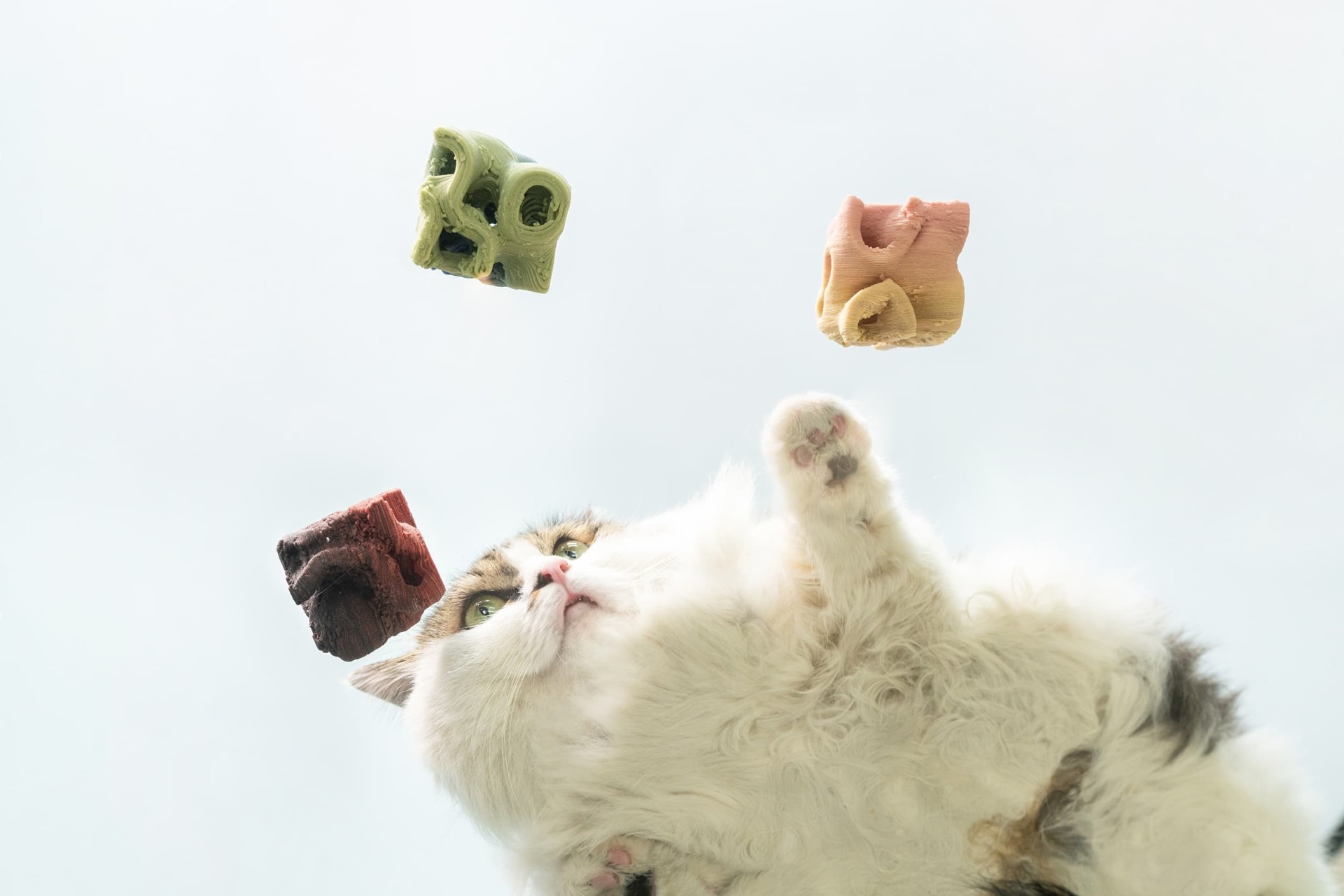
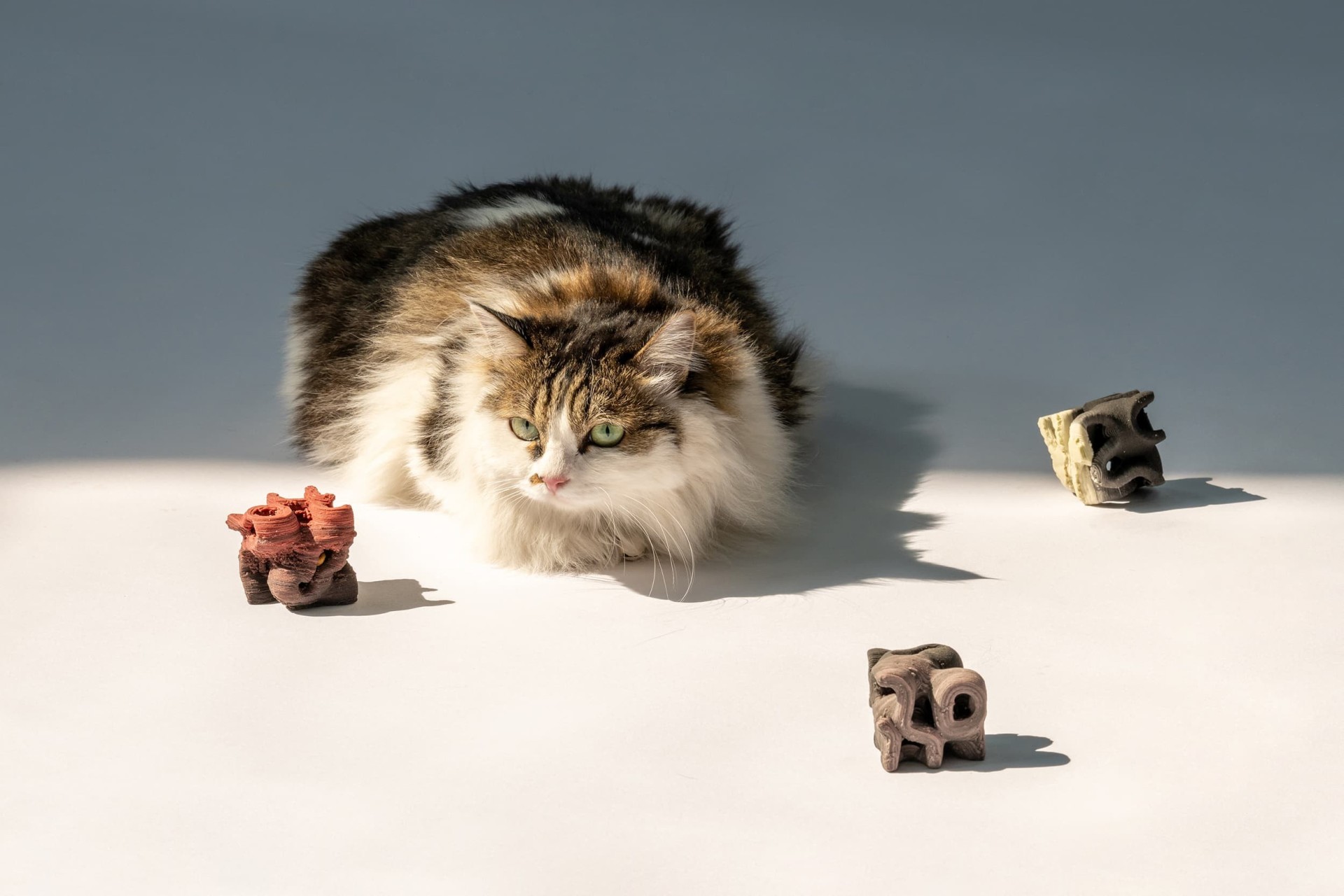
We combined food with carriers of different structural configurations, adjusting the size, shape and spatial arrangement of their openings to observe how cats responded to them.
The observations revealed different patterns of interaction across different opening structures. Larger openings more readily elicited actions such as reaching in with a paw and batting at the food. Faced with smaller openings, the cats more often resorted to biting. At times, they continued pawing at a structure, trying to retrieve food caught in its narrow gaps.
These structures were not simply elements of the food’s appearance. The openings, surfaces and spatial arrangements established conditions for behaviour. They did not dictate how an animal should act, but they could create opportunities for certain actions to occur.
Here, the object of design was no longer food alone, but the interaction between food and animal.
Food might be obtained directly, or it might require a degree of exploration before it could be reached. As the means of obtaining it changed, eating could become connected with pawing, biting and the exploration of the surrounding environment. The form of food thus became one way for design to enter into an animal’s everyday experience.
04 / Observing Preferences That Cannot Be Expressed Directly
Animals cannot explain their choices in words.
A cat cannot simply tell us which form it finds more appealing, or whether its choice of a particular structure is driven by scent, touch or the process of obtaining the food itself. Observing animal behaviour therefore requires us to begin with actual responses, rather than relying on human intuition to determine what an animal prefers.
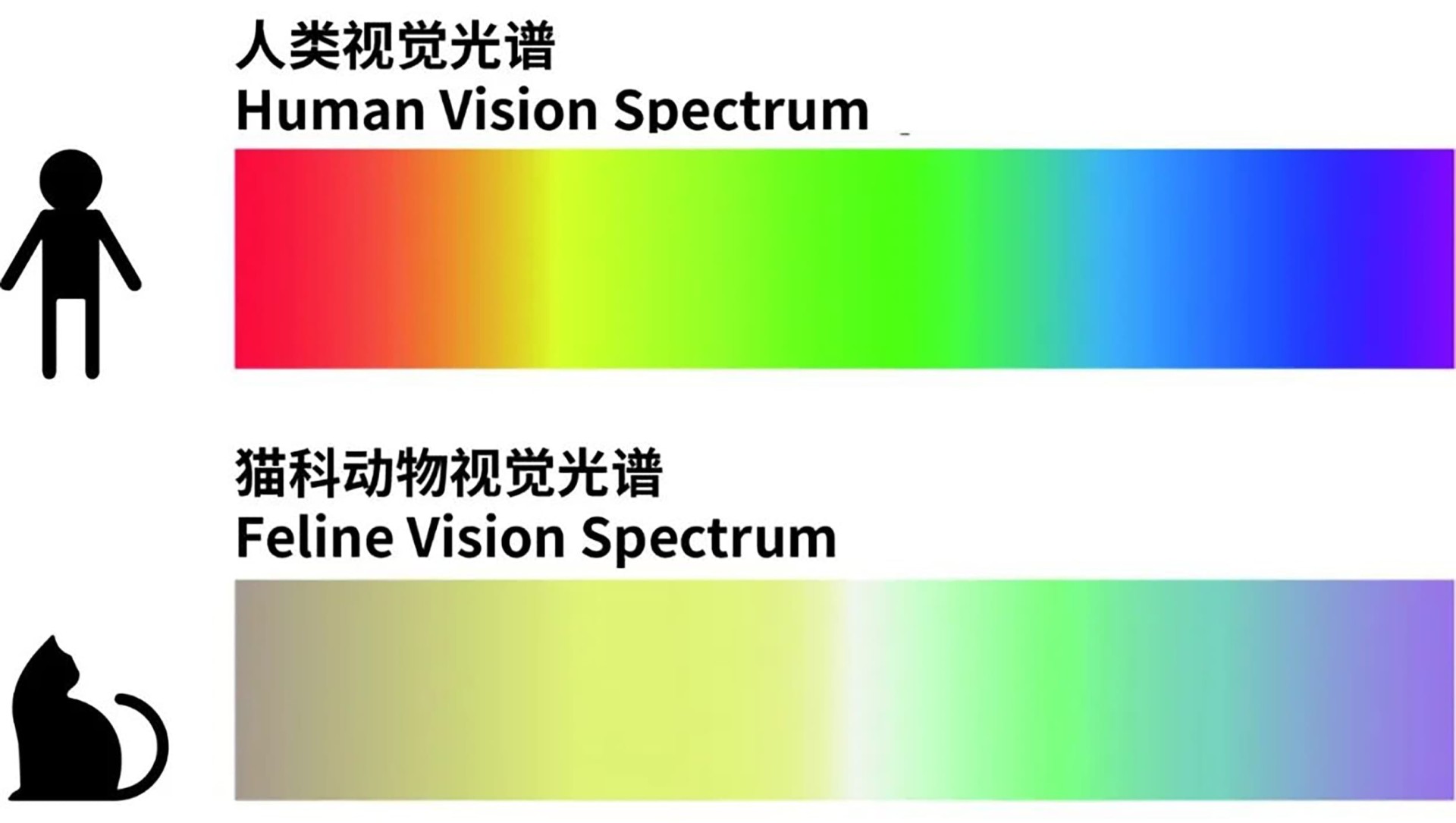
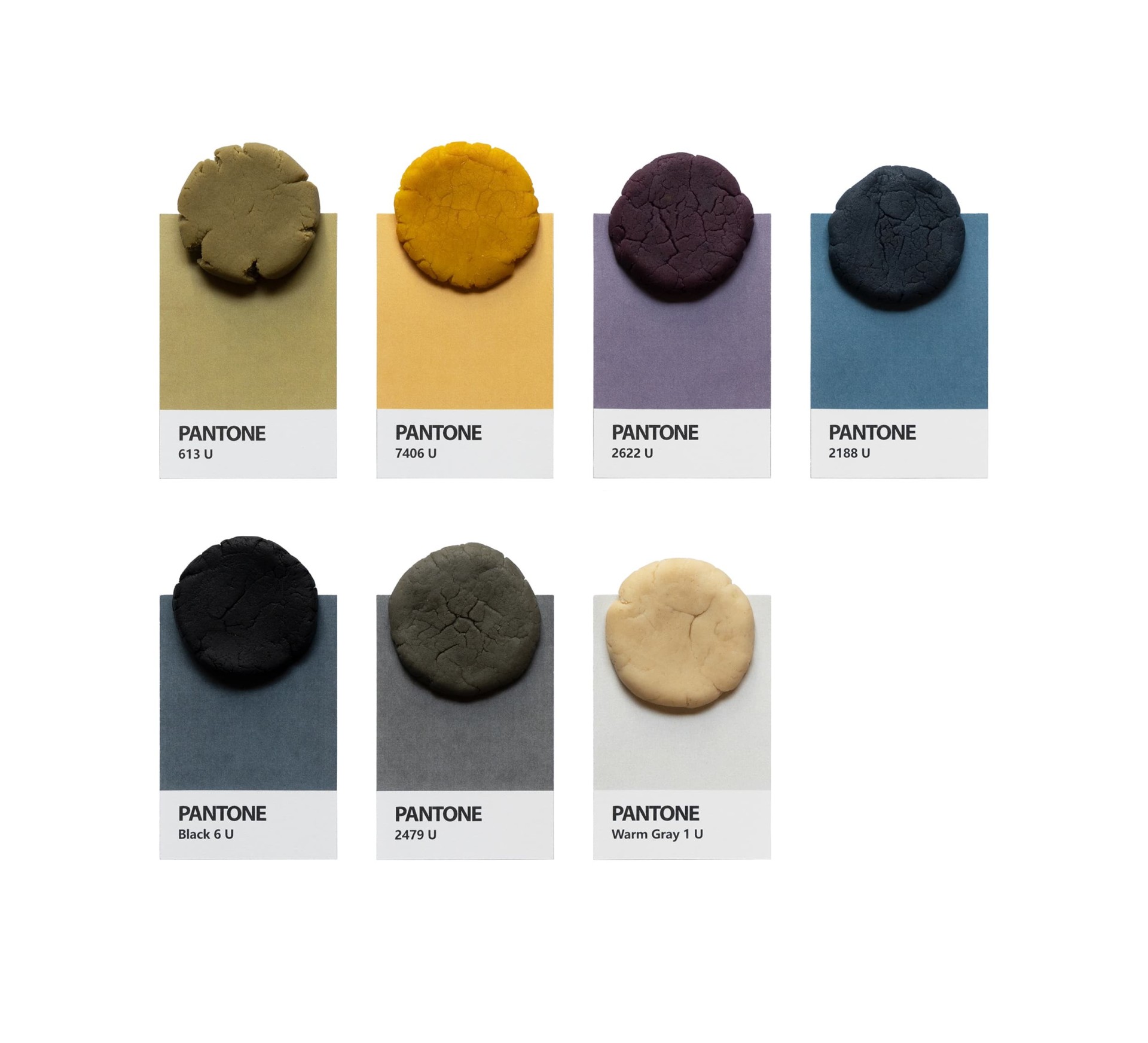
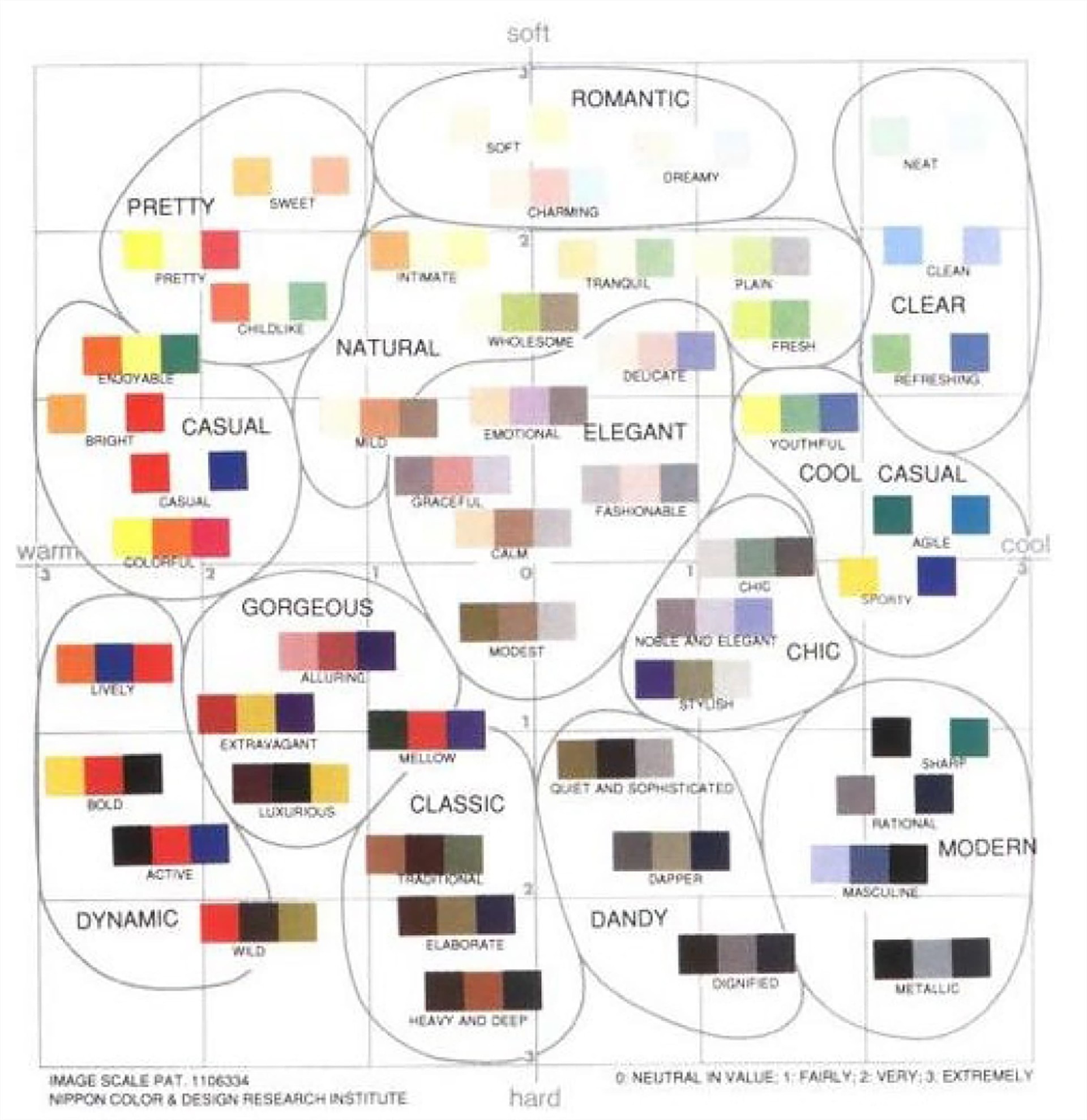
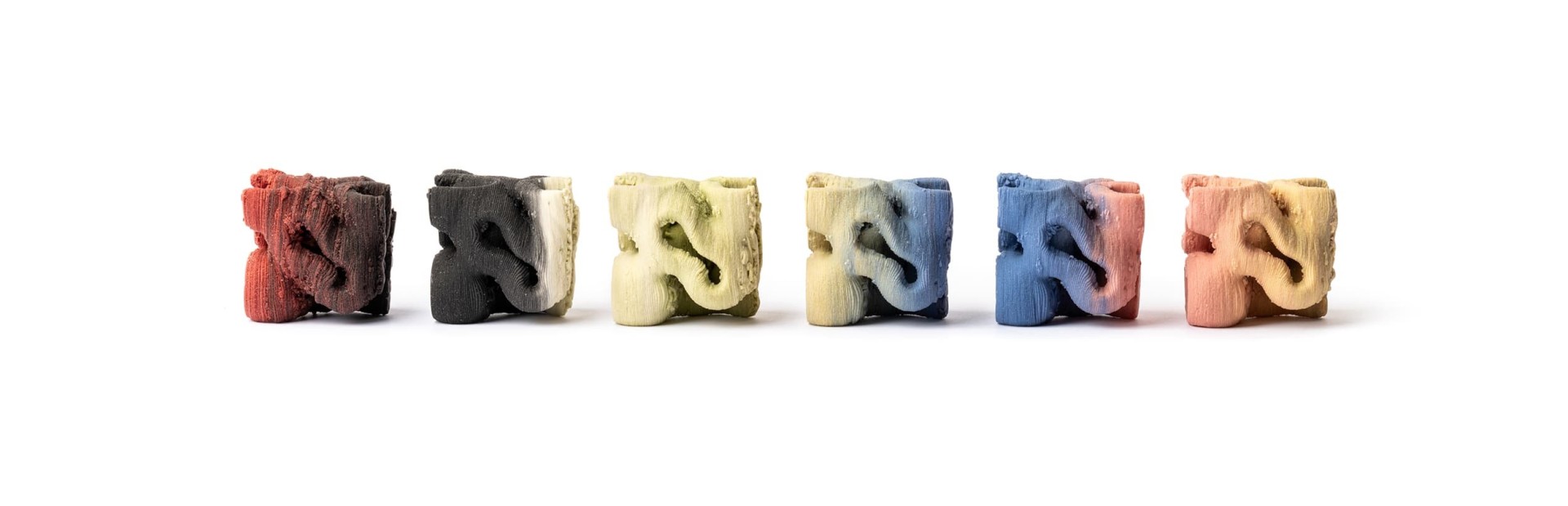
The experiments also examined responses to different colours. Under the conditions of these tests, no clear colour preference was observed.
This result tells us only that colour showed no pronounced influence under the conditions in which the experiments were conducted. It does not establish that cats have no colour preferences. Cats see the world differently from humans, but differences in visual perception alone cannot tell us how they will choose in a particular situation. The testing environment, the combination of colours, the scent of the food and individual differences may all have influenced the results.
Understanding an animal’s preferences is not straightforward. We can observe its behaviour without necessarily being able to determine what lies behind it.
Are we observing the animal on its own terms, or projecting our own habits of perception onto it?
Listening to what cannot speak does not mean that we can supply an answer on its behalf. The answer is never entirely ours to give.
05 / Food and Behaviour
In this practice, 3D printing initially offered us a way to alter the form of food. As the experiments developed, our attention moved from what food could be made to look like towards the relationship between changes in form and animal behaviour.
Material properties influence how food can be made. Structures alter the conditions under which animals encounter it. The behaviour that emerges through these encounters, in turn, informs our understanding of the design. Forms and patterns of use imagined in advance by the designer must be reconsidered through actual contact.
Food remains a material necessary for sustaining life, but it is also a medium through which an animal engages with its surroundings. When the form of food and the means of obtaining it change, the animal’s actions may change with them.
Any design must take into account an animal’s actual needs, the safety of feeding and individual differences. Interaction should not become a goal imposed on an animal by the designer. It should find its basis in the animal’s real behaviour and responses.
When humans design food, utensils and living environments for companion animals, the impulse is often one of care. But care is not the same as understanding. We can create new possibilities for them, yet we still need to observe whether those possibilities genuinely suit their needs. The task of design is not to decide for an animal what constitutes a better life, but to try to understand its behaviour and adjust the conditions we create accordingly.
An Exploration Still Unfinished
Beginning with the form of pet food, Other Food gradually opened up questions about the relationships between materials, structures and animal behaviour.
Many questions remain unanswered. The formability and performance of the materials, the effects of different structures on animal behaviour, and the relationship between materials and the animal body all require further investigation.
During the process of making and observation, our initial ideas about the form of food were repeatedly challenged by the behaviour of the materials and the responses of the animals. Design is not simply a matter of producing a predetermined result under given conditions. Once an idea enters practice, new questions emerge alongside it.
How we interpret animal behaviour, and how we determine what animals actually need, remain questions we must continue to confront.
Design is an act of listening to what cannot speak.
This does not mean that designers can speak on behalf of the silent. Rather, it reminds us that there is always a distance between the behaviour we observe and the meaning we assign to it.
Through this practice, certain relationships that had previously gone unnoticed have entered our field of inquiry. They will remain part of NONGZAO’s ongoing work, awaiting another attempt.
— Practice Period: February – August 2024