
NONGZAO Field Notes • Diansha Pass
The Fate of an Old Sugarcane Variety
Original Text | Xu Gang • NONGZAO Field Notes
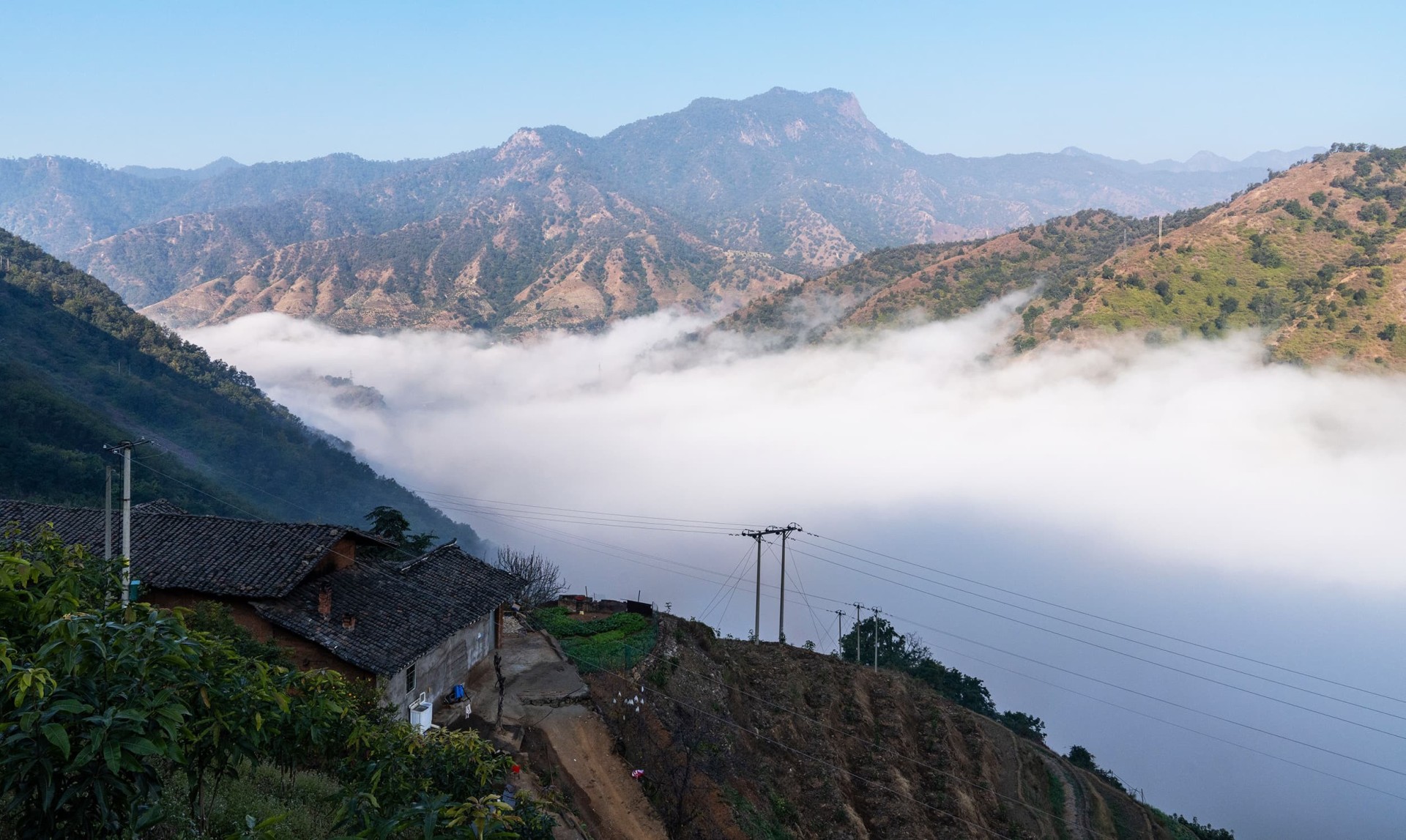
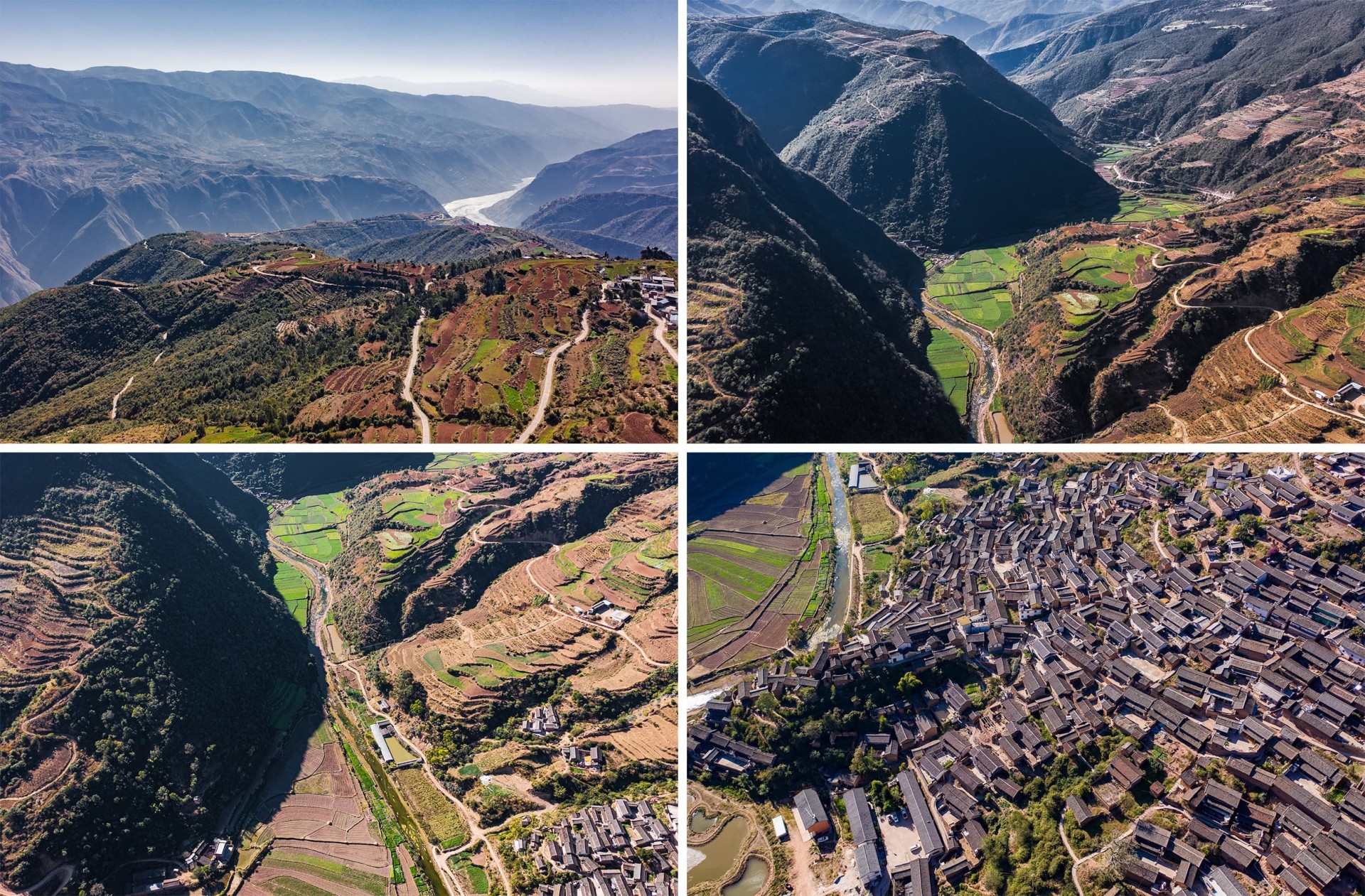
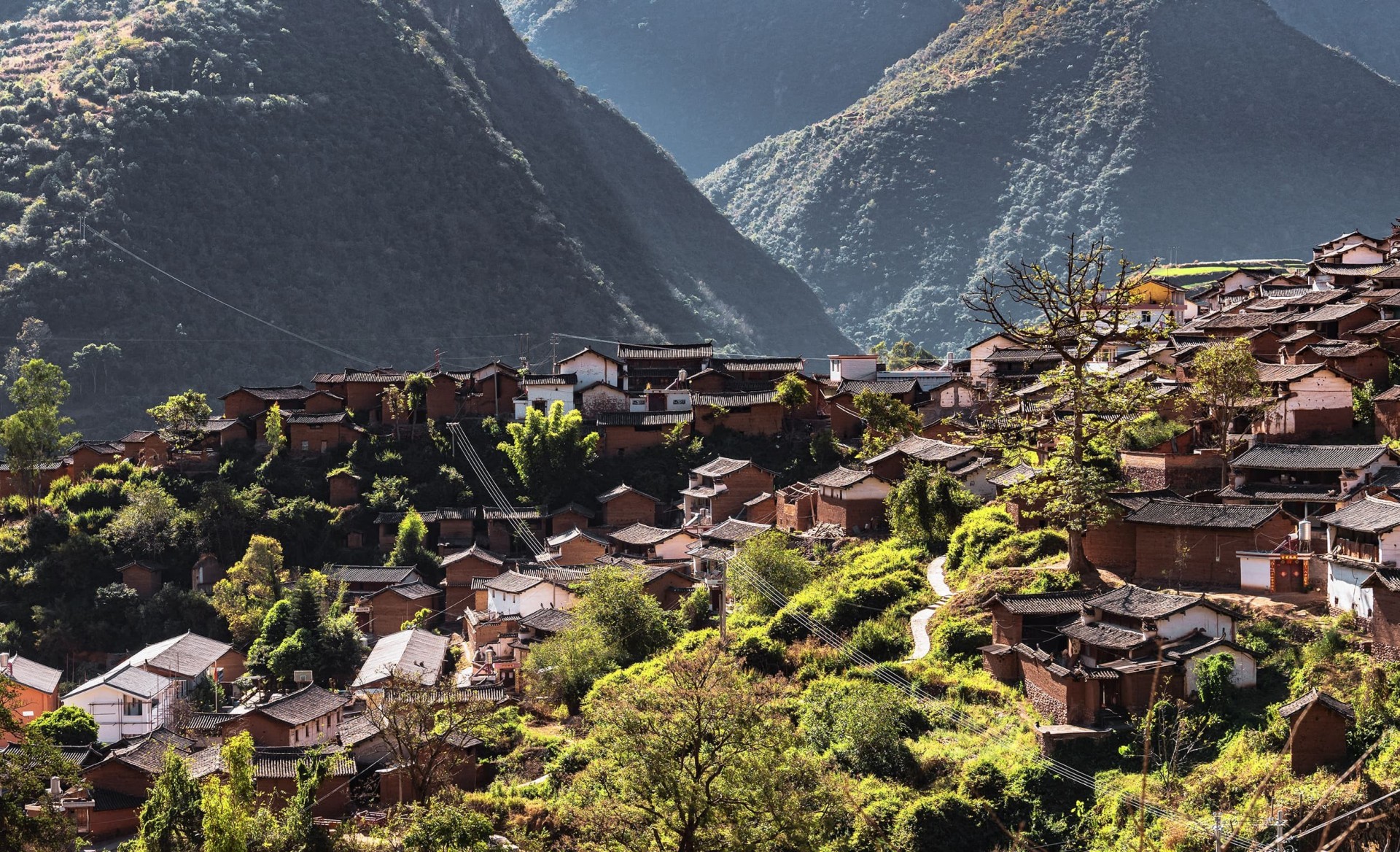
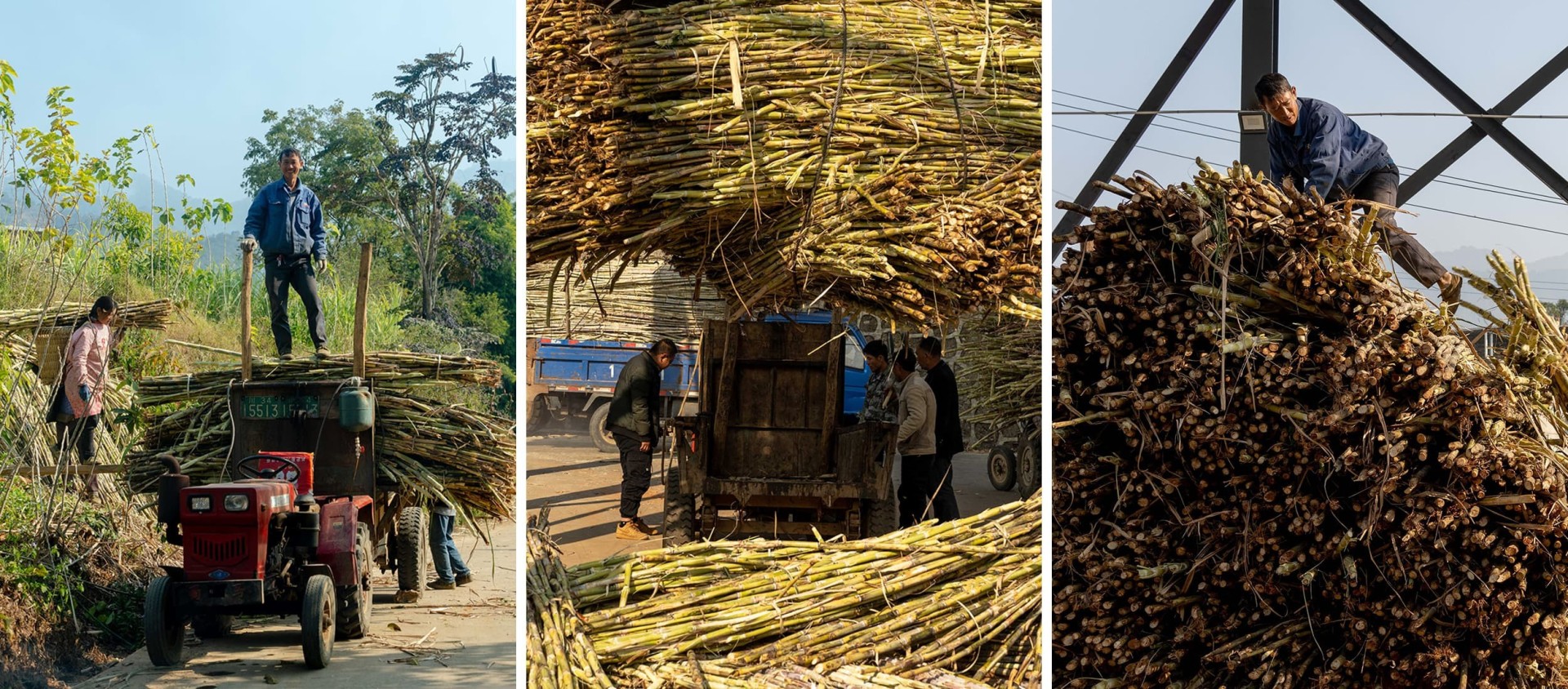
In December 2020, I travelled to Diansha Pass Village, in Yundian Town, Huili, Liangshan Yi Autonomous Prefecture, Sichuan Province. The Anning River flowed past the village, with ranges of hills stretching along both banks. The river valley remained warm even in winter. Sugarcane still stood in the fields, its leaves beginning to dry and turn brittle, rustling in the wind.
Diansha Pass is not widely known. Sugarcane fields are scattered across the valley and surrounding hills, some running alongside the roads, others tucked into slopes and low-lying ground. A number of local sugarcane varieties are still grown here, alongside traditional methods of making brown sugar. Unlike large-scale cultivation and mechanised processing, sugarcane farming and sugar production in Diansha Pass still depend heavily on the accumulated experience of growers and sugar makers.
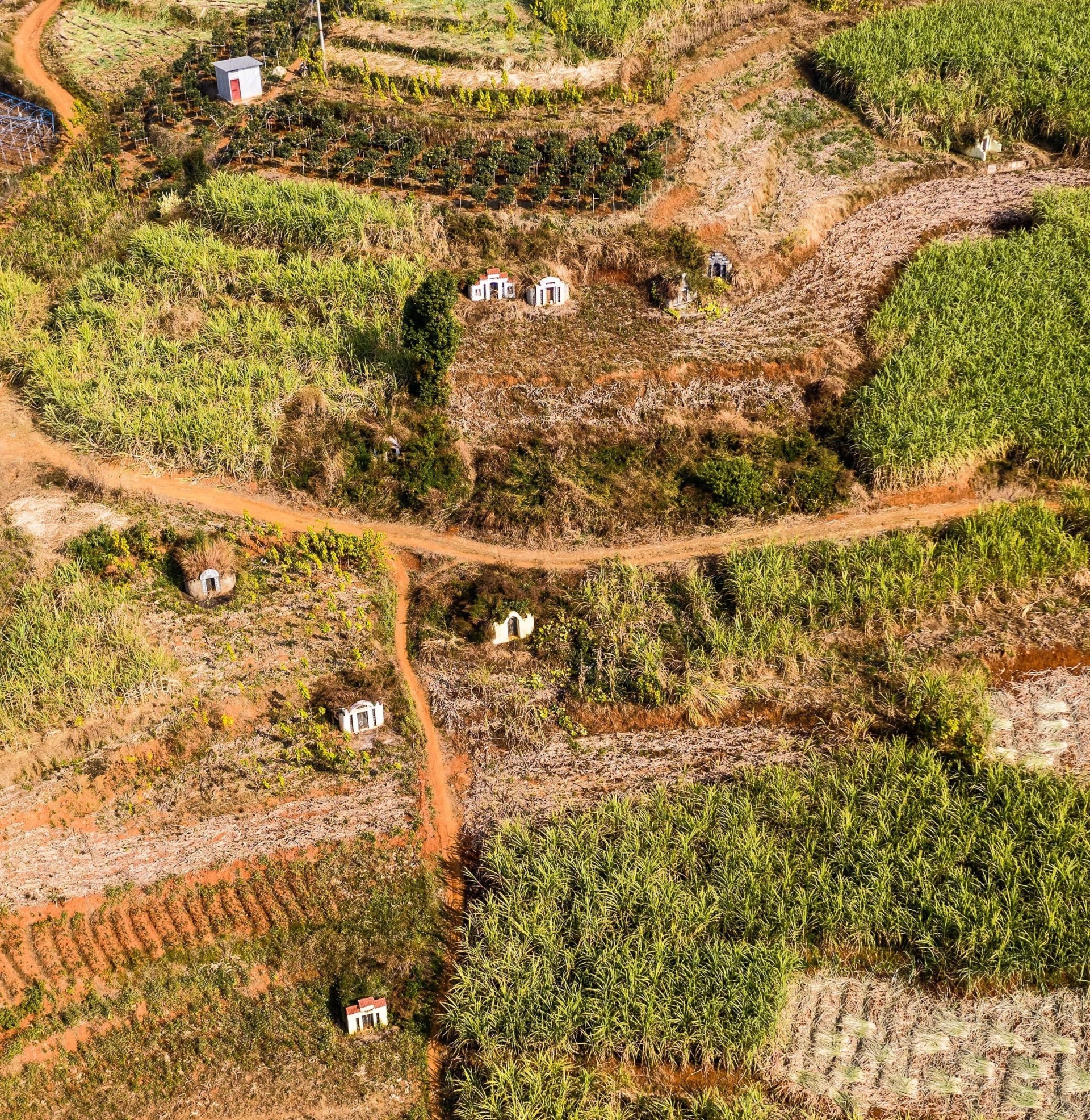
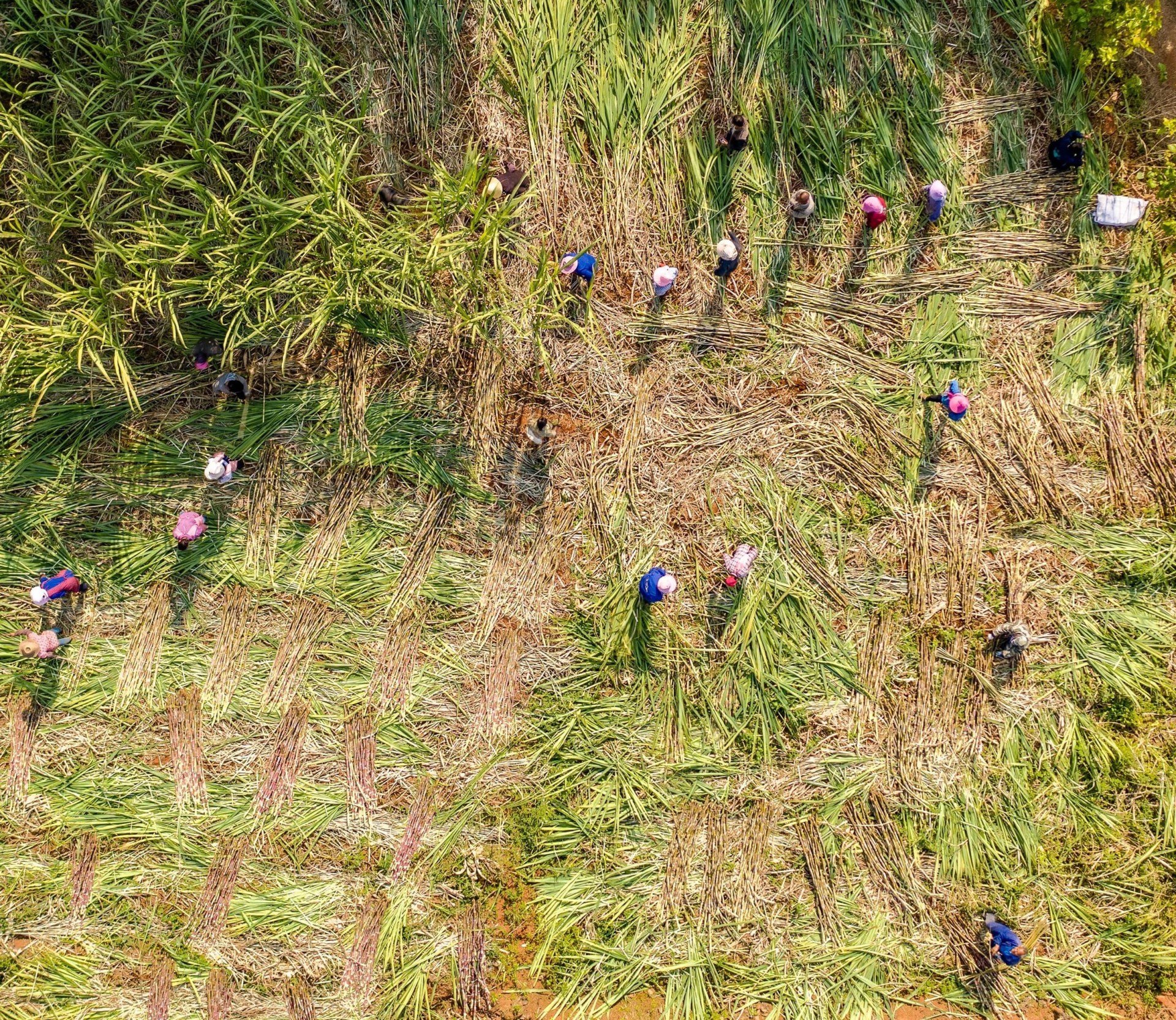
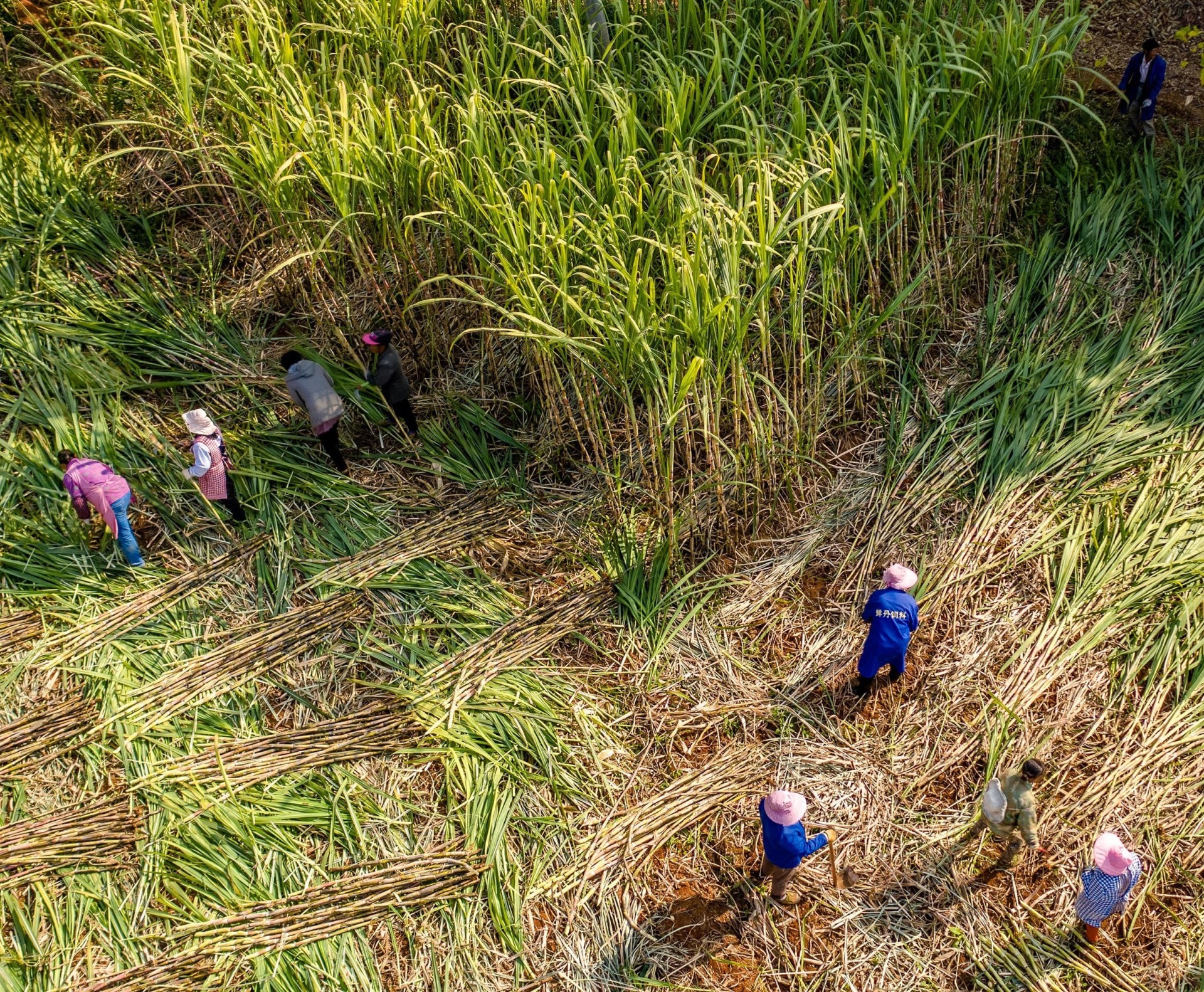
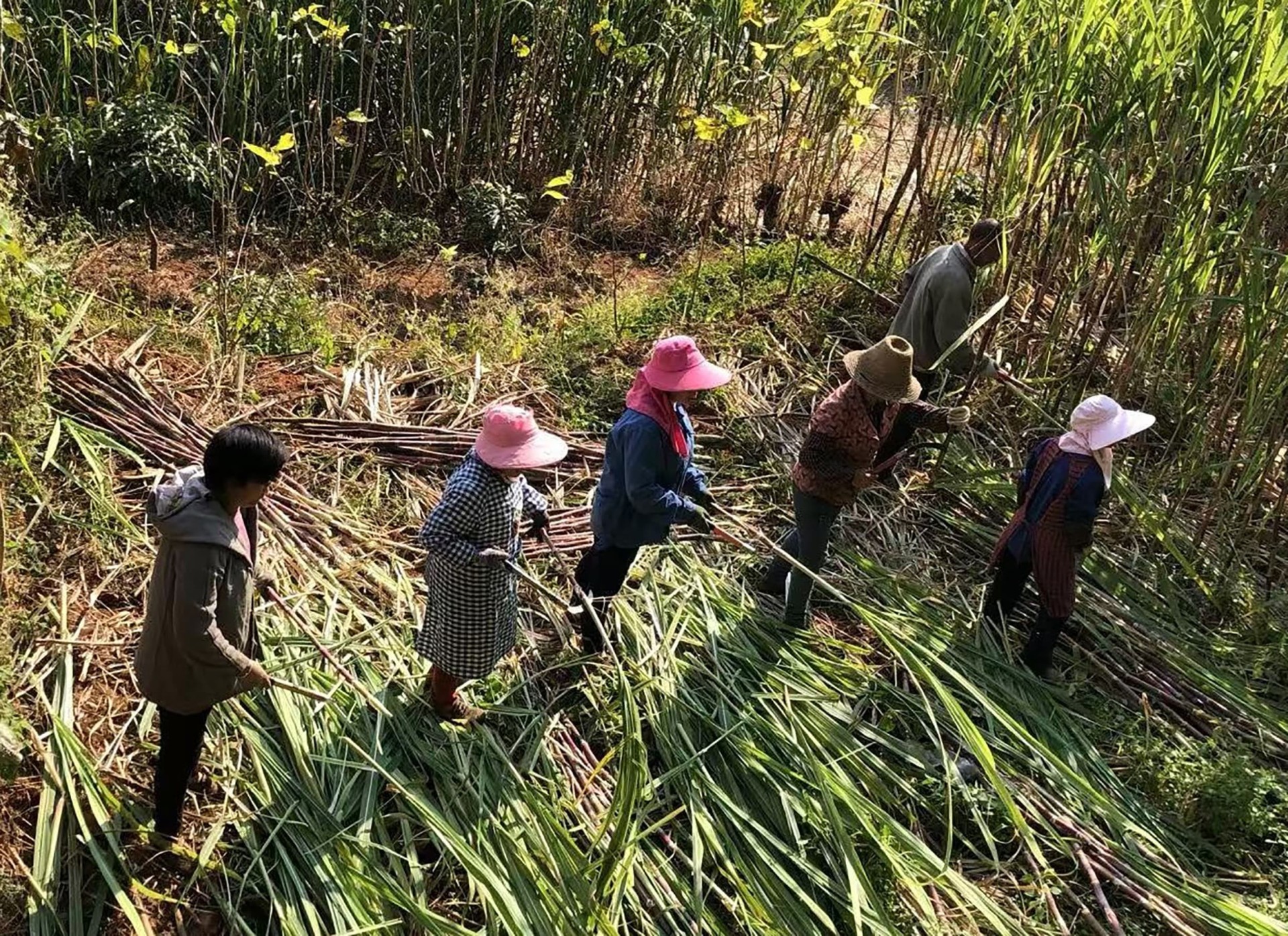
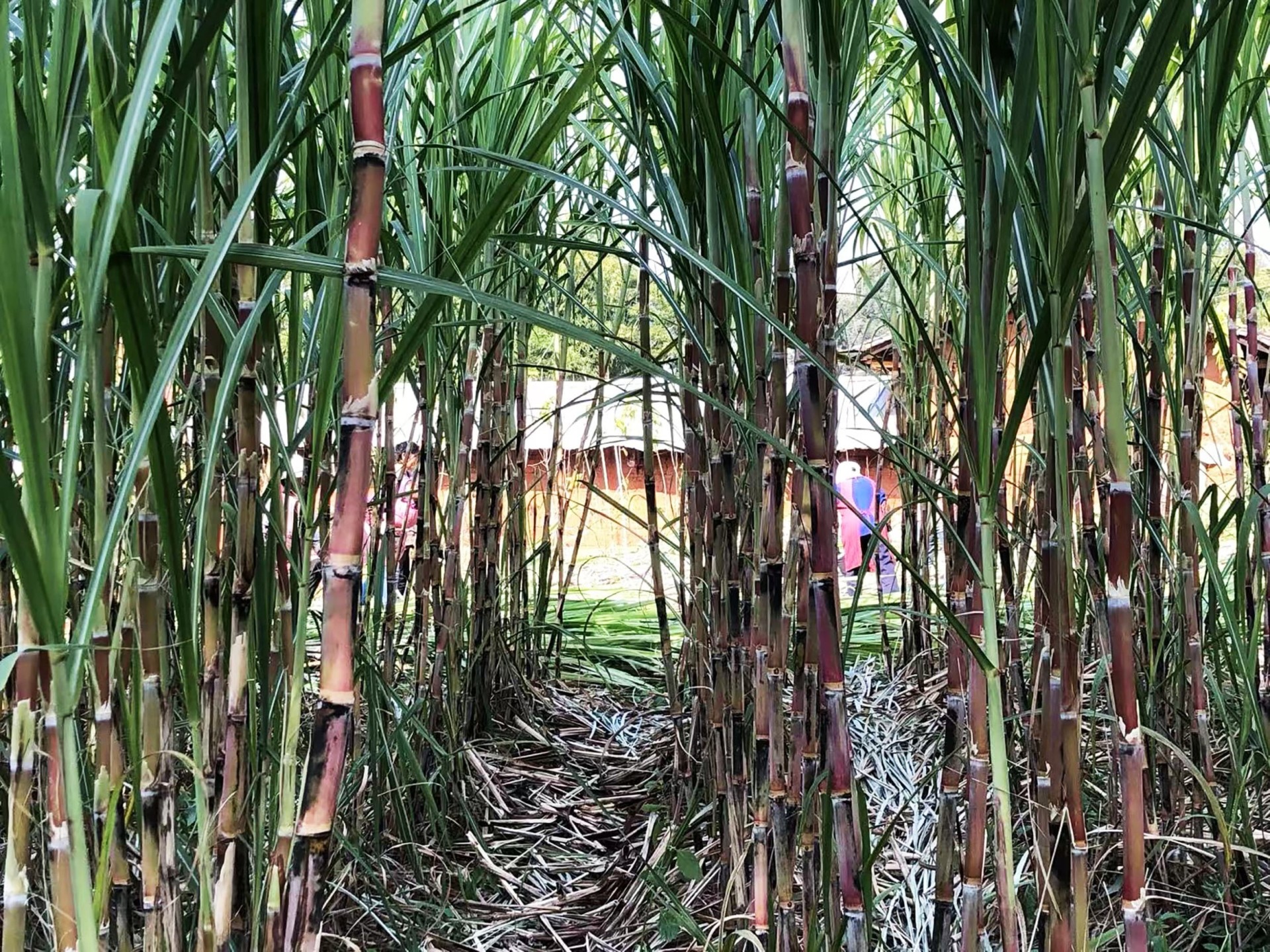
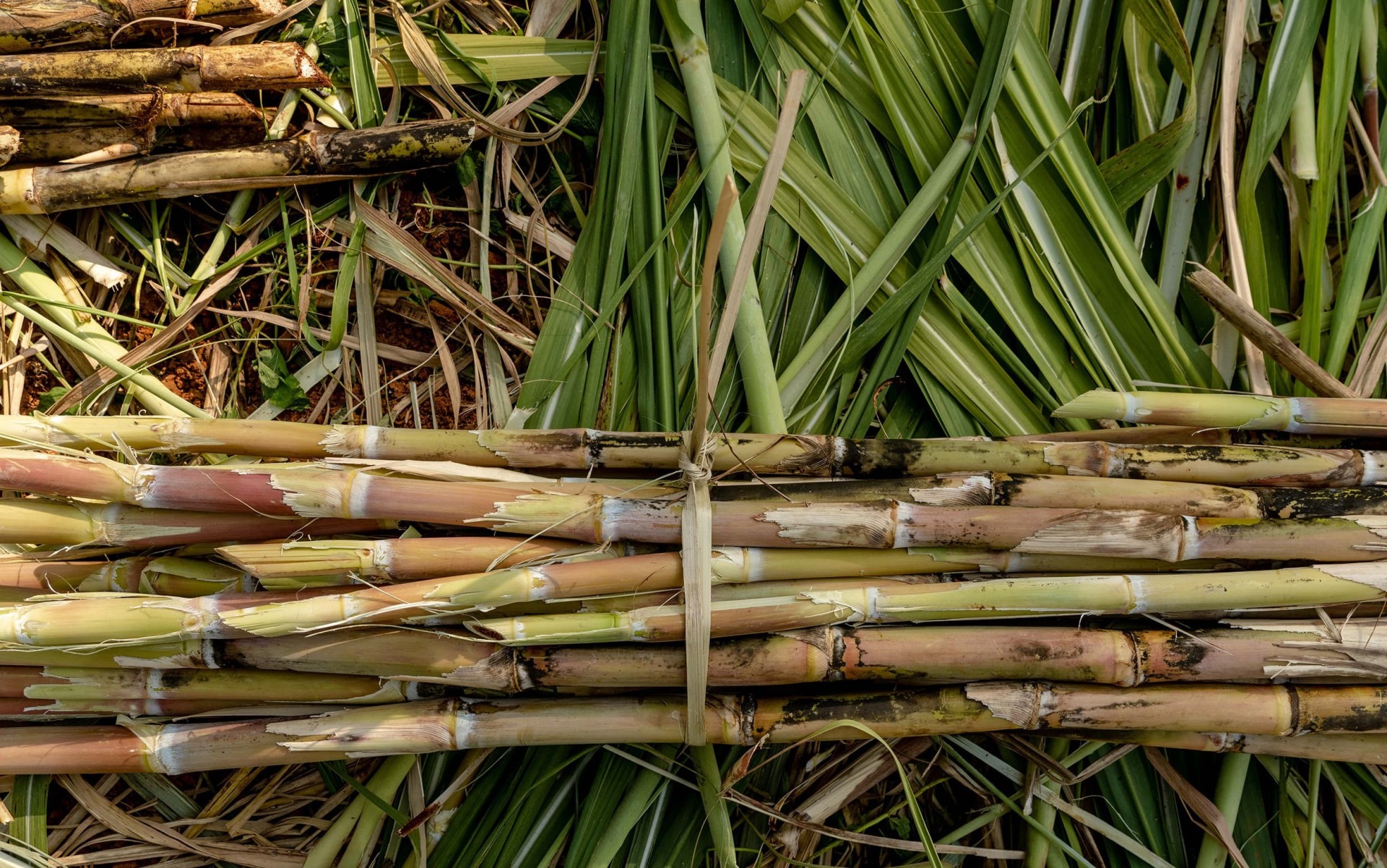
Locals distinguish between varieties by their appearance, taste and intended use. Luohan sugarcane, for example, has thick joints and yellowish-purple skin. Another local variety, known as green-skinned sugarcane, is relatively slender, with skin ranging from blue-green to pale greenish white. For growers, these differences are about more than appearance. They affect how the cane grows, when it is harvested and how it can be processed.
Villagers also refer to sugarcane they have kept for planting, passing it down and growing it over successive generations, as jia zhe—literally, “family cane”. At the end of each growing season, growers set aside cane stalks for planting the following year. The variety survives through this annual cycle of cultivation, without any dedicated system for its preservation.
Records of local produce in the Gazetteer of Huili Prefecture, compiled during the Qing dynasty, already mention varieties such as Luohan sugarcane. This points to a long history of sugarcane cultivation in the area. Historical records offer a starting point, but whether these varieties still exist today, and what they have become, can only be understood by returning to the fields.
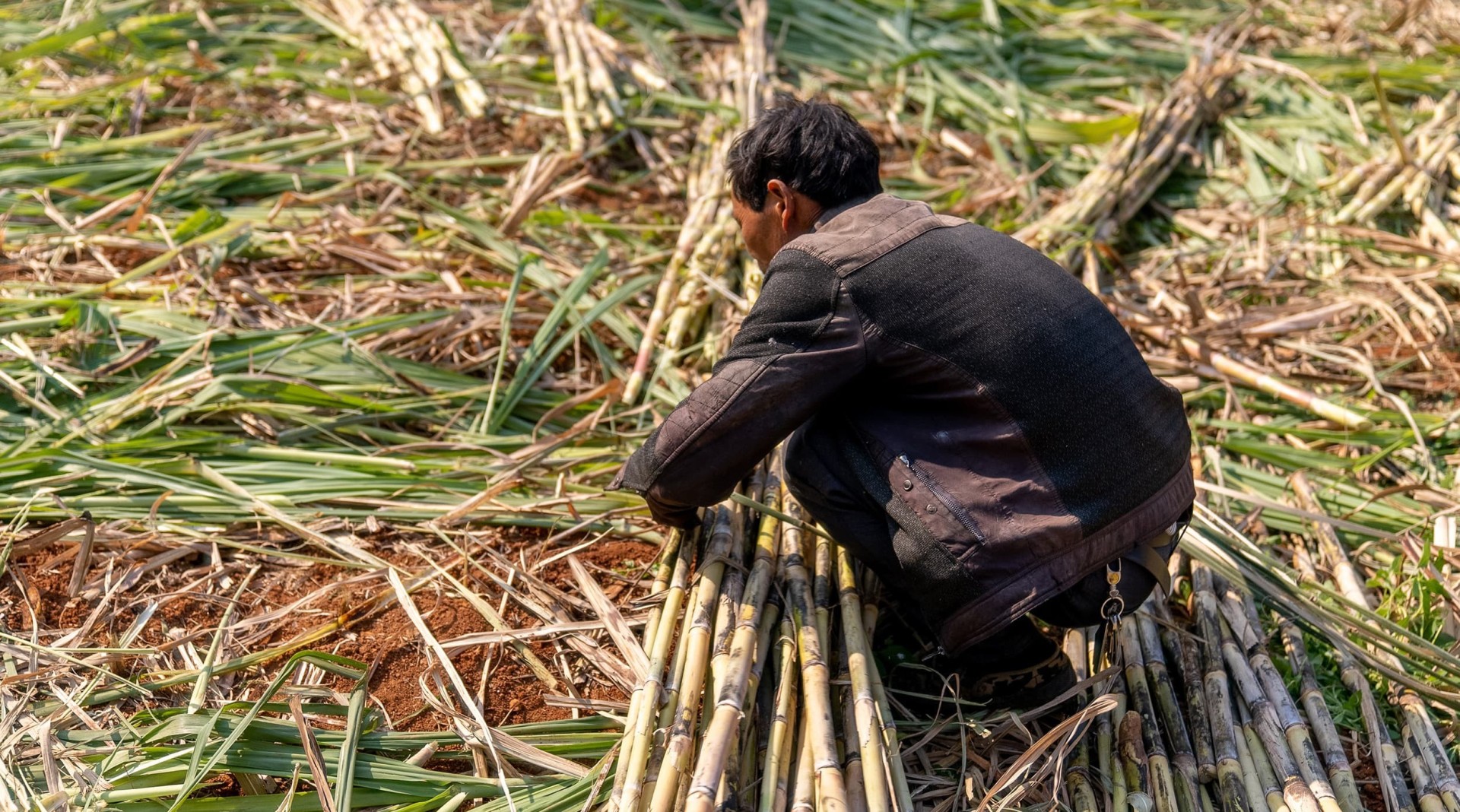
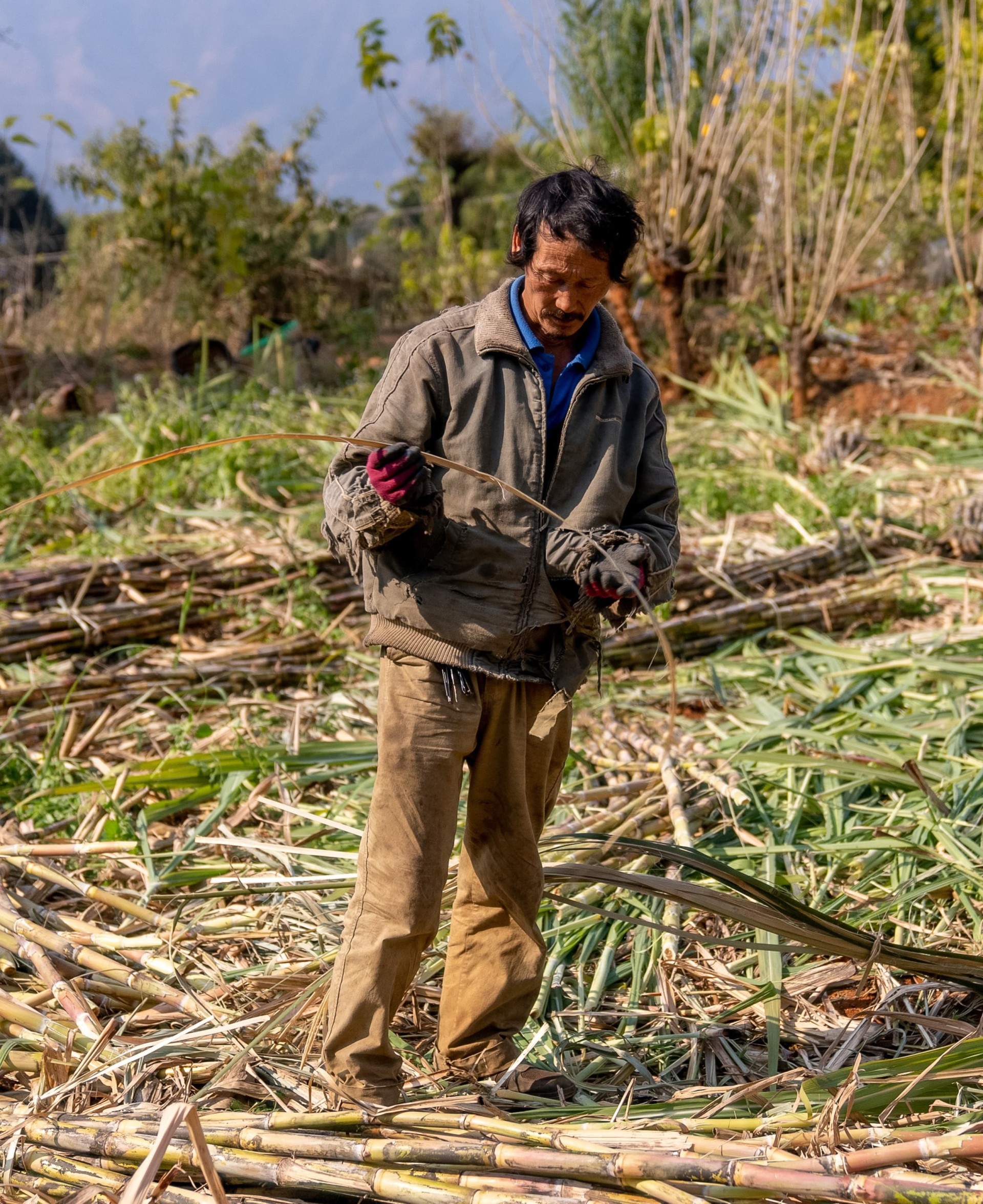
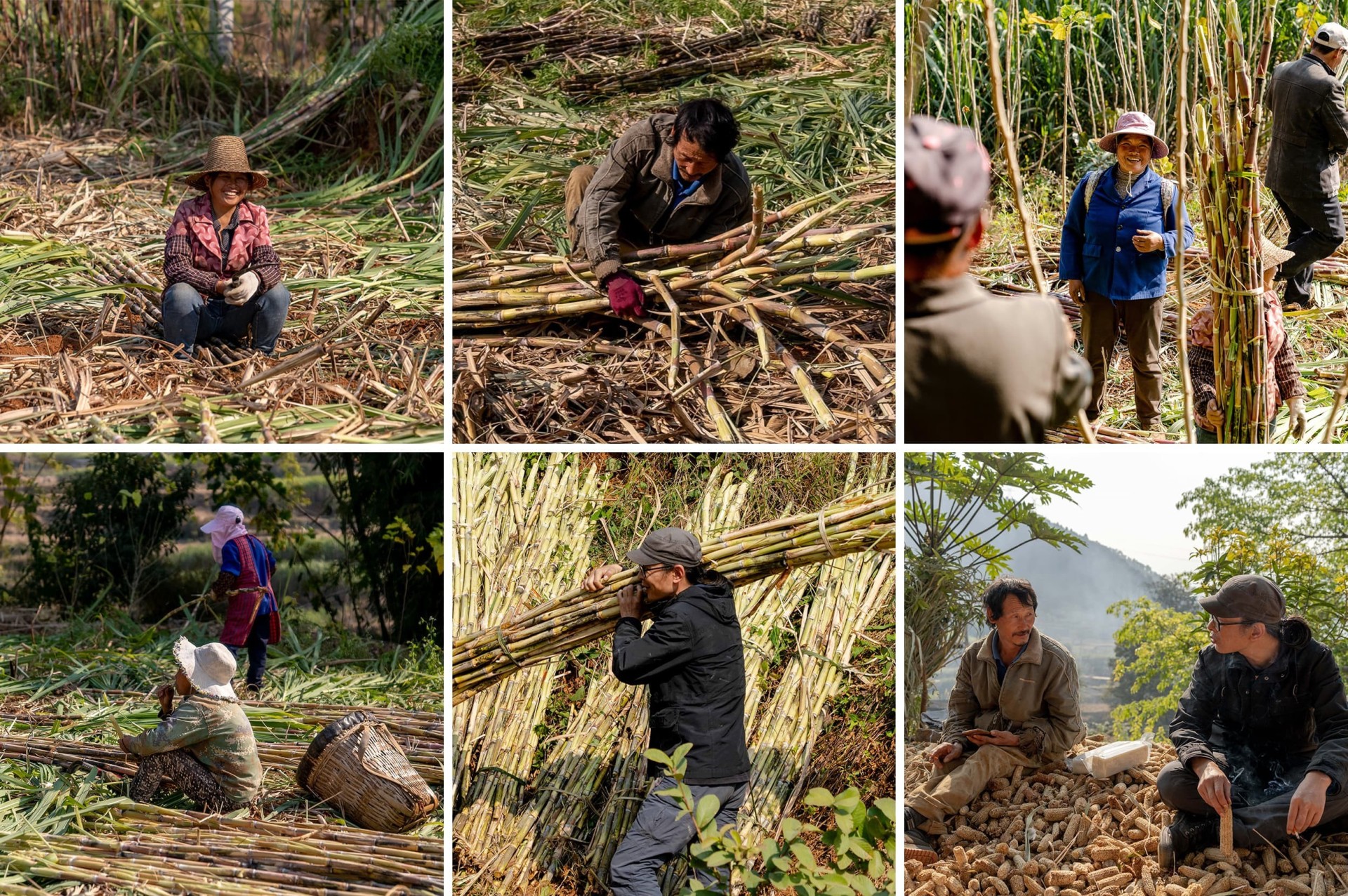
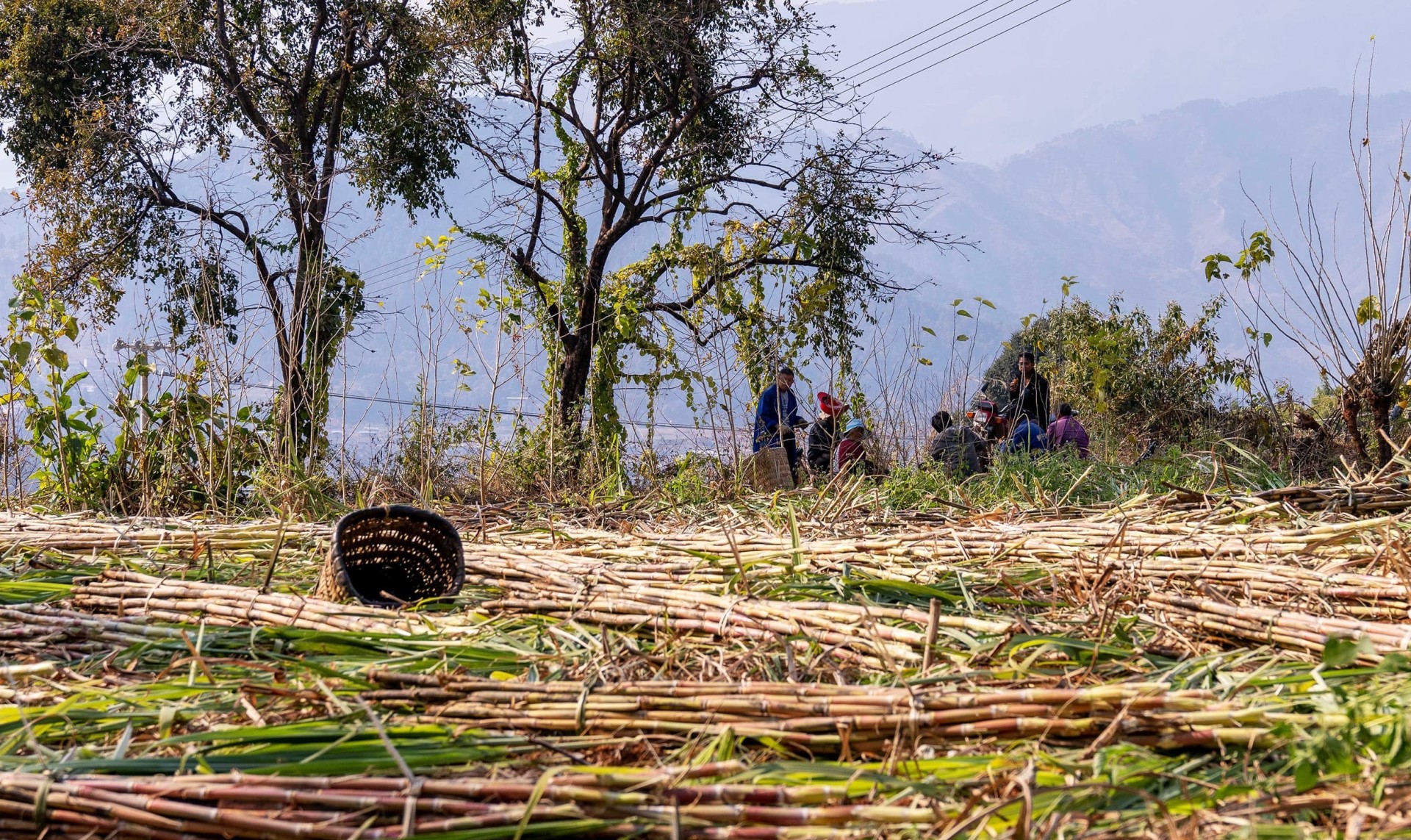
Sugarcane in Diansha Pass is still grown mainly on small, scattered plots. Each household decides what to plant, which cane to keep for seed, when to harvest and when to send the crop for processing, according to the conditions of its own land. When to plant, how to tend the crop, when to cut it, and which varieties are best suited to particular methods of processing—these are forms of knowledge that have never been fully set down in writing. They persist instead in the routines of everyday work.
Whether an old variety survives depends first on whether anyone is willing to keep growing it. Each variety has its own growing cycle and processing characteristics. Yield, planting time, labour requirements and the eventual selling price all influence a grower's decision about what to plant the following year. When a variety takes longer to mature but brings no corresponding return, it is only natural for growers to reconsider whether it is worth keeping.
Traditional sugar making was another important part of this field visit.
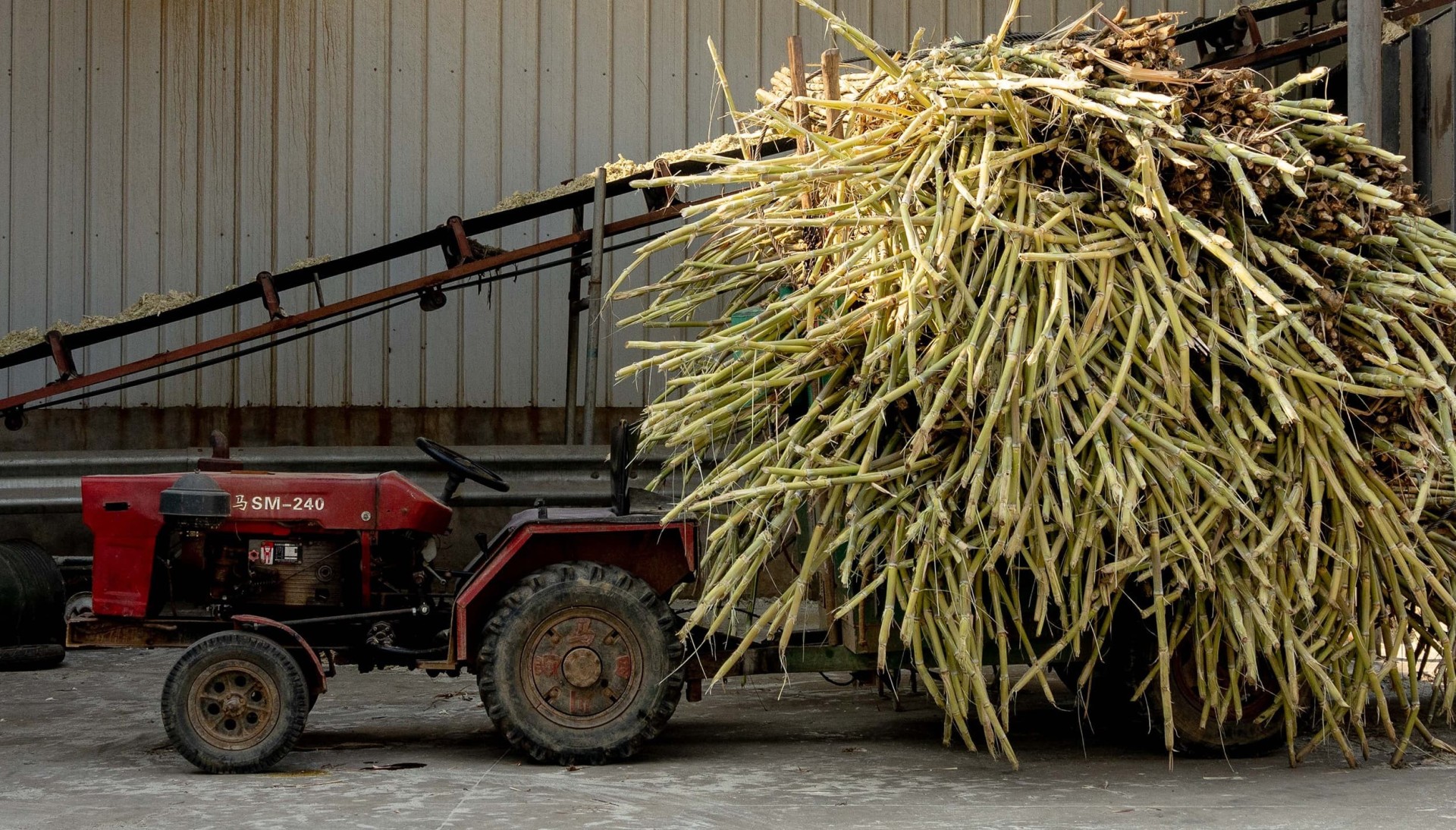
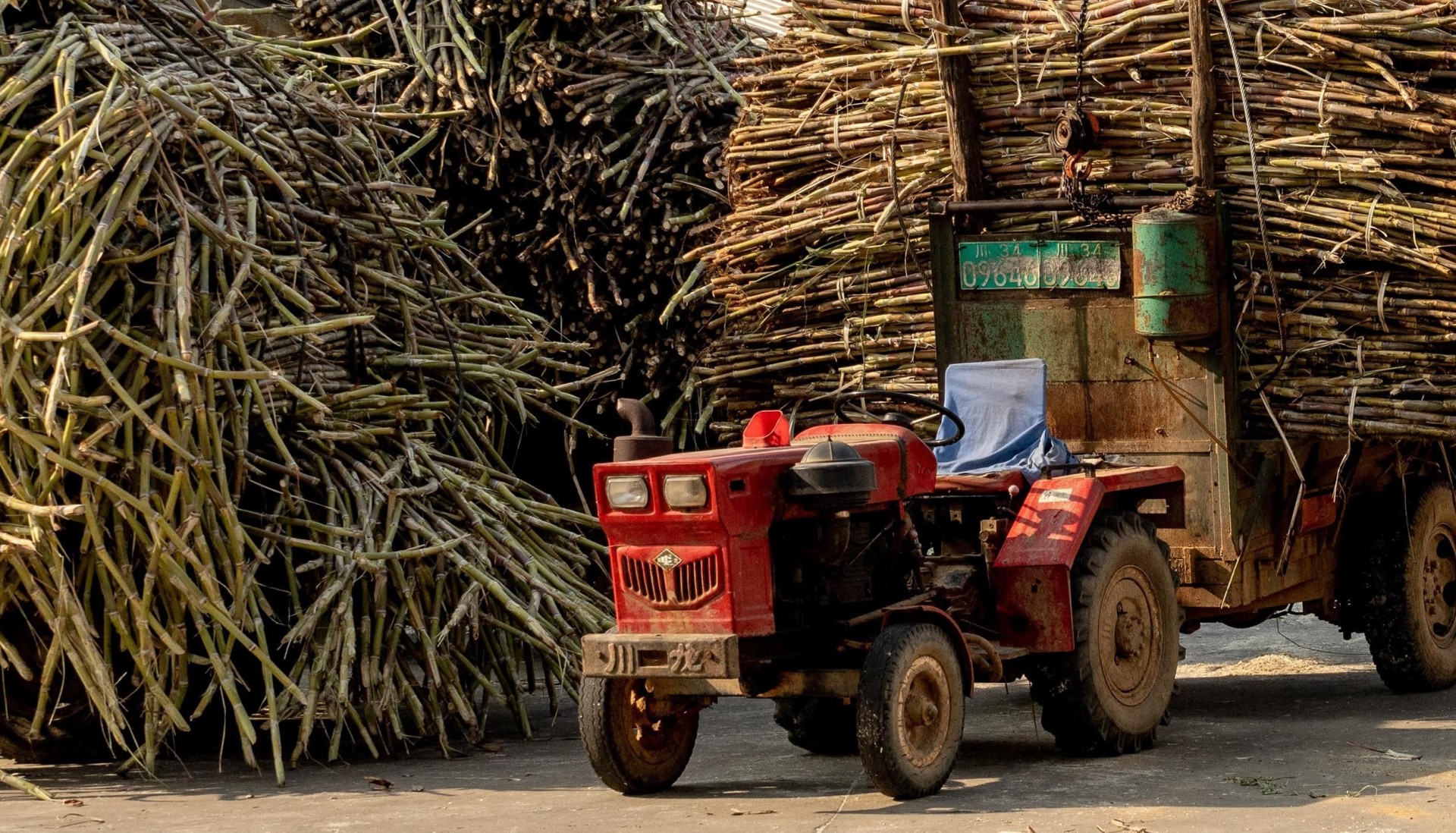
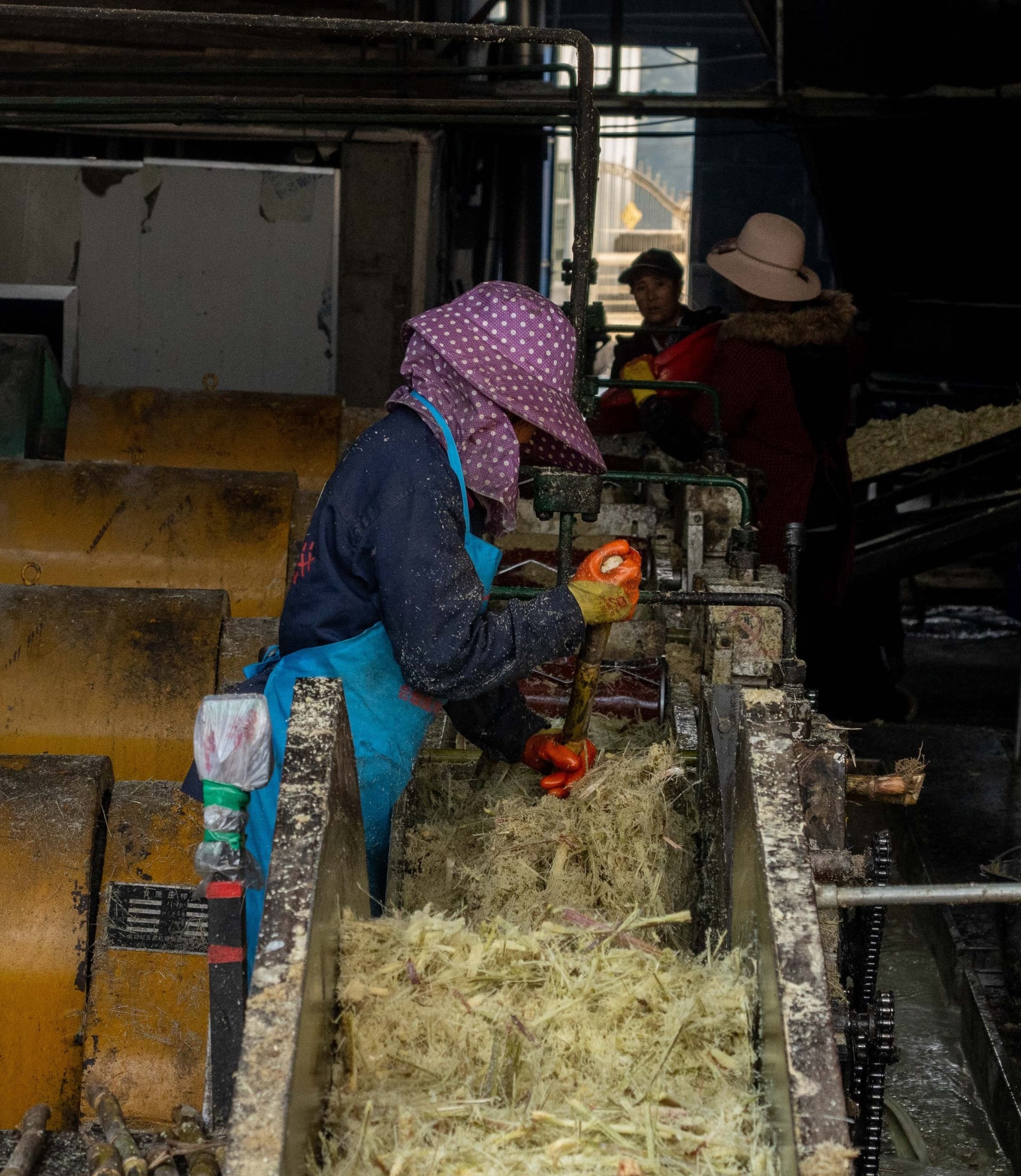
Locals use the phrase “five pressings, three filtrations, two floatings, one settling” to describe some of the key stages in making brown sugar. Today, machines have gradually replaced traditional stone mills for extracting the juice. The stages that follow—settling, filtering, boiling and moulding—still require sugar makers to judge conditions as they work.
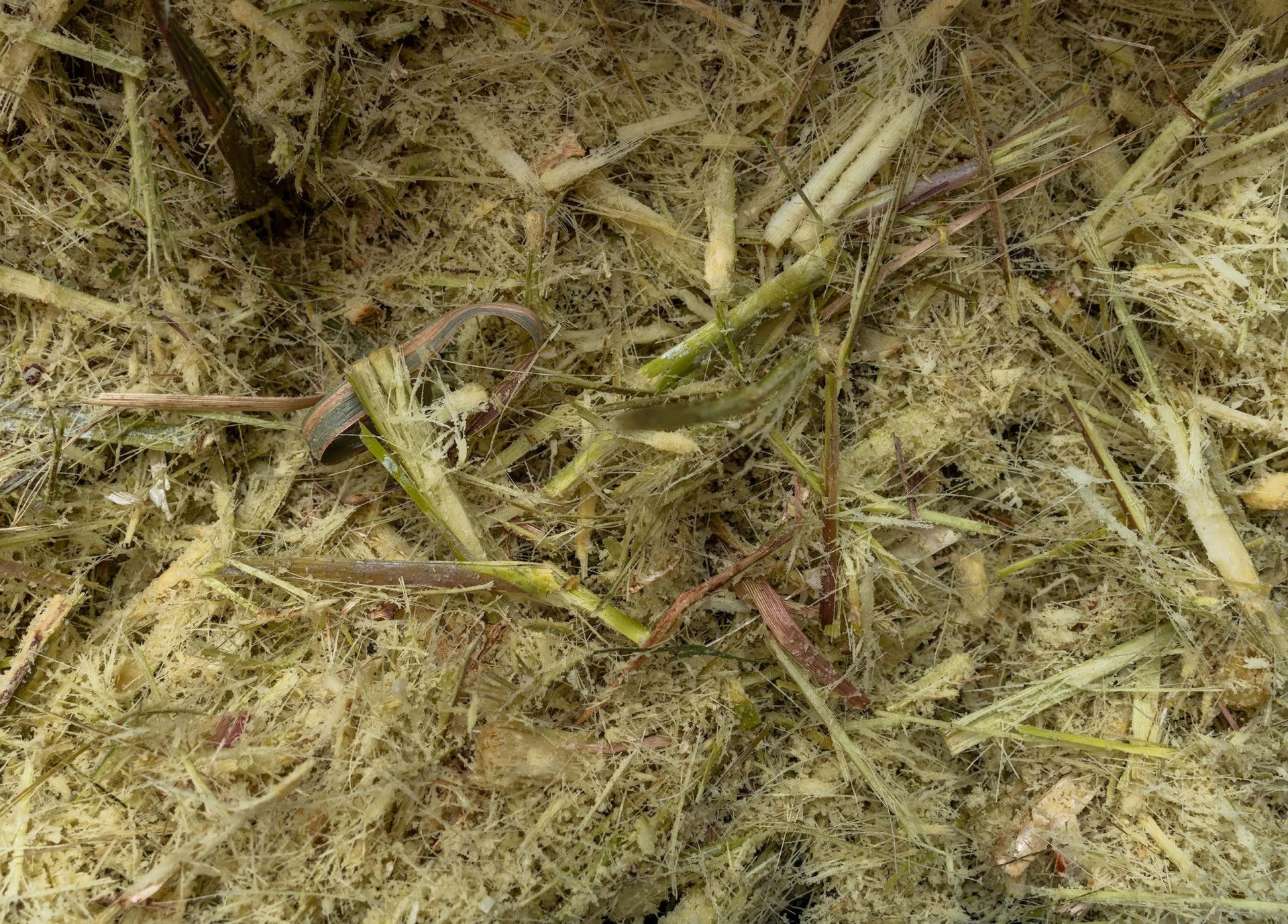
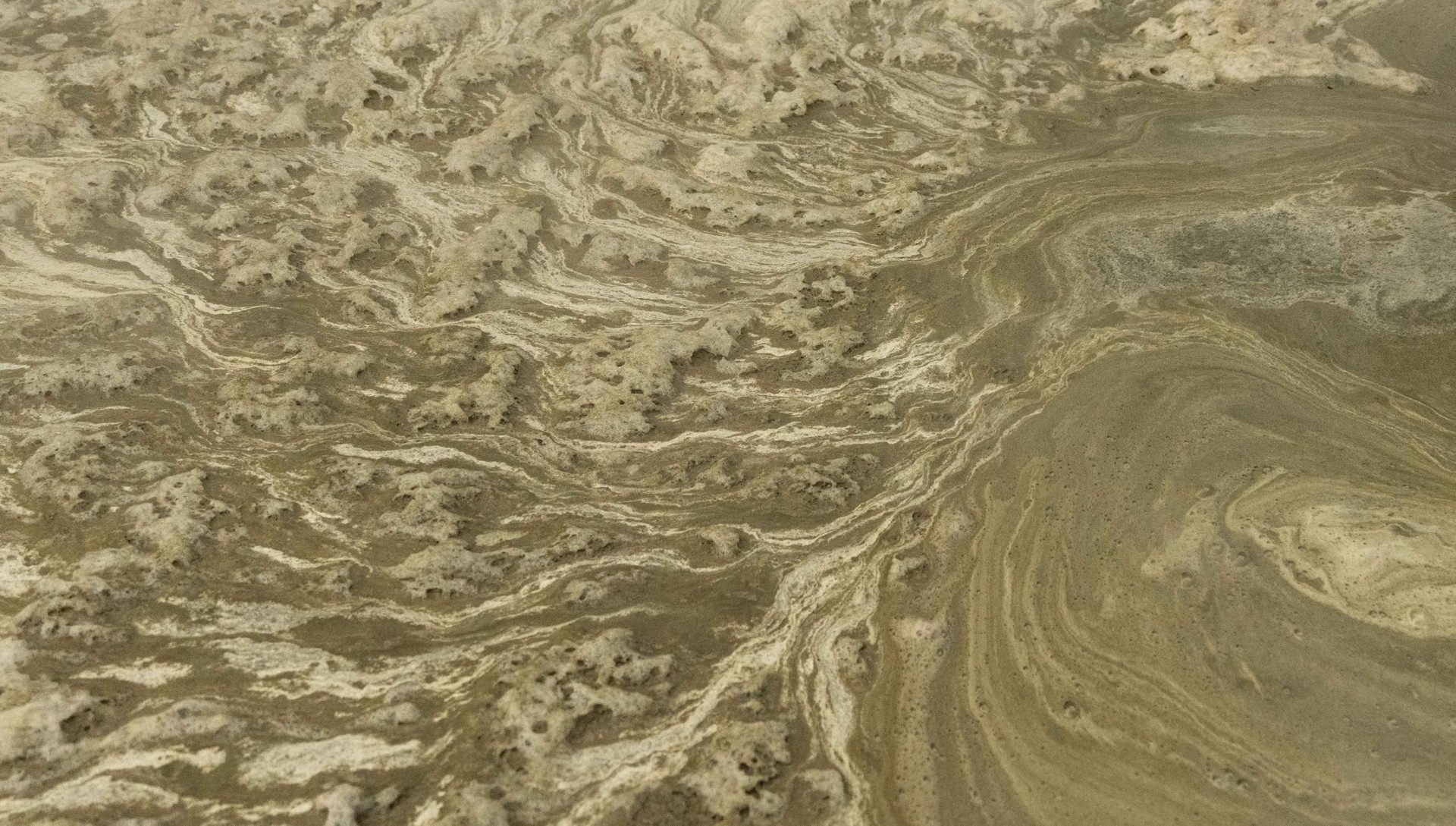
Freshly pressed cane juice is blue-green, with fibres and other impurities suspended in it. After settling and filtration, the juice is poured into rows of iron pans and heated over a wood fire. As the water evaporates, the liquid thickens and its colour gradually deepens.
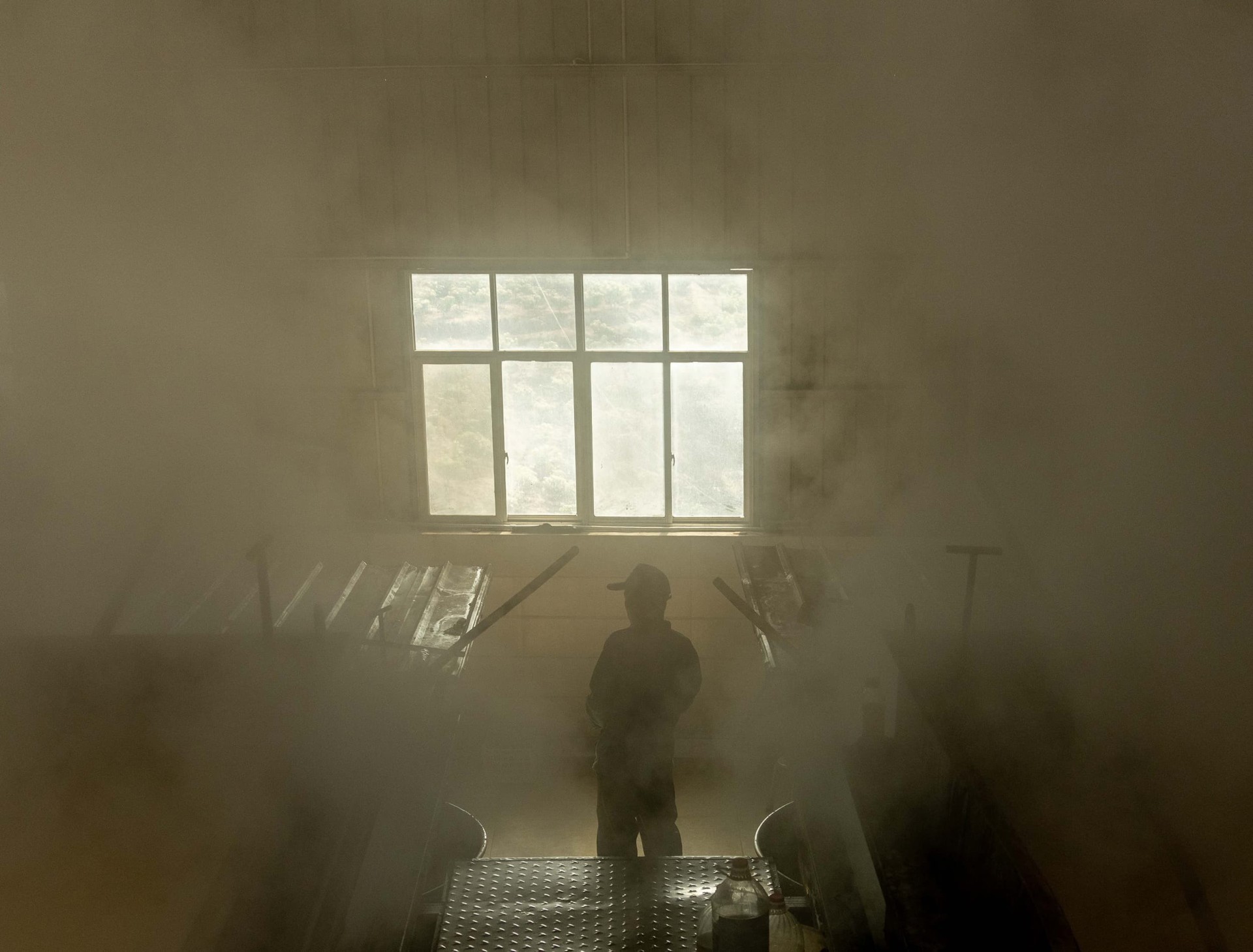
The heat required for boiling sugar cannot be reduced to a fixed setting that can simply be copied from one batch to the next. Workers watch the bubbles, colour and flow of the syrup, stirring continuously as they judge how far the liquid has concentrated. If it is not heated enough, the syrup will struggle to set. Too much heat can darken the sugar and even give it a burnt taste.
These judgements come from years of hands-on experience. Even when the same sugarcane and tools are used, the process is affected by the condition of the juice, the intensity of the fire and the surrounding environment. Sugar makers must adjust their movements as the material changes, rather than simply follow a fixed sequence of instructions.
Once the syrup reaches the right consistency, it is poured into wooden moulds. The mixture is then stirred and turned to encourage it to crystallise, or qi sha—literally, “rise into grains”. As the sugar cools and hardens, it becomes brown sugar. The process may look straightforward, but every stage, from juice to finished sugar, depends on an understanding of the material and how it behaves.
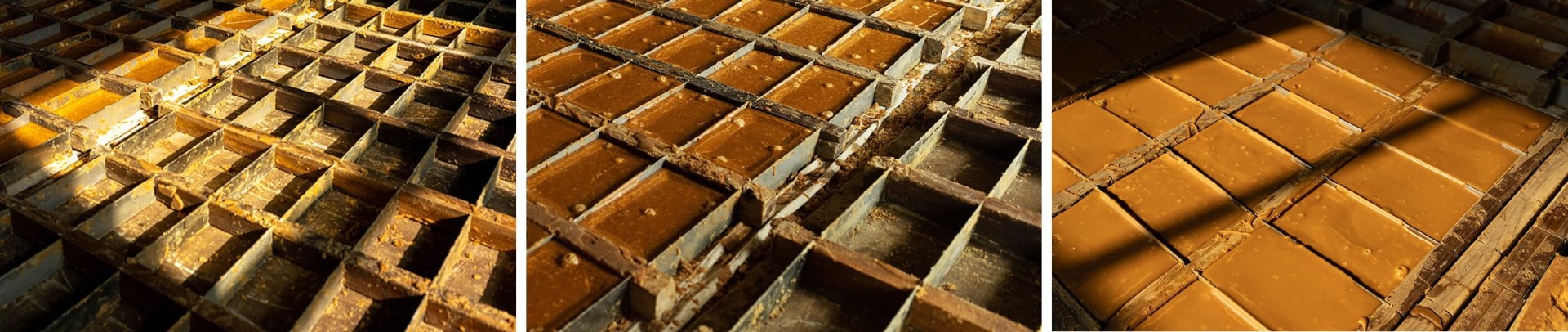
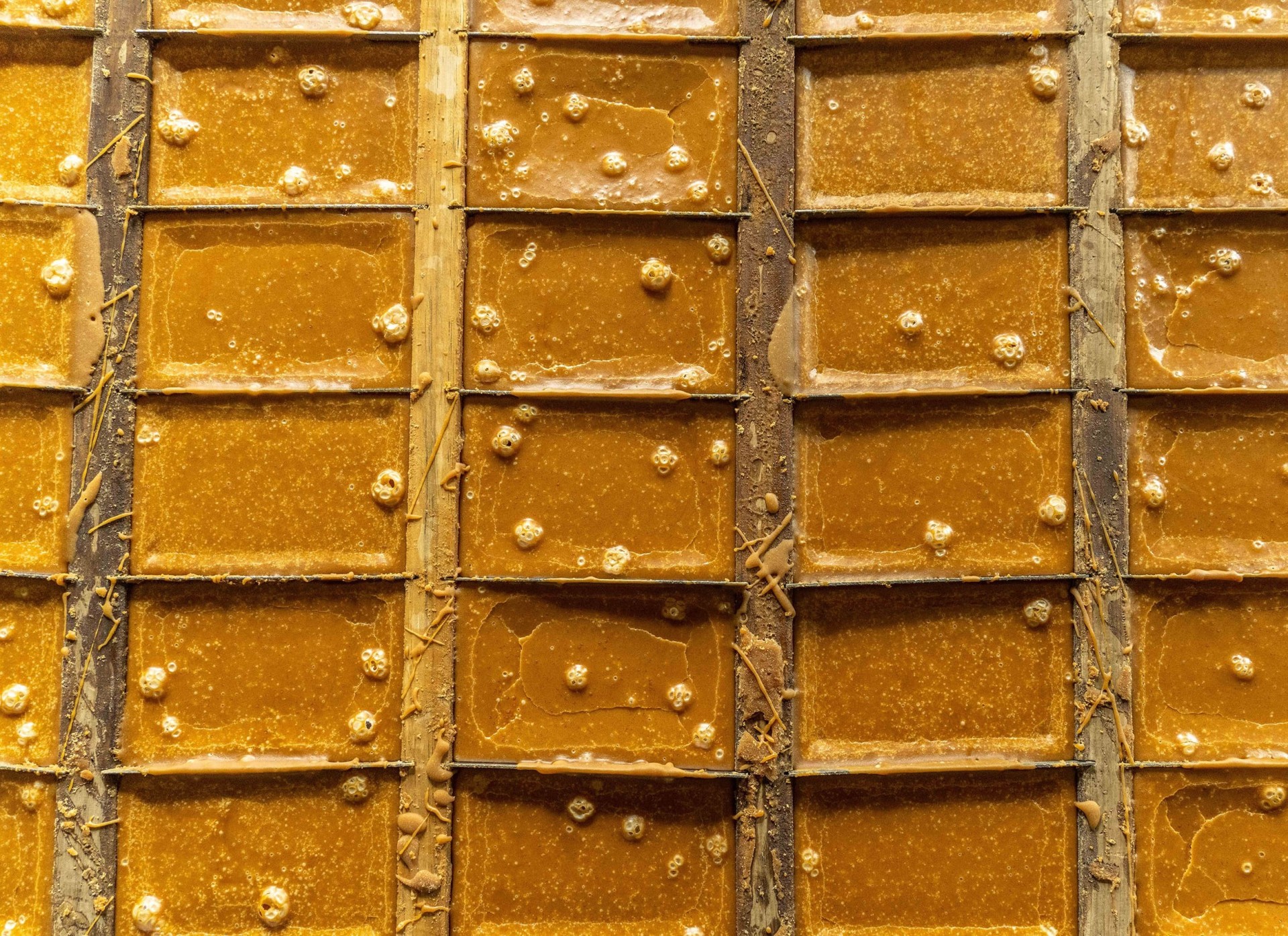
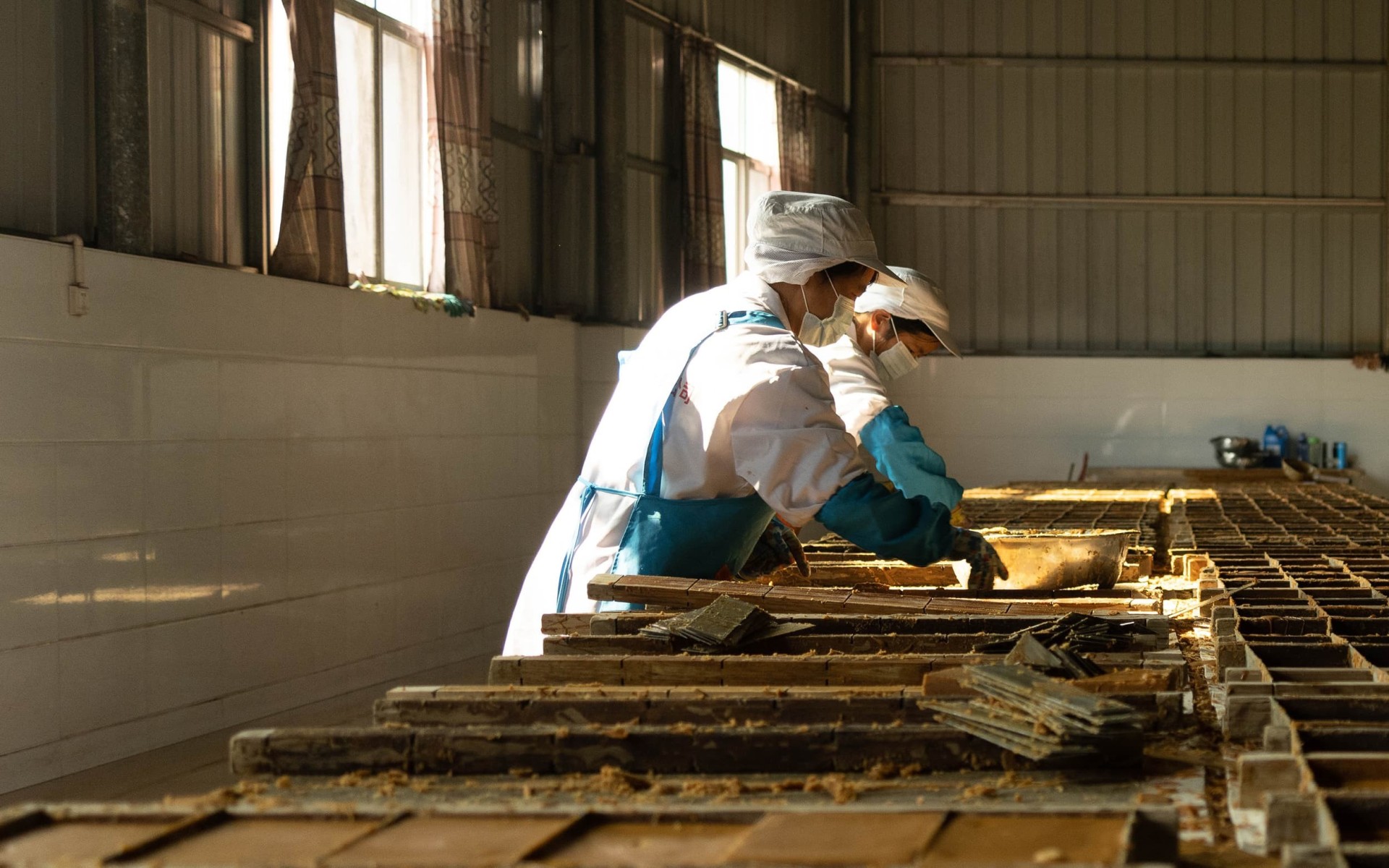
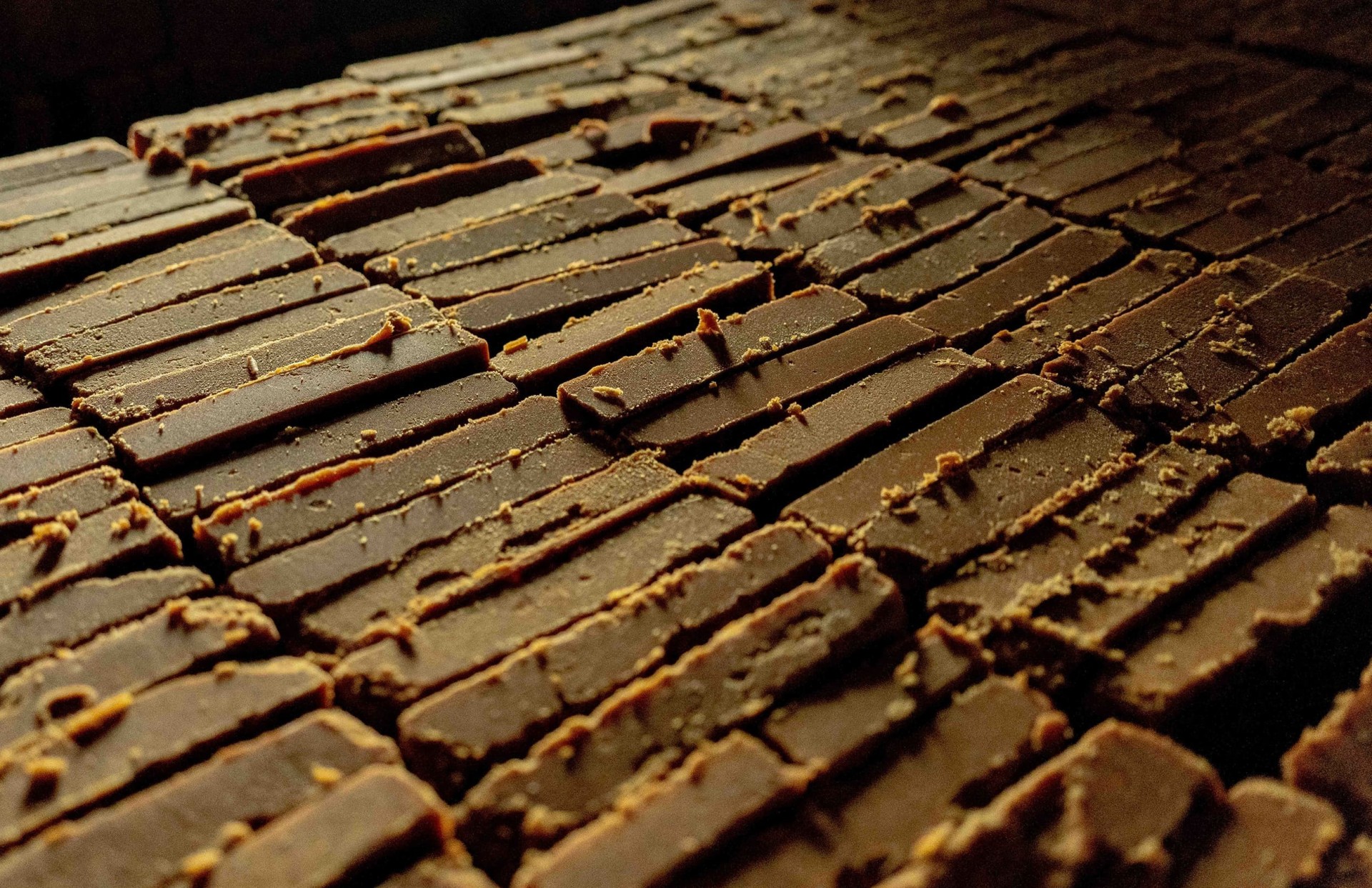
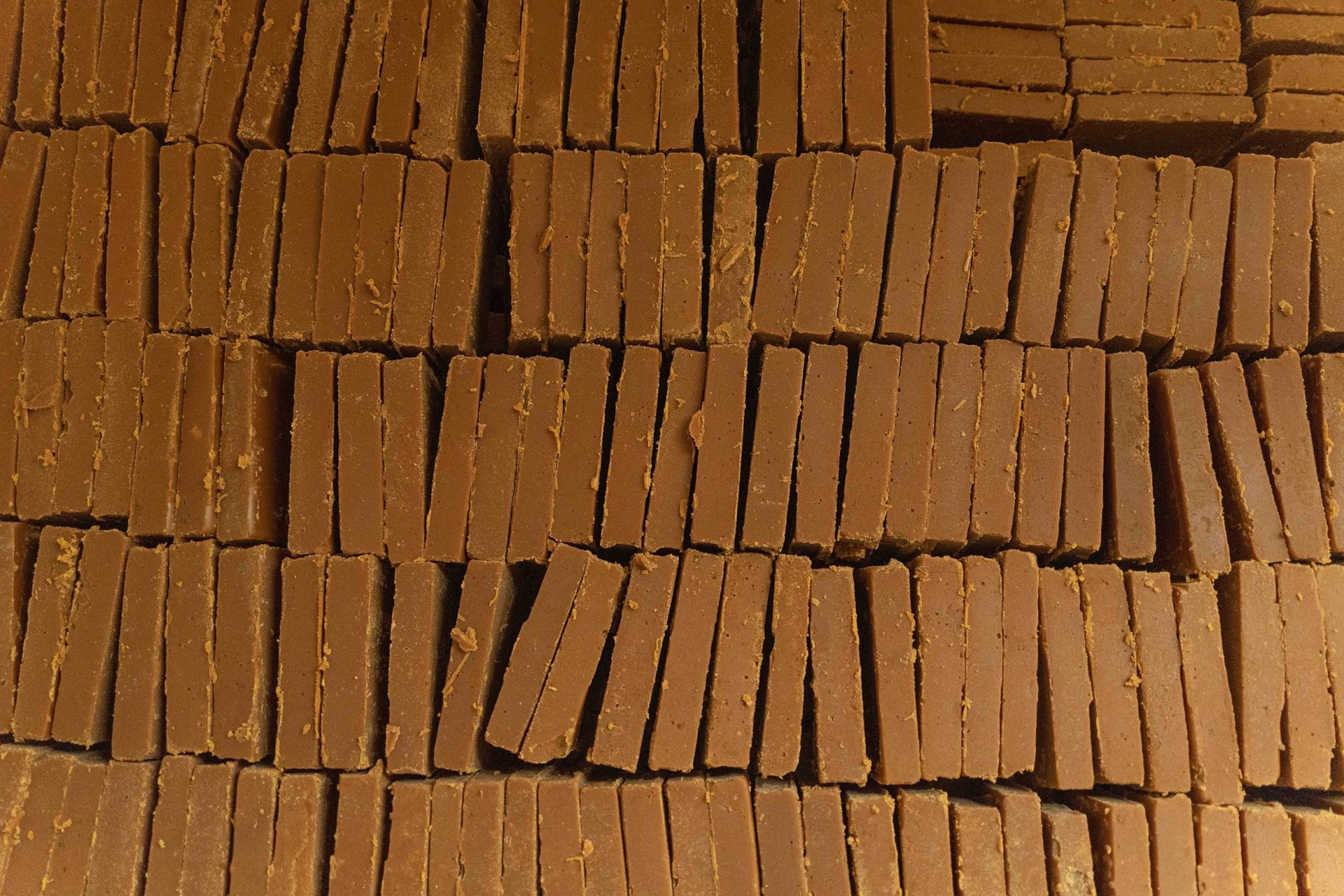
I tasted the freshly made sugar. Its cut surface was visibly granular. It melted gradually in my mouth, leaving behind the aroma of the sugarcane itself. When dissolved in hot water, it produced a reddish-brown drink. Its flavour was inseparable from the process that had produced it.
Machines can take over some of the physical work, but they cannot necessarily replace a worker's ability to observe the syrup and judge its condition. As the number of experienced sugar makers declines, the opportunities to pass on this knowledge may disappear along with the work through which it is practised.
Old sugarcane varieties face more than one kind of pressure.
Low yields, long growing cycles and the labour required for cultivation and processing all affect growers' decisions. In Diansha Pass, I also learned of another issue connected to sugarcane farming: the way leaves and stalks left in the fields after harvest had been handled was changing.
In the past, dry leaves and stalks left after harvesting were often burned in the fields. Locals believed that burning cleared the remaining plant matter, helped reduce certain pests and diseases, and left ash in the soil. Later, local authorities prohibited the burning of sugarcane residues in response to environmental requirements. Farmers were left to pile the material at the edges of their fields or find other ways to dispose of it.
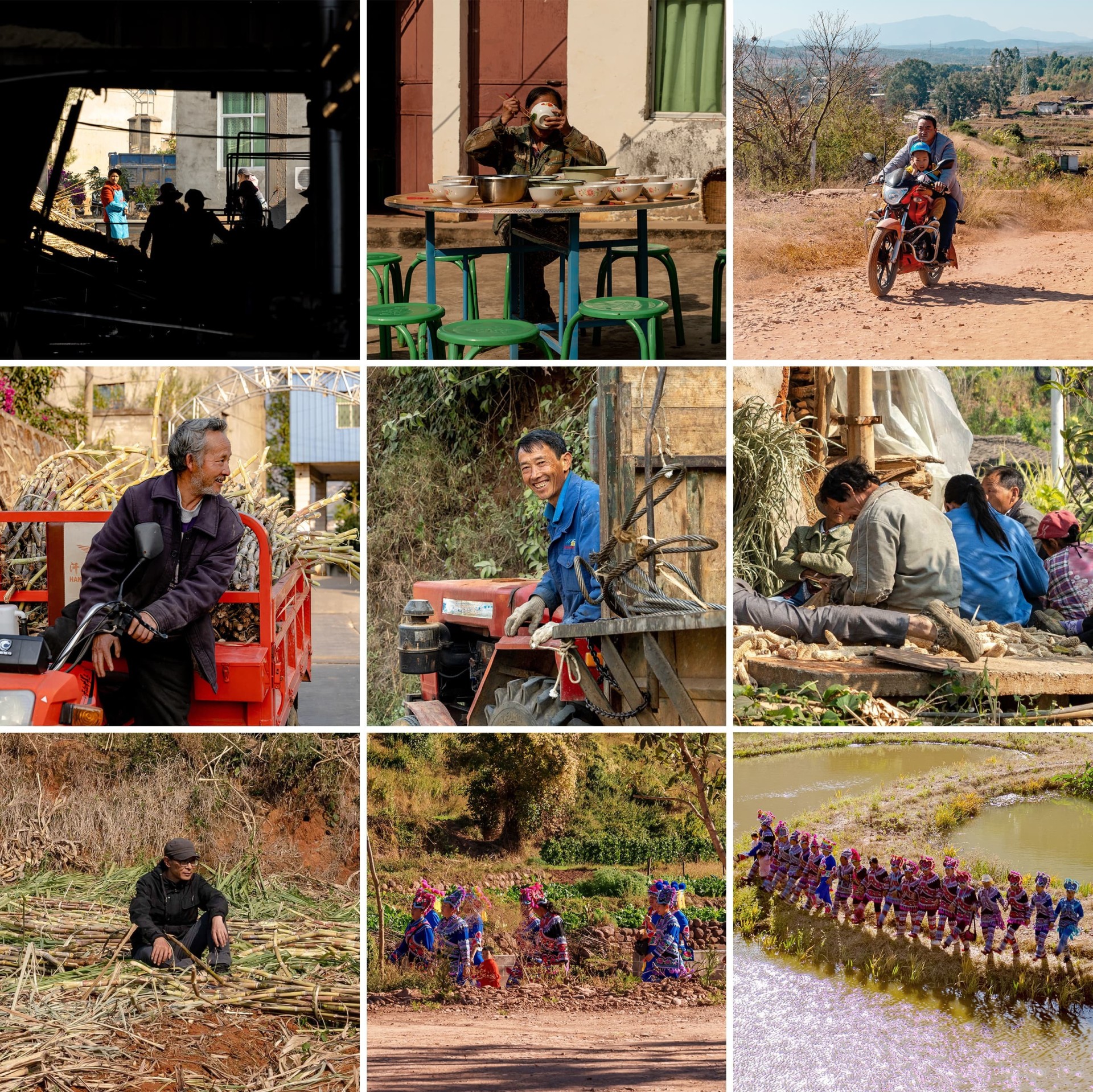
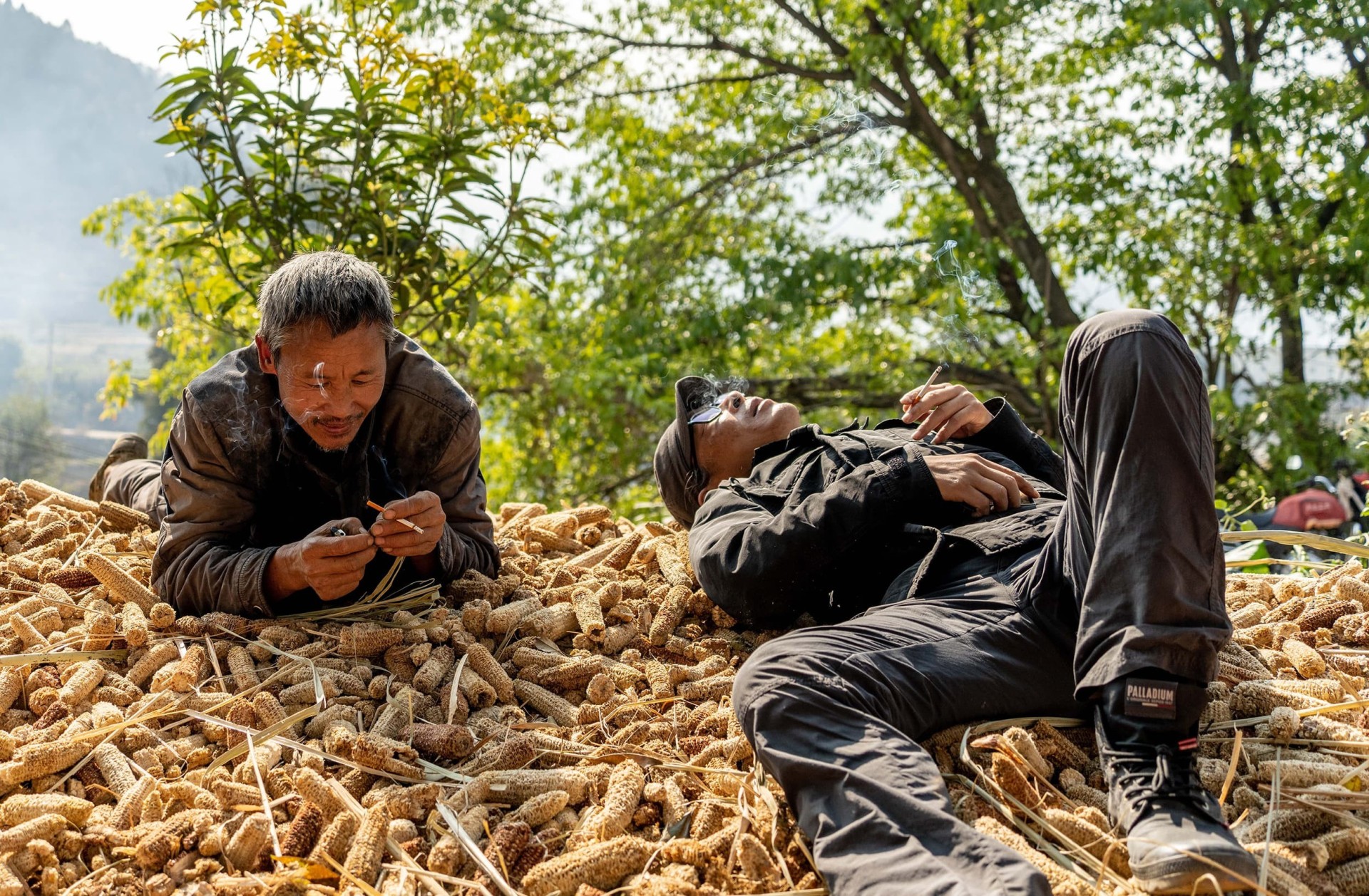
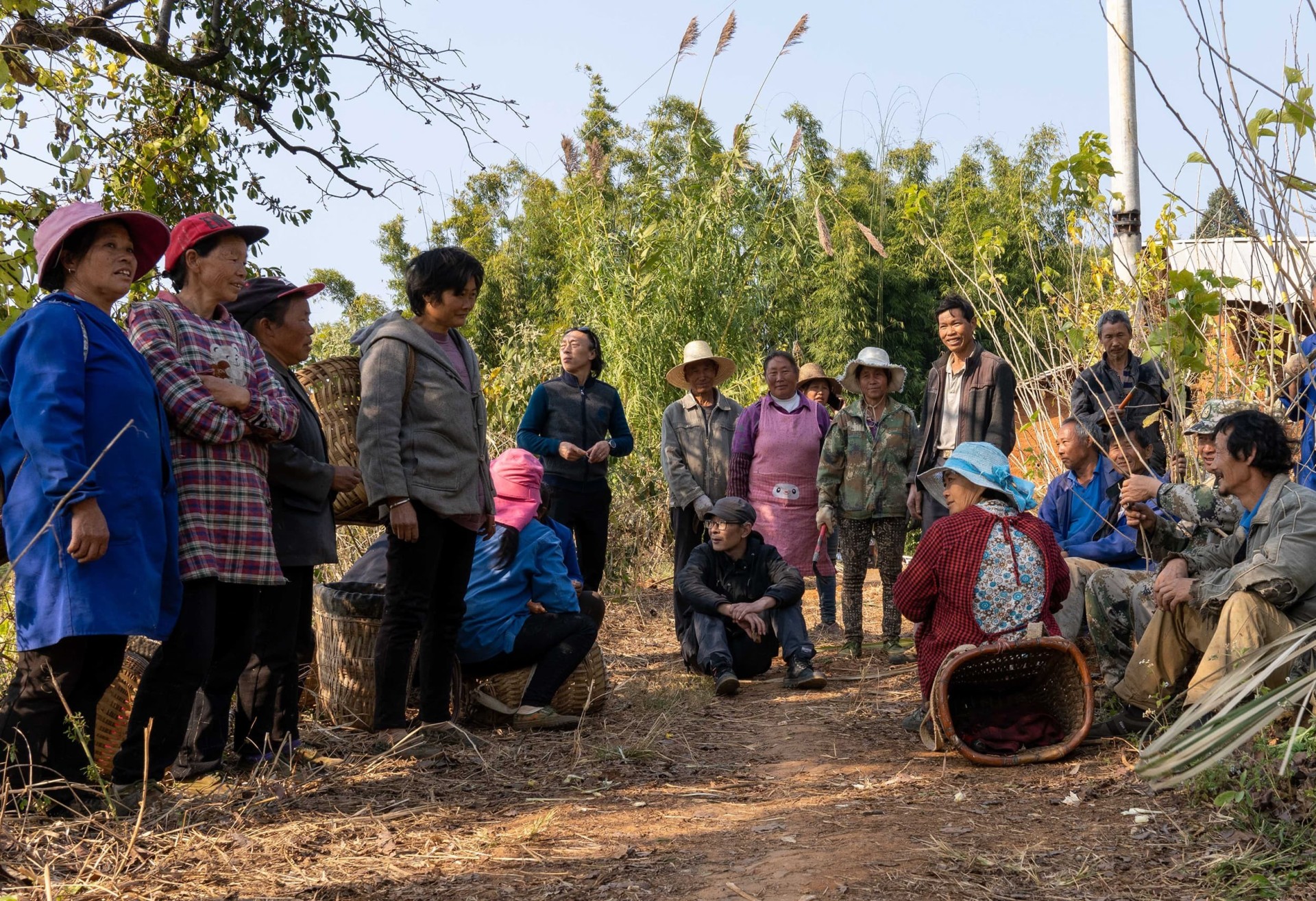
Villagers told me that sugarcane pests and diseases had become markedly worse in 2019. Some plots suffered severe yield losses, while others came close to complete crop failure. They believed the change in how the residues were handled was connected to the problem.
Yet by the time of my visit, I could see sugarcane leaves and stalks being burned again in harvested fields. No one told me that a formal policy change had taken place, but the fires had clearly returned.
A single field visit is not enough to attribute the pest and disease problems of 2019 entirely to the burning ban. Still, the villagers' accounts, together with the renewed burning I observed, point to a question worth considering: when a long-established farming practice is changed, what happens if the alternative does not adequately address the practical problems growers face? Under such circumstances, farmers may return to methods they know and trust.
Local knowledge does not mean that older practices were always right, just as modern governance does not mean that a policy will produce the same results everywhere. The real challenge is to understand the specific ecological conditions and circumstances of production, and to find workable approaches that can be sustained over time while addressing both environmental requirements and farmers' needs.
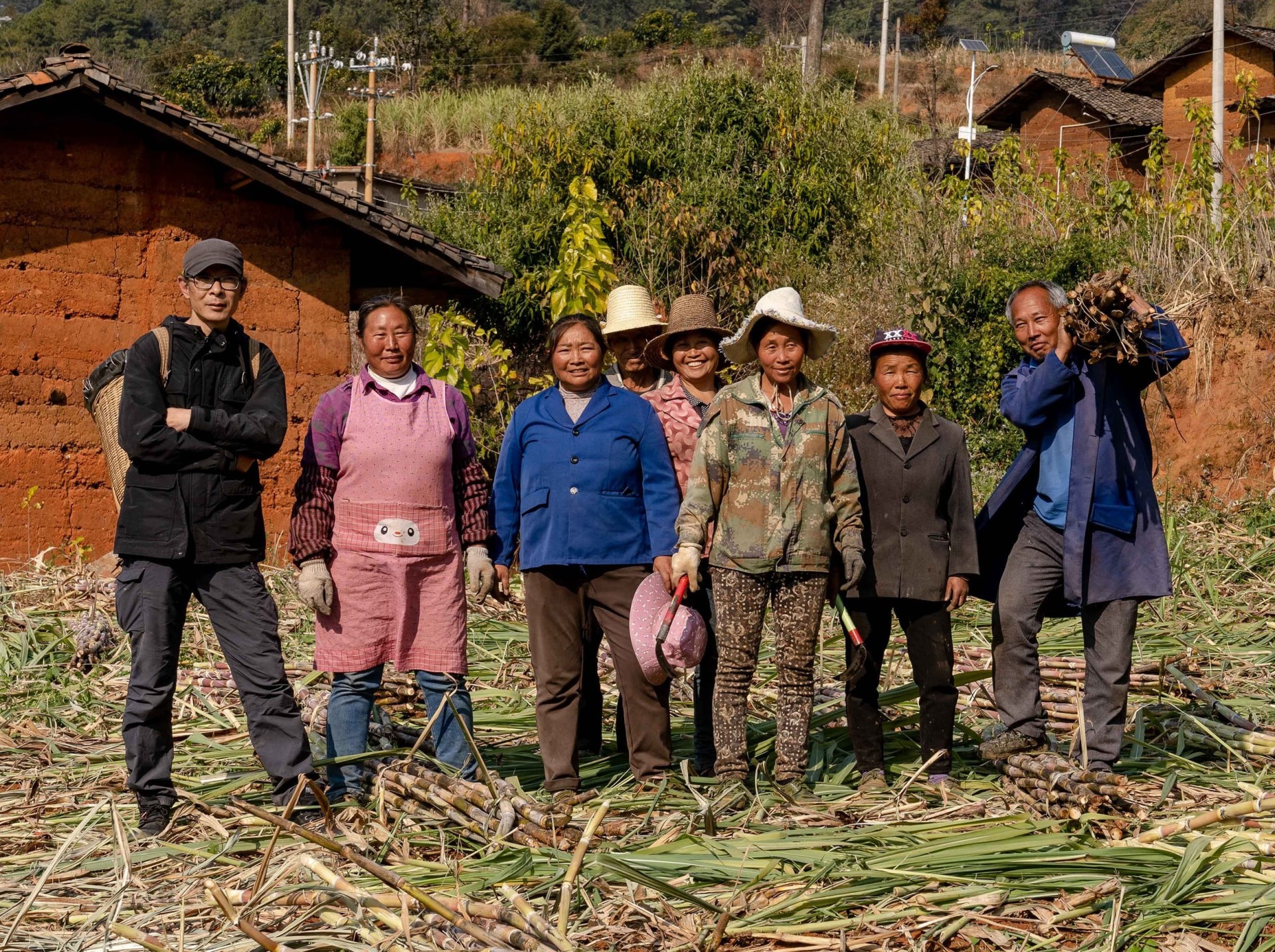
In Diansha Pass, I met Master Hu, one of the few people in the area who still makes sugar using traditional methods.
Speaking about Luohan sugarcane, he said, “Luohan sugarcane has been passed down since the Qing dynasty. If our generation lets it disappear, those who come after us may never know what sugarcane grown on this land actually tastes like.”
For Master Hu, Luohan sugarcane is neither just a name in local history nor a cultural symbol that can be preserved in isolation. It is a variety that grows here, planted and harvested by local farmers, then turned into brown sugar by the people who make it.
Growers need a reason to keep planting it. Sugar makers need a reliable supply of cane. And someone must be willing to buy the sugar they produce. Only while these parts of the process remain connected will the knowledge and distinctive flavour of this sugarcane have a chance to survive.
In Diansha Pass, the air still carries the scent of sugarcane. The Anning River continues to flow past the village, and the cane is still growing in the fields.
— Fieldwork Time: December 2020