
NONGZAO Field Notes • A Hundred Li of Terraces
There is always a nerve that leads back to the countryside.
Original Text | Xu Gang • NONGZAO Field Notes
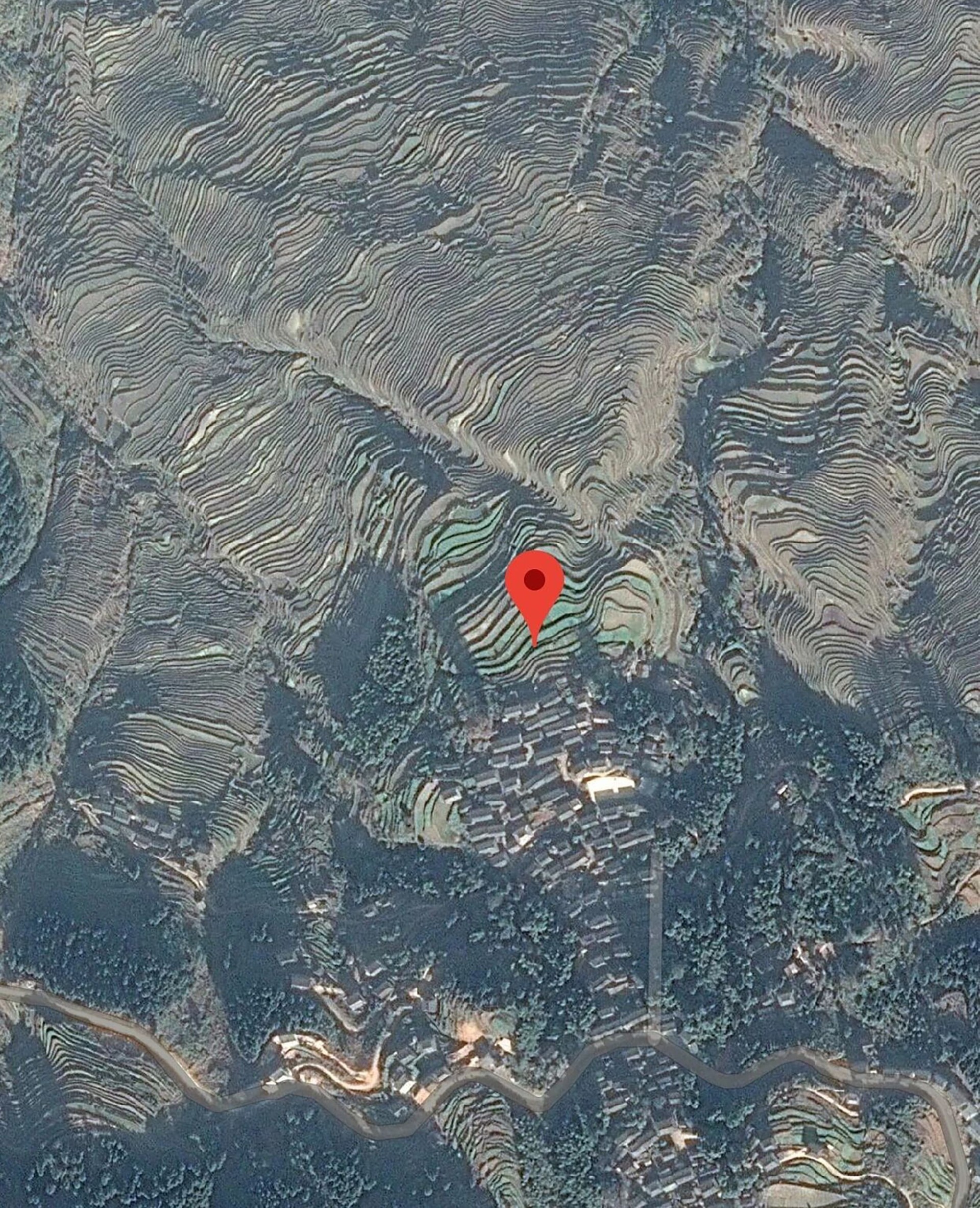

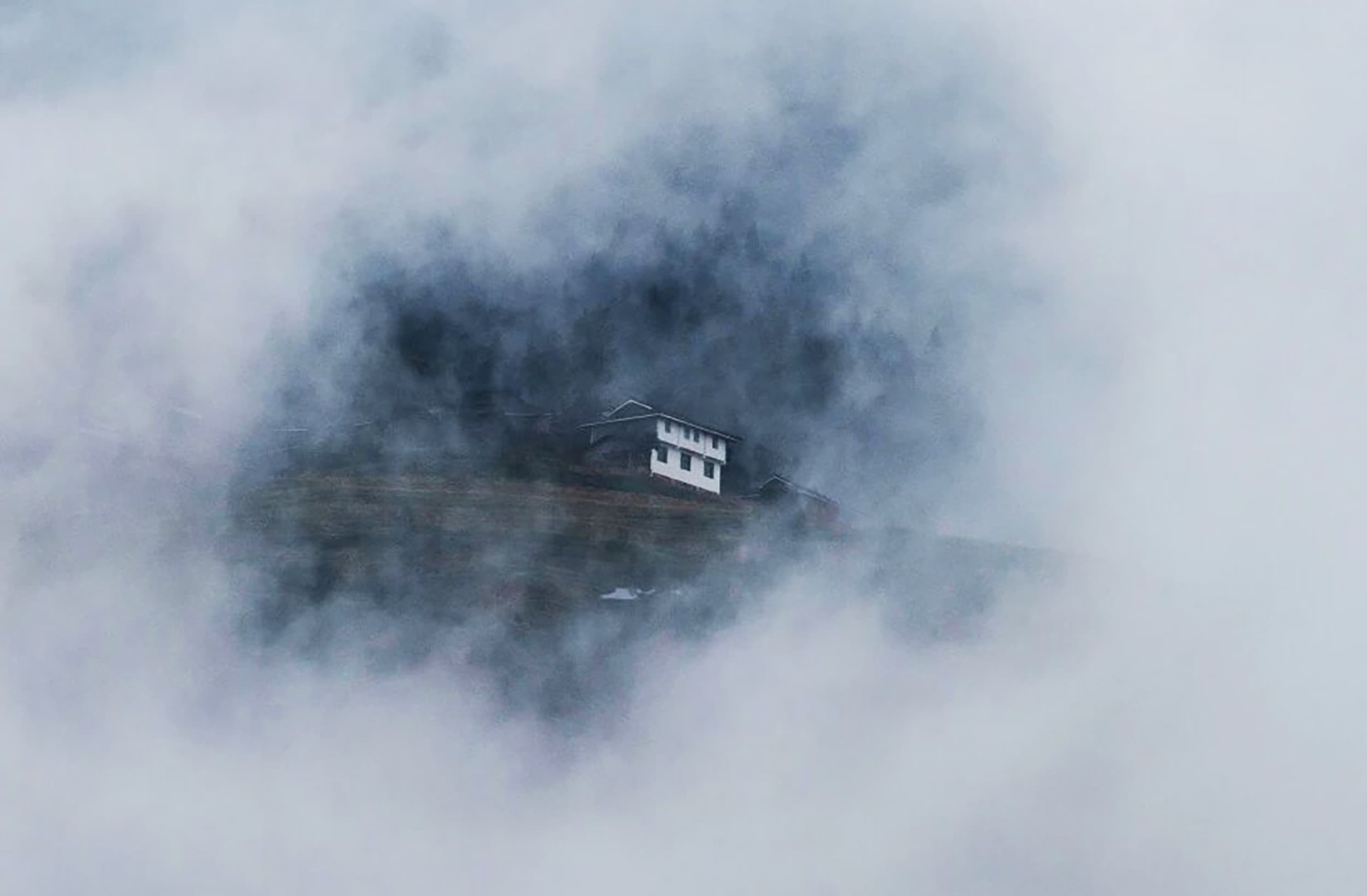
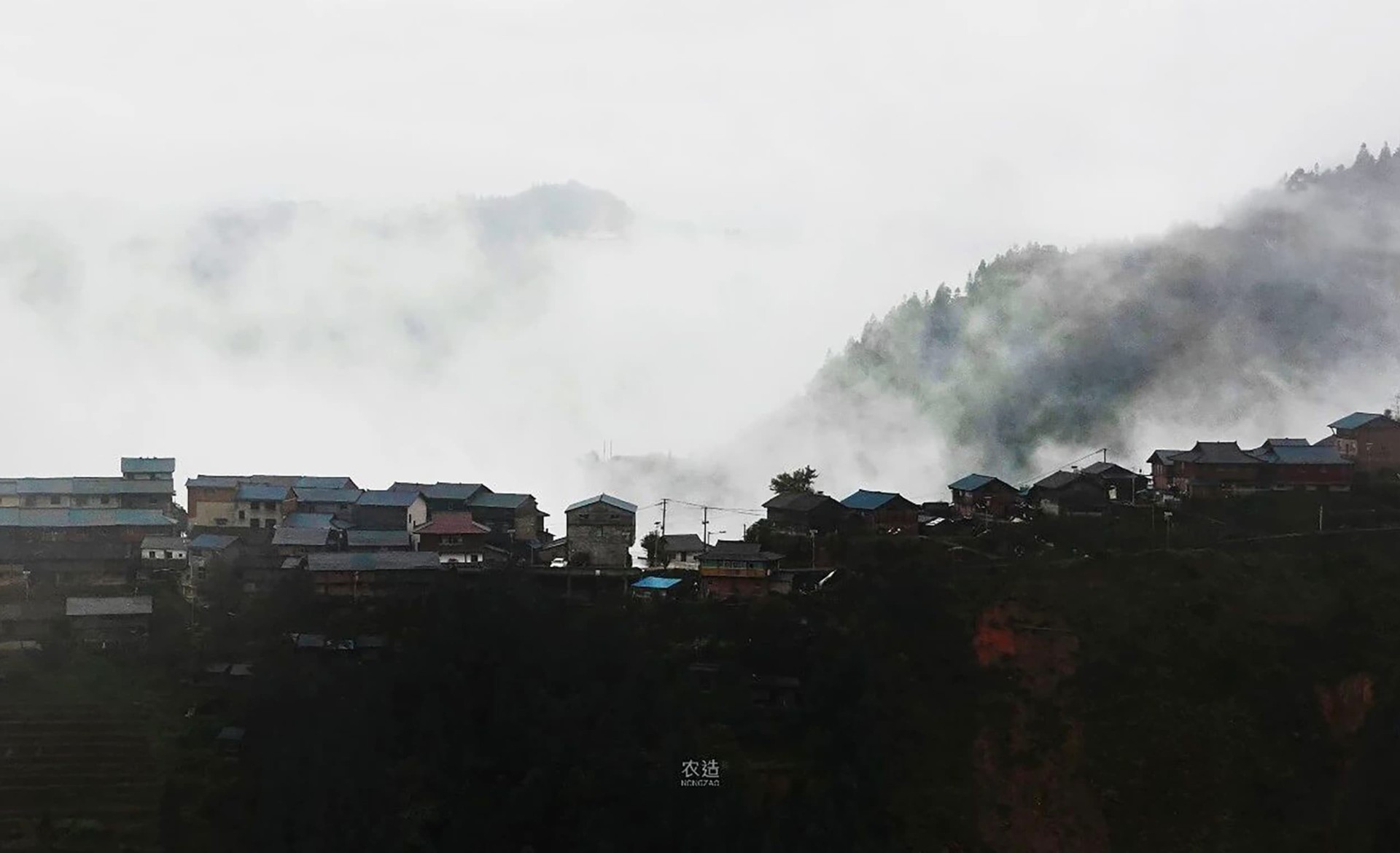
In April 2020, I followed the mountain roads west from Congjiang town and travelled deep into the heart of the Yueliang Mountains. The hills rolled on one after another, densely covered in trees. The terrain rose and fell, leaving little flat land.
For generations, people living in these mountains have had to make homes and farmland fit within the limited land available. Over time, they developed ways of living and working shaped by the demands of the terrain.
There is a local saying: "The Miao live on the mountaintops, the Dong by the water, and the Han along the streets." This simple observation hints at the different settlement patterns that have taken shape among the area's ethnic communities. To understand a place, it is not enough to look at its mountains and rivers. We must also look at how people live within them.
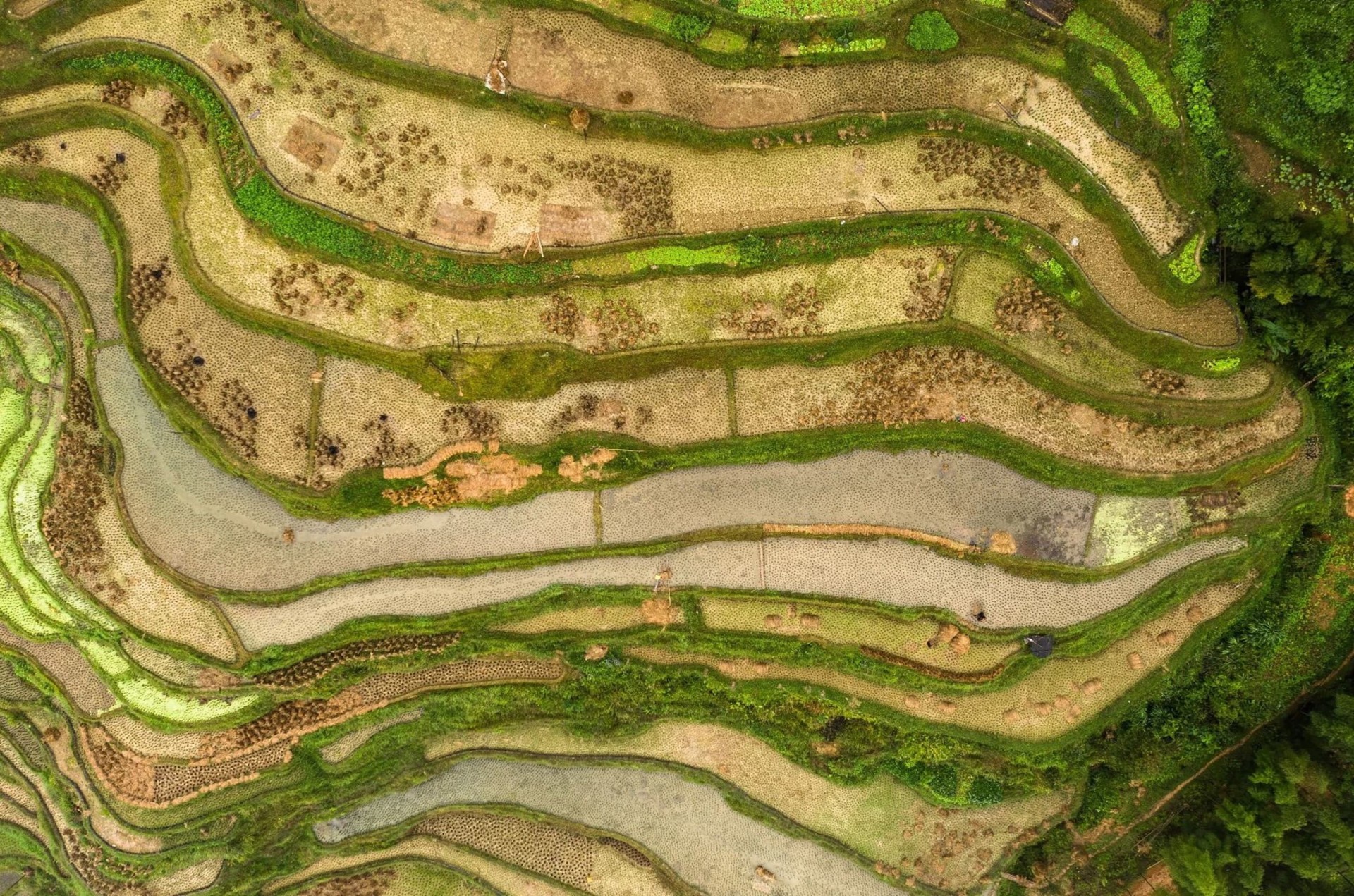
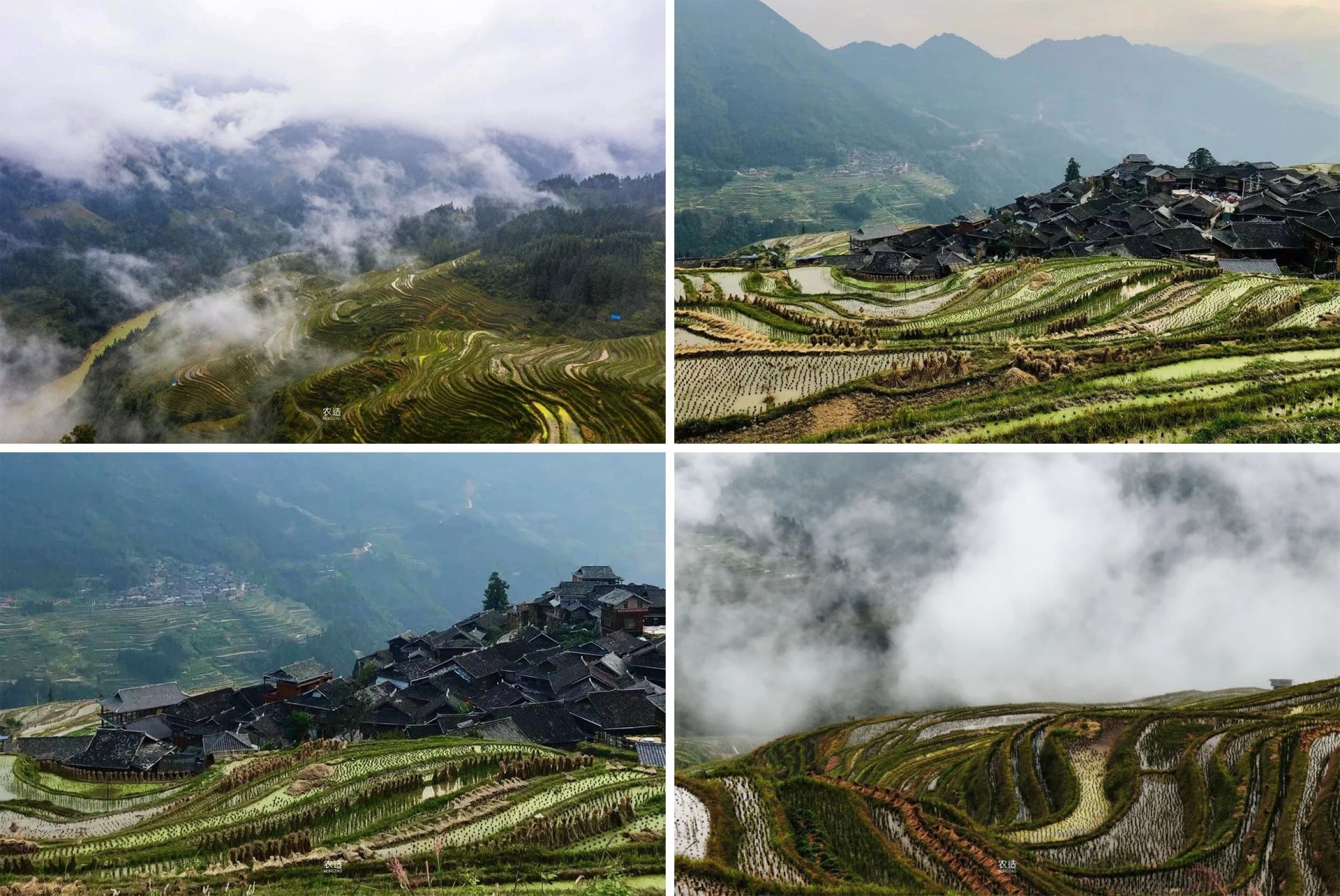
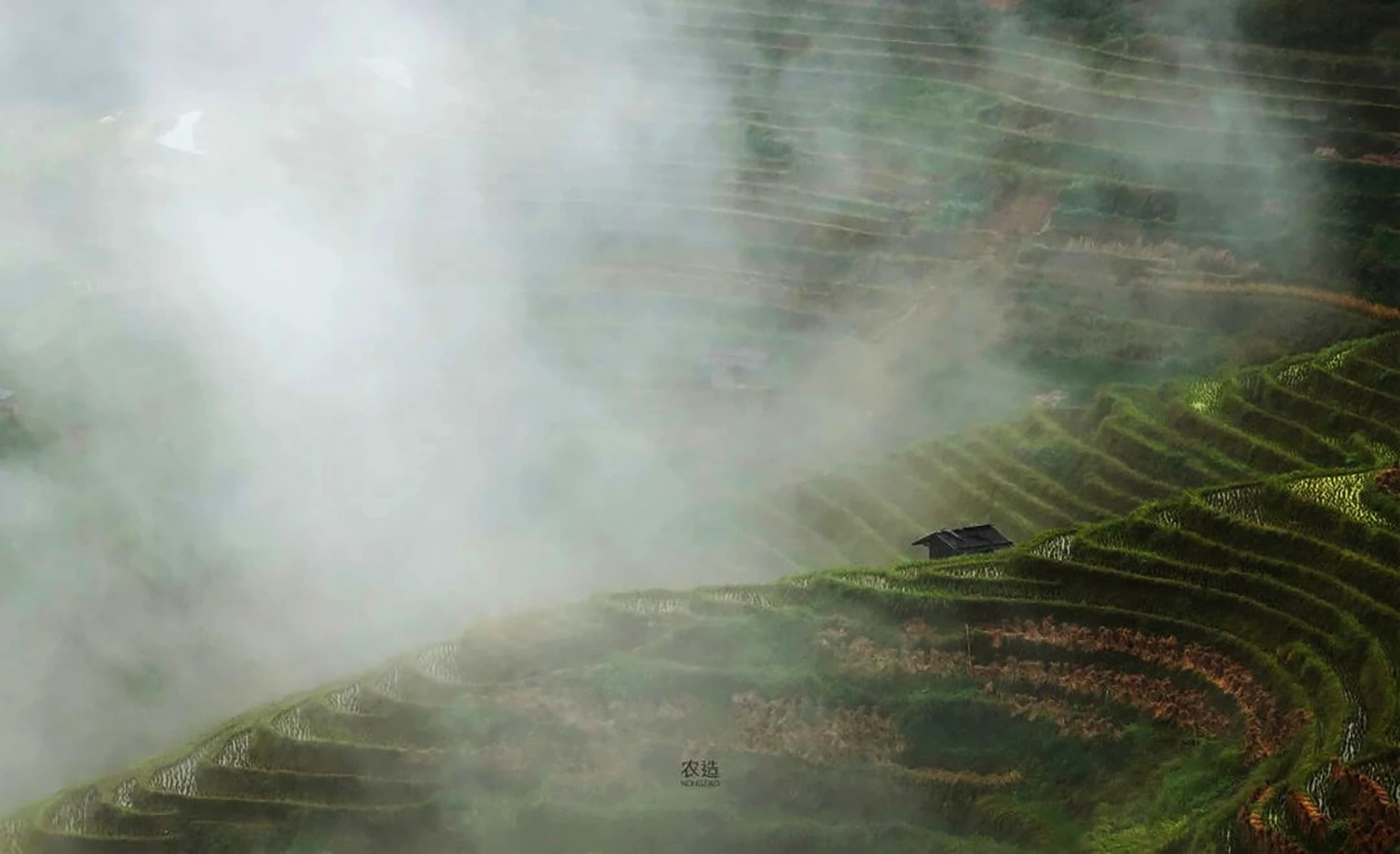
Extensive terraced fields spread across the heart of the Yueliang Mountains. In Congjiang County, the townships of Jiabang, Jiajiu, Jiamian and Donglang all have fields that follow the contours of the mountains, unfolding in successive layers. As the seasons change, the terraces shift from sheets of water to young rice plants, ripening grain and harvested fields. The mountains, too, take on different colours and textures throughout the year.
Jiabang's terraces entered the public eye relatively early. Jiajiu, by contrast, remains far less well known. The two places are around sixty to seventy kilometres apart, yet tourism development has taken markedly different paths. Tucked deep into the Yueliang Mountains, Jiajiu remains closely connected to its surrounding villages, and the traces of everyday farming have not entirely receded behind the scenery.
What stayed with me most, however, were the terraces of Jiashui Village.
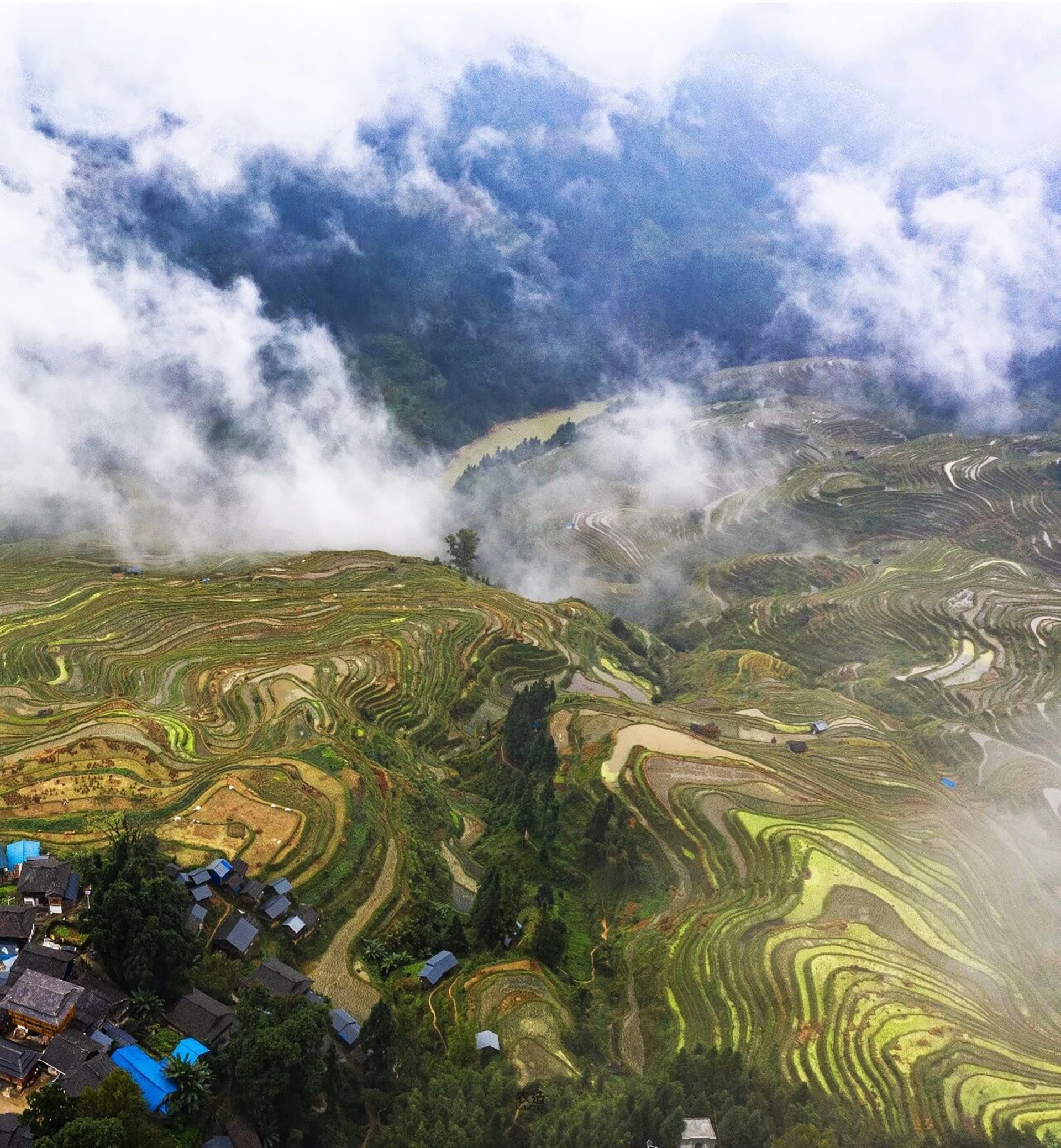
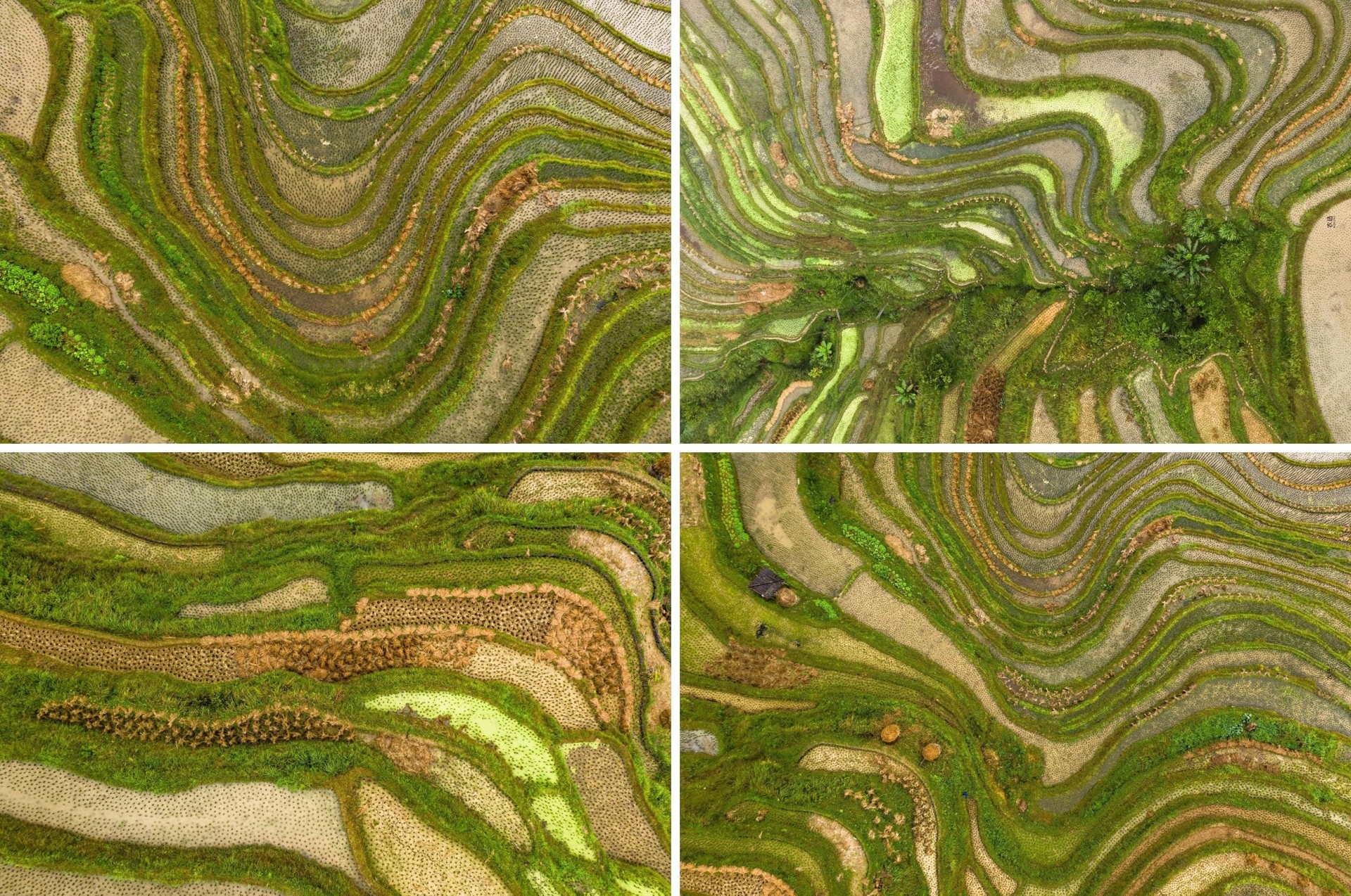
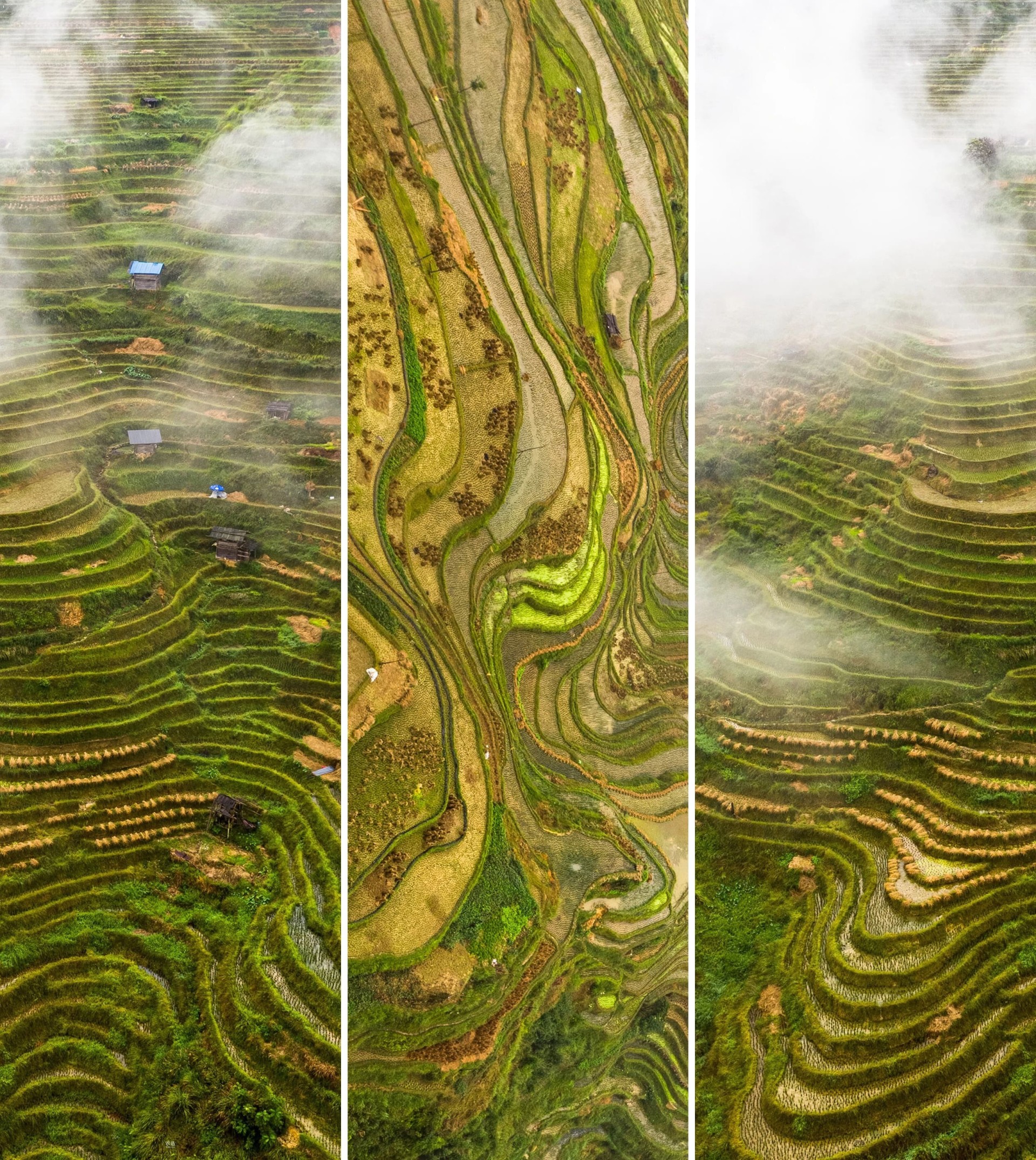
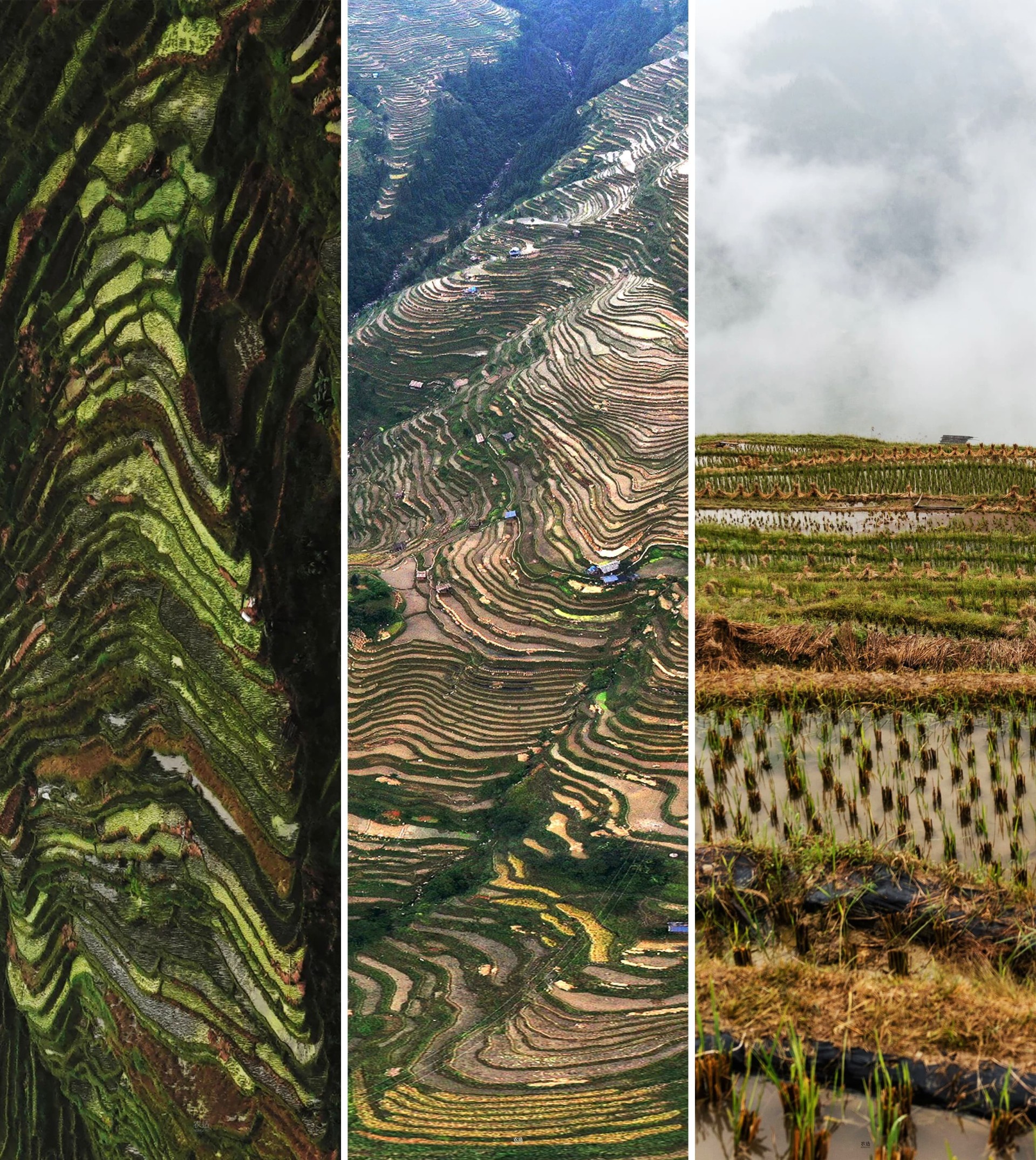
Jiashui Terraces: Forests, Houses and Fields
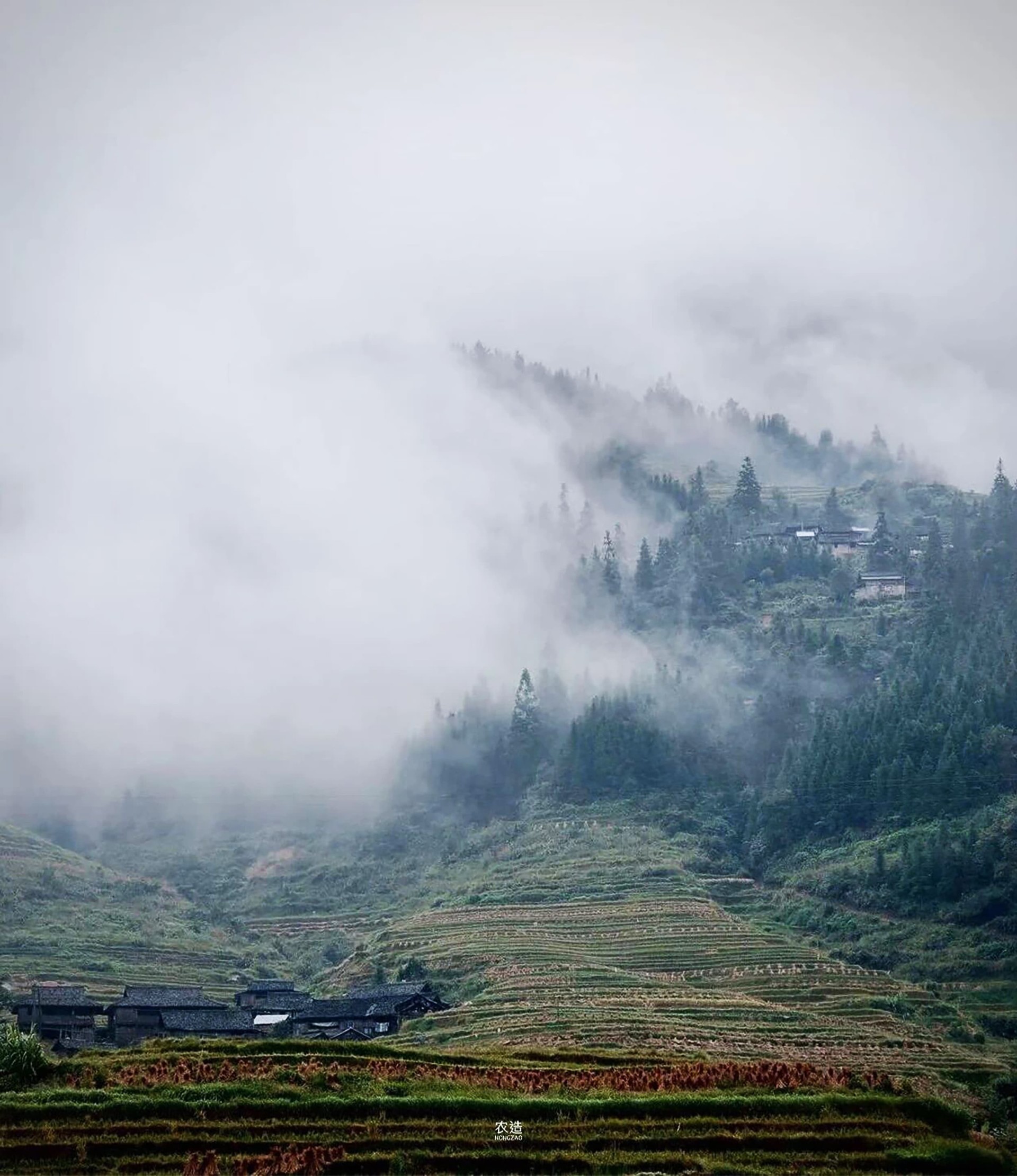
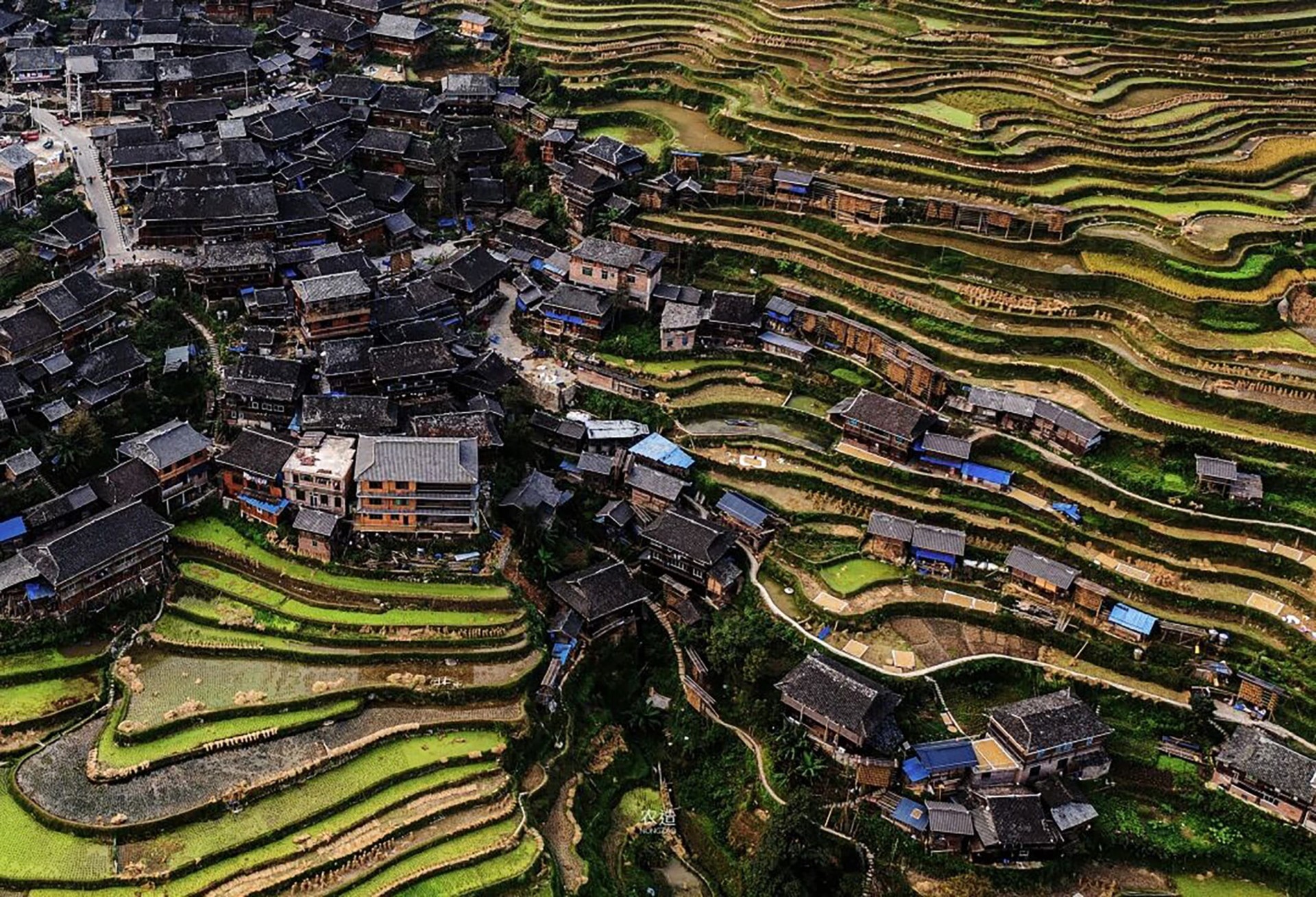
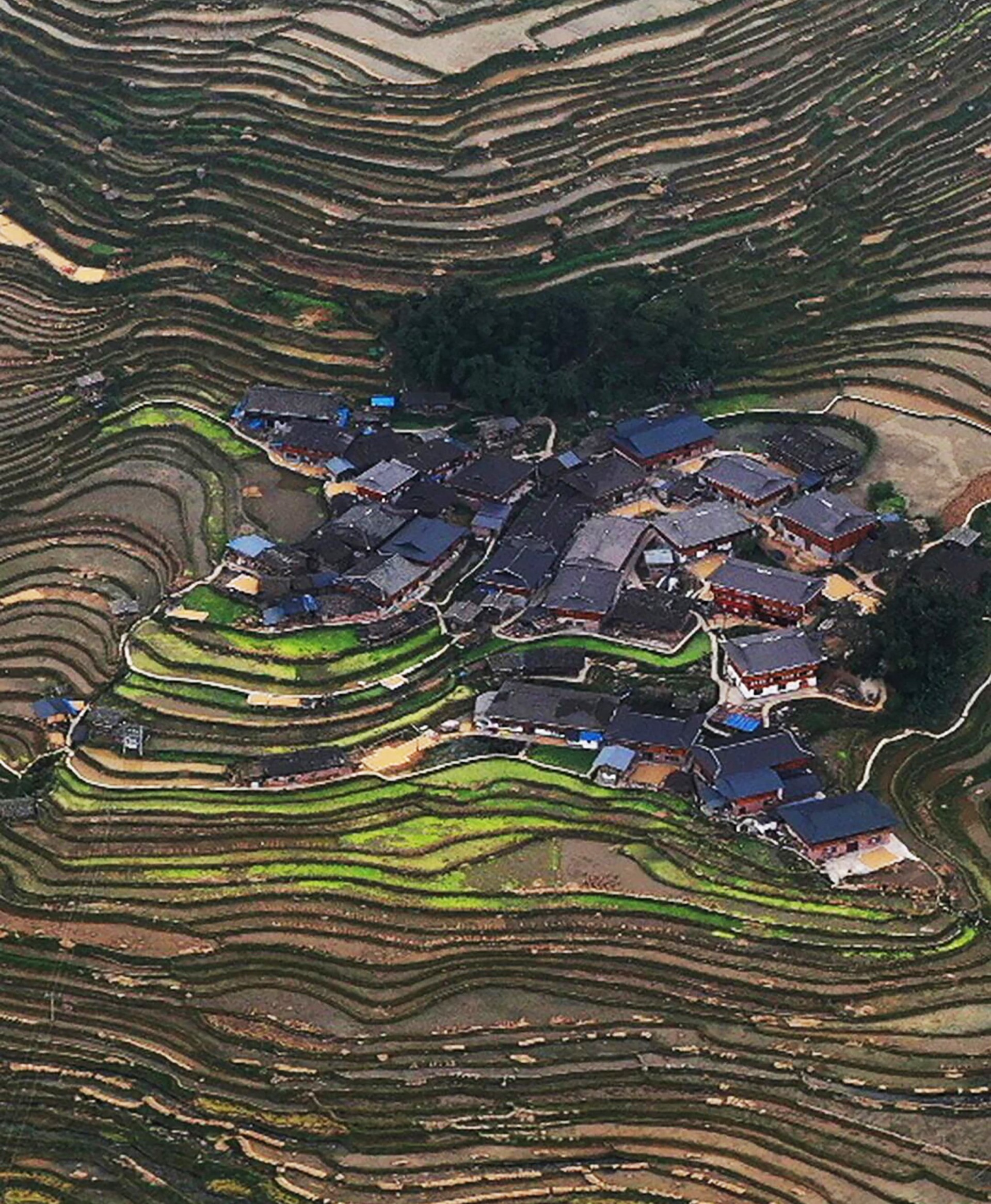
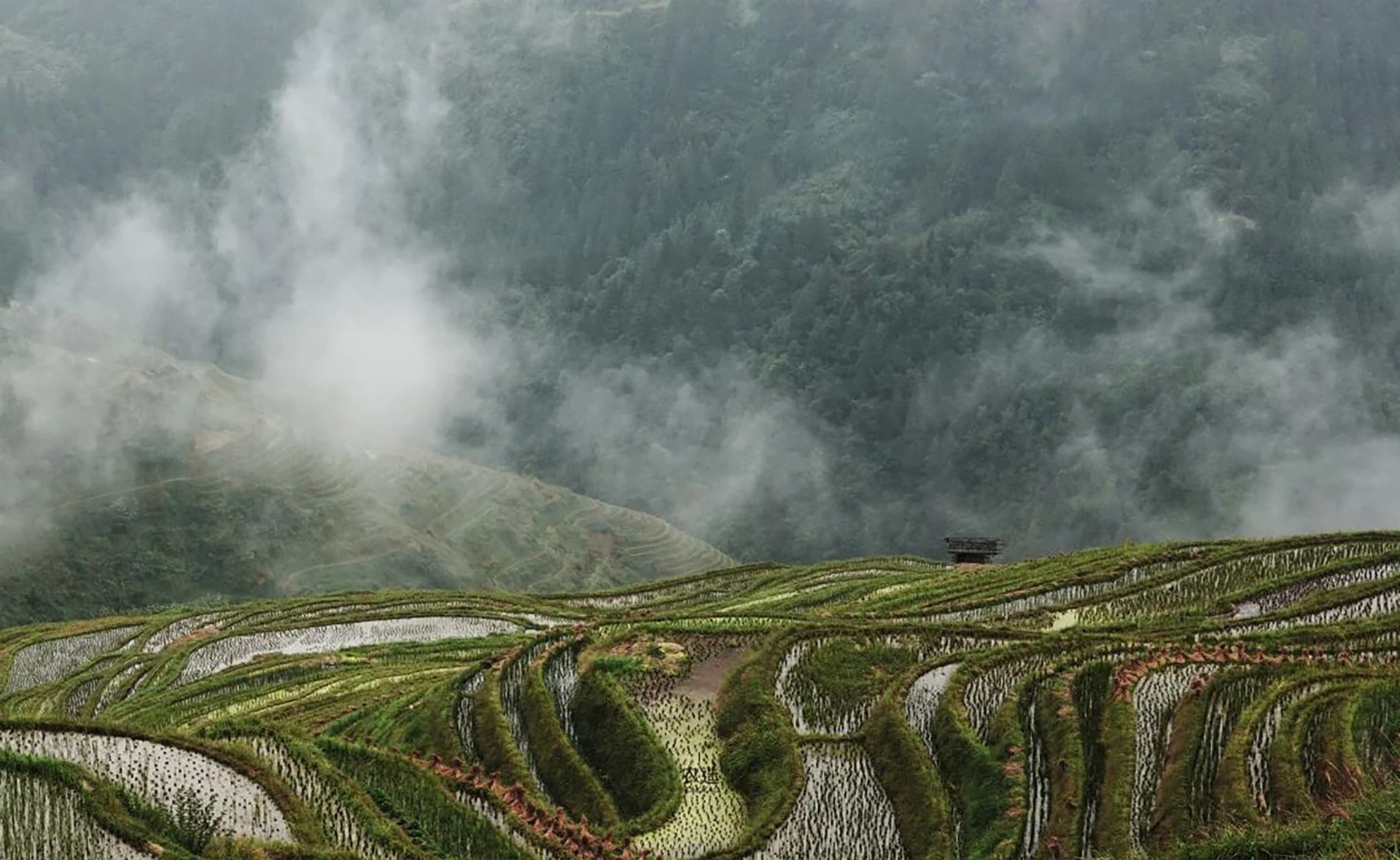
Seen as a whole, the landscape is arranged in distinct layers. Forests occupy the higher ground, houses cling to the mountainsides, and terraces descend along the slopes. Forest, settlement and farmland are not separate elements. They are connected through water sources, the land itself and the work of cultivation.
Flat land suitable for farming is scarce in the mountains, and building terraces is not simply a matter of cutting a slope into level ground. The placement of retaining banks, the use of stone and soil, and the ways in which water is brought in and held in the fields all determine whether the land can remain productive. People have to work with the contours of the mountain, finding cultivable ground one level at a time along its limited slopes.
The way retaining banks are built in Jiashui is worth a closer look.
Villagers begin by laying stones to form the outer edge of a bank, then gradually backfill it with earth. The soil is sifted to remove larger stones and grass roots. Once in place, it is repeatedly compacted and beaten with a mallet to make the foundation as dense as possible. When building bunds for flooded rice fields, they often retain the roots or sod in the clods of earth, laying them grass-side down before filling and compacting the inner side with finer soil.
None of these steps is particularly complicated, but each matters. The arrangement of stones, the backfilling of earth and the compacting of the banks all contribute to the stability of the fields.
Terraces are not built once and then left to last indefinitely. Banks collapse, waterways need maintenance, and the fields must be cultivated year after year. Terracing changes the shape of the land, but it is also an ongoing form of labour.
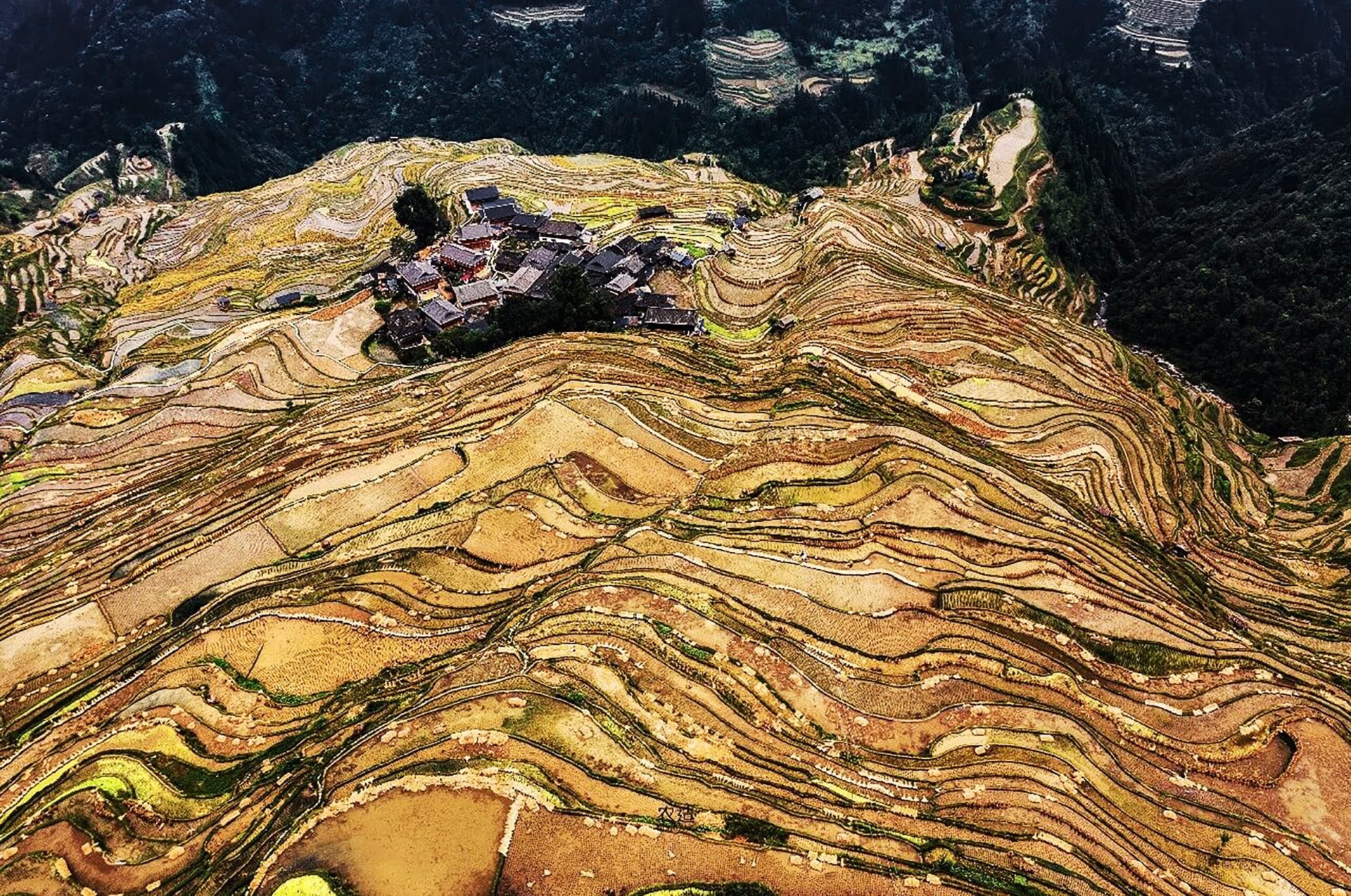
Everyday Life on the Land
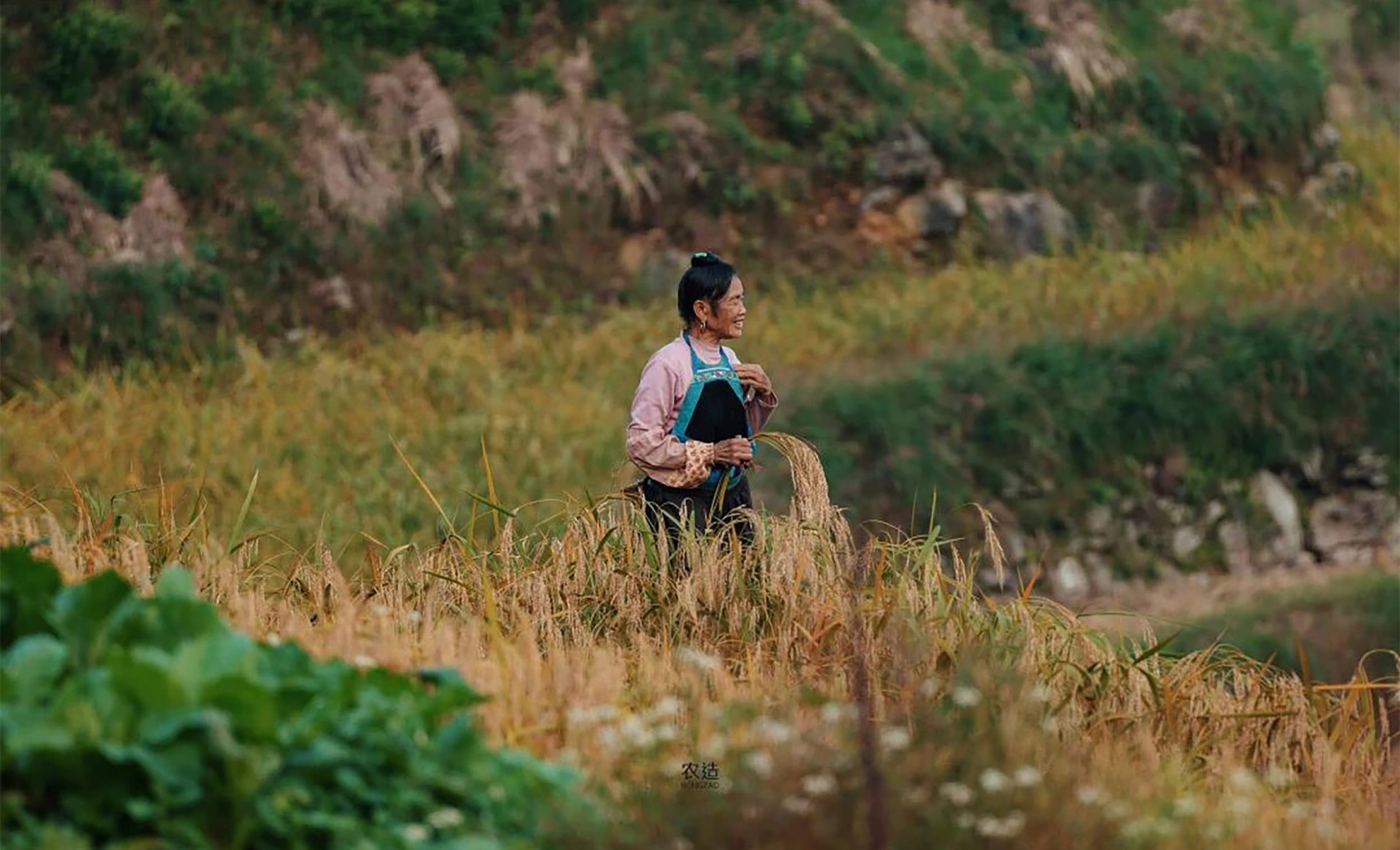
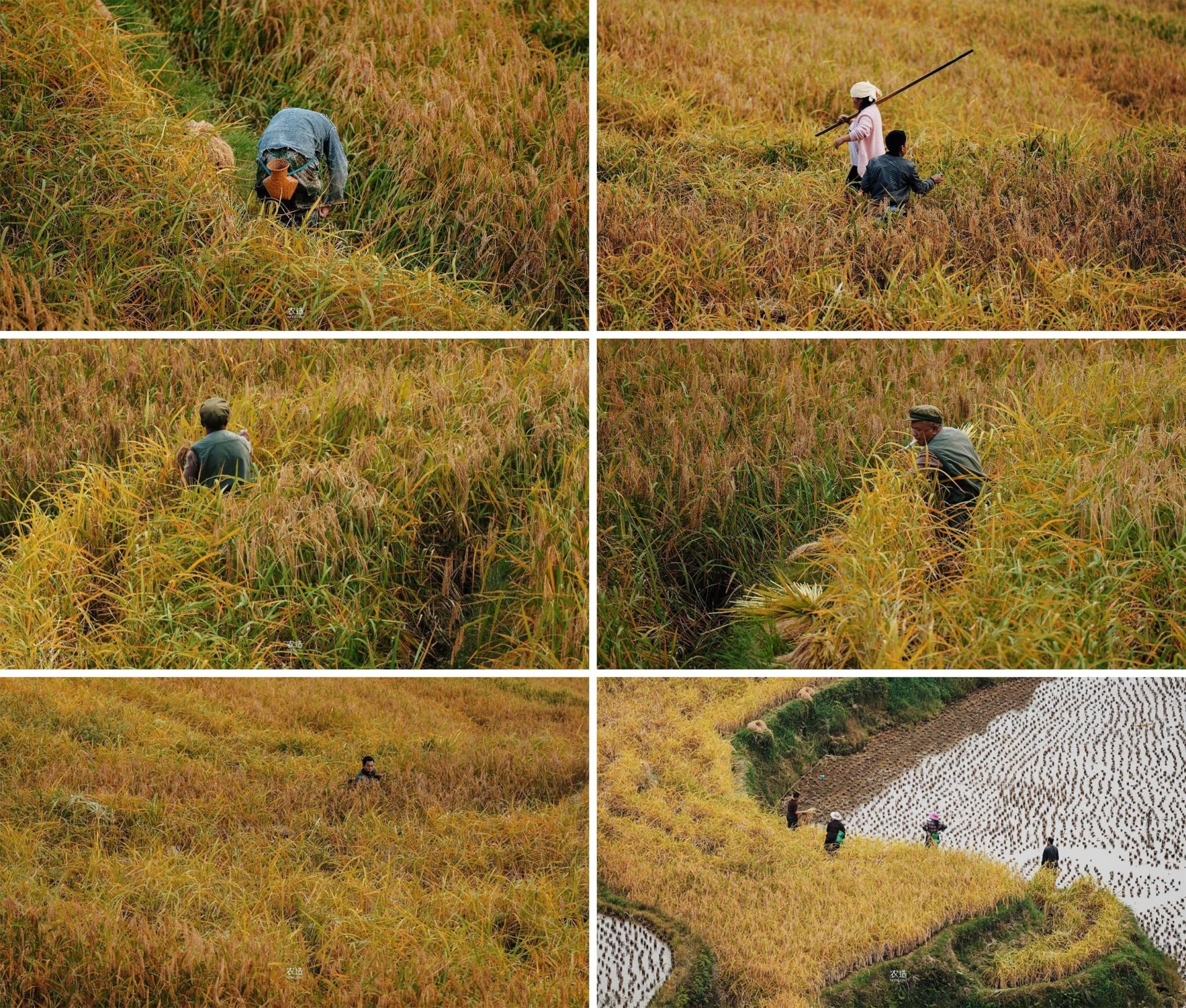
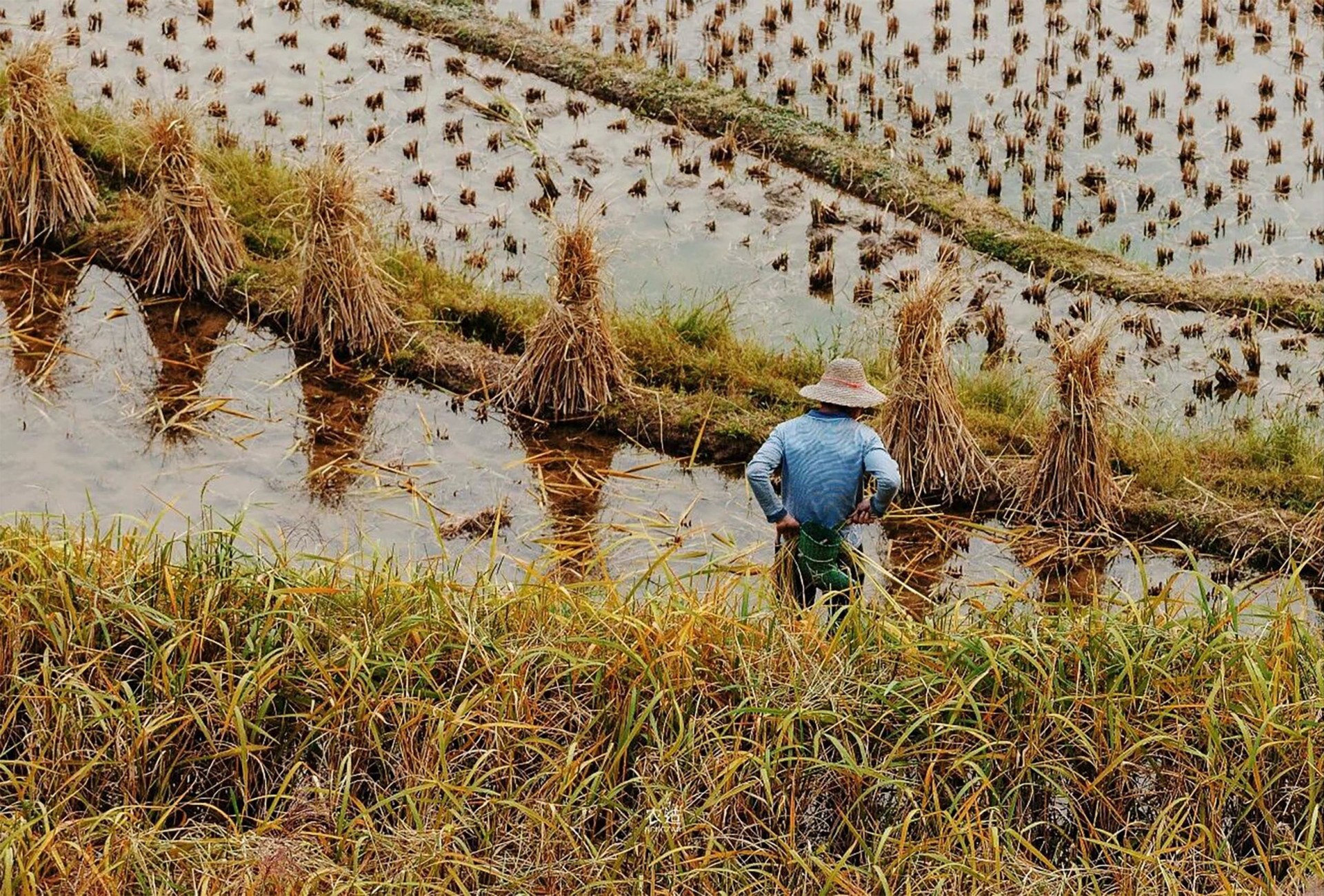
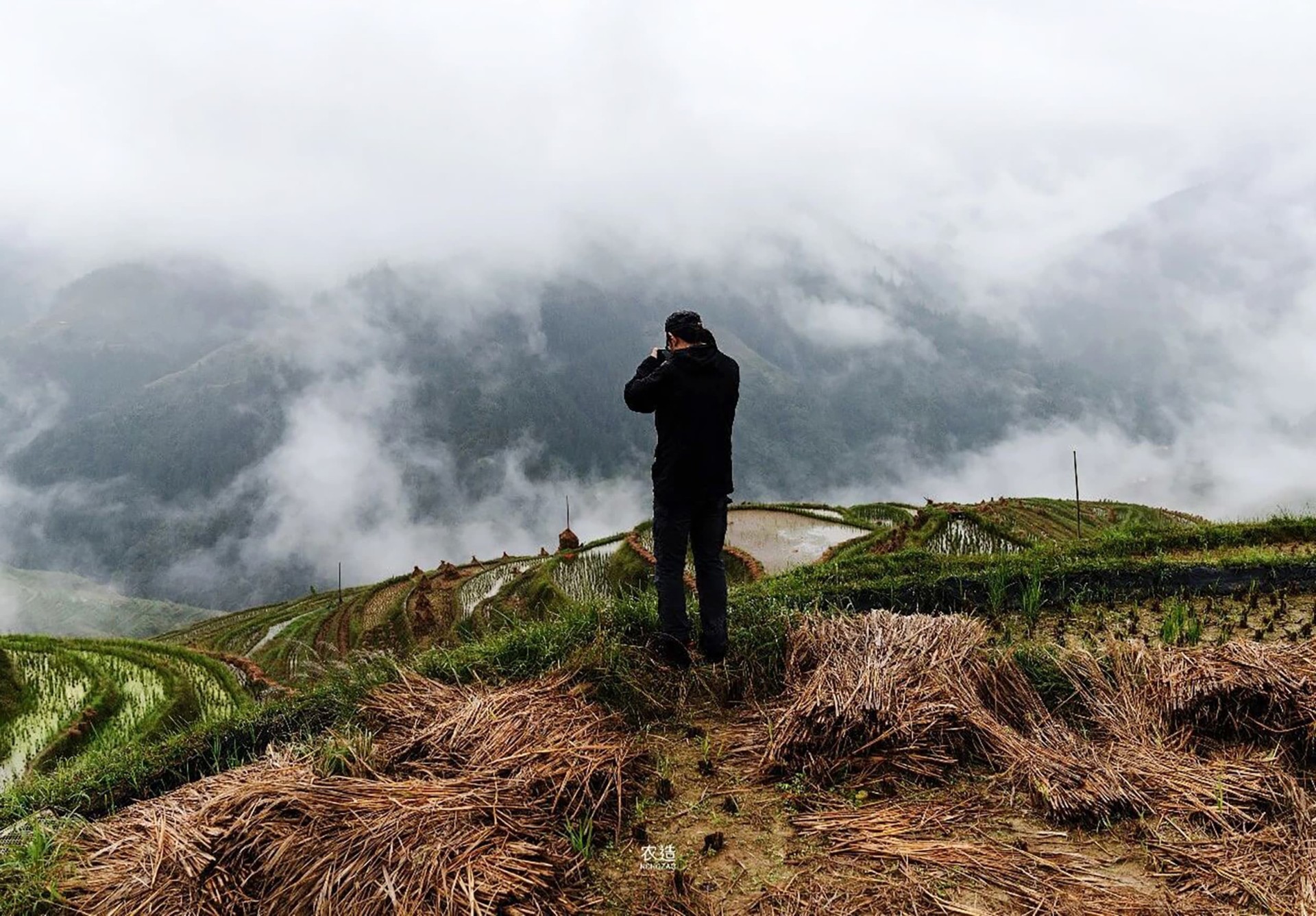
In April, the terraces of Jiashui had just been filled with spring water. They looked like a scatter of broken mirrors, reflecting the eaves of houses halfway up the slopes and the clouds overhead. Grass along the narrow banks was turning green, while last year's rice stubble remained embedded in the mud. A few villagers were crouched on a slope repairing a collapsed bank. The dull, steady blows of their mallets carried across the valley, one after another.
From a distance, the terraces appeared as lines rising and falling with the mountains, their successive levels forming a clear rhythm. Up close, what I saw was different: stones piled together, banks patched and repaired, and the everyday work required to keep a piece of land in use.
Forests, water sources, retaining banks, livestock and farmland are also connected through these daily activities. Forests provide vegetation cover on the slopes. Water from streams and mountain brooks flows into the fields. Grass growing along the banks can be cut and used, while livestock manure can be returned to the soil. Rice cultivation and fish farming in the paddies are also notable features of the region's traditional agriculture.
People's labour holds these elements together. Planting, harvesting, collecting manure, raising fish and repairing the banks all follow their own seasonal rhythms. The terraces do not serve their purpose only at harvest time. They require continual care if they are to keep producing food.
The layered fields before me were shaped by both the conditions of the mountains and generations of labour. Their beauty lies not only in their lines and scale, but also in the fact that people are still farming, repairing and living here.
A Growing Concern: The Decline of Xianghe Nuo
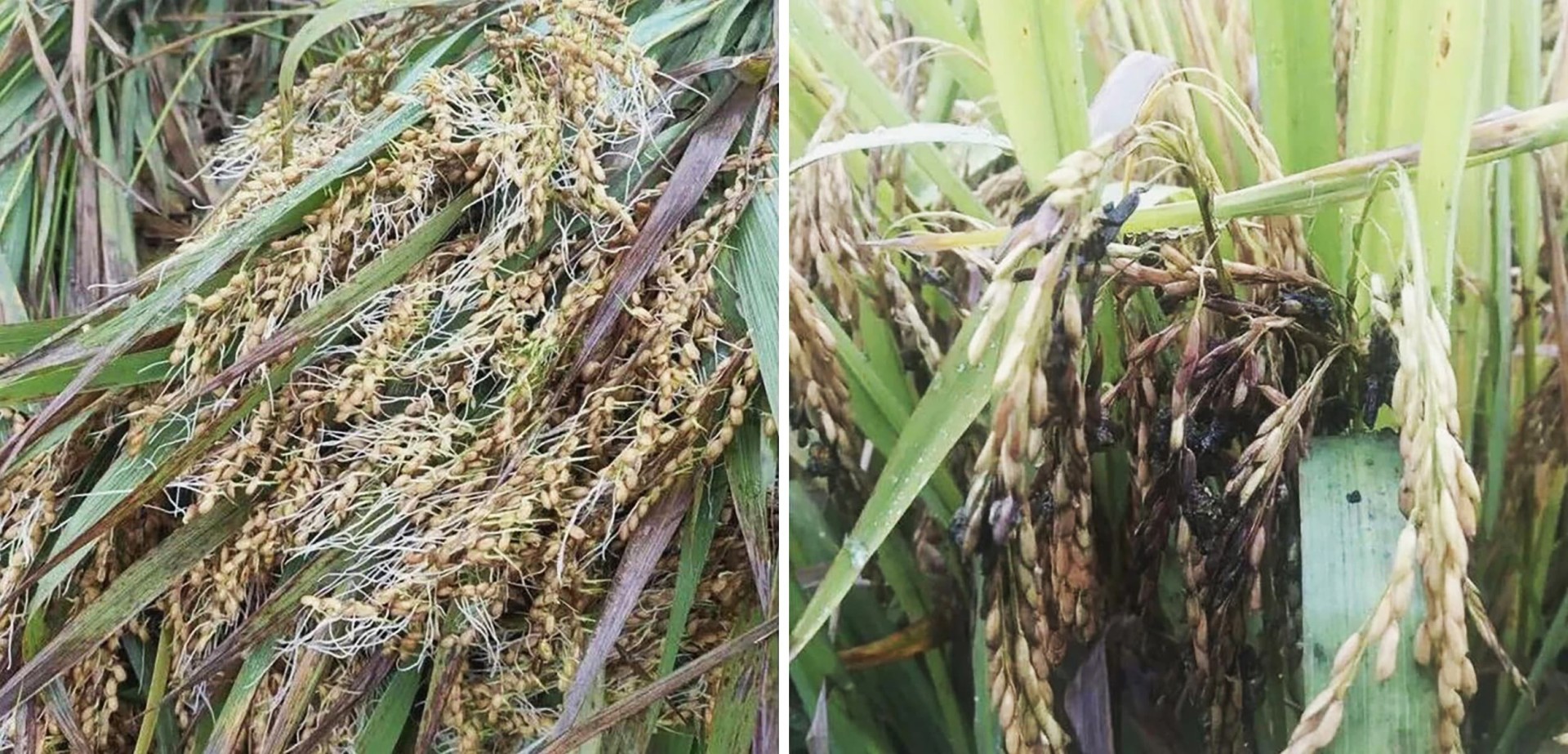
That autumn, persistent rain across southeastern Guizhou caused rice plants to lodge, while some grains began to sprout and develop mould before they could be harvested. The losses caused by the weather directly affected that year's yield.
Another change concerned the rice varieties being grown. Among the terraces I observed, most of the harvested plots had been planted with indica rice, while xianghe nuo—a local fragrant glutinous rice—accounted for only a small proportion. From a rough estimate on site, it made up less than ten per cent. The place once occupied by traditional glutinous rice in local farming may already have changed considerably.
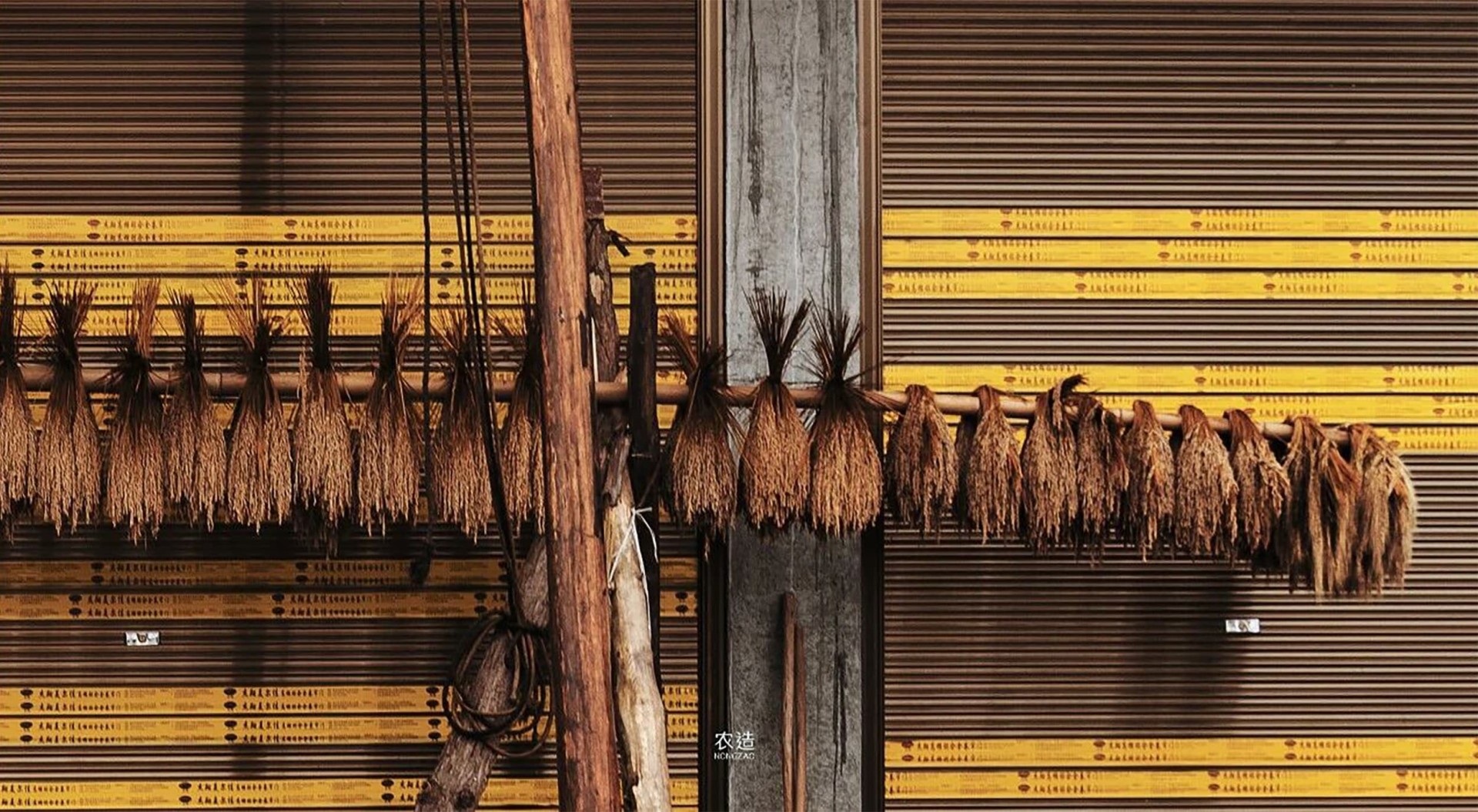
Many of the granaries around the houses also stood unused. The small amount of xianghe nuo that had been harvested was hung beneath the eaves to dry. The spaces built for storing grain were still there, but the way of life that had once filled them seemed to be changing.
Xianghe nuo is more than a crop. The knowledge of how to grow it, the practices of harvesting and storing it, and the food traditions built around it are all connected to everyday life in the village. A crop can survive only if the land and climate suit it, but also if people continue to plant, harvest, store and eat it.
Traditional farming is not a fixed system. People have always adjusted the way they work in response to the realities of their lives. But one thing deserves attention: as a traditional crop becomes less common, the labour and everyday practices associated with it may also lose the opportunity to be passed on.
The terraces still lay one above another. The banks still needed repair, and the houses remained on the same mountainsides. Yet the farming practices that sustained this landscape may already have changed. The unused granaries and the declining presence of xianghe nuo were changes rooted not in the distant past, but in everyday life as it was being lived.
A landscape can remain even as the life that shaped it begins to disappear.
People and Nature in the Field
Terraces often enter the public imagination through their grandeur. We admire their lines, layers and scale, yet it is easy to overlook the labour behind them. They are not simply natural scenery. They are environments gradually shaped by generations of work, as people adapted a particular terrain to the needs of survival and production.
The mountains constrained people's choices, but also led them to develop ways of working with the land. The construction of retaining banks, the management of water and the arrangement of farmland all embody an understanding of local conditions. People have reshaped the mountains, while the slopes, soil and flow of water have, in turn, shaped how they live.
The terraces of Jiashui reveal not only how people make use of nature, but also the sustained labour that such use demands. Land cannot be made secure once and for all, nor will the presence of a terrace guarantee that the practices sustaining it will continue.
What stayed with me was more than the grandeur of the terraces. The skill of building retaining banks, the crops still being grown and the granaries gradually falling out of use all belong to the life of the same landscape. Each follows its own rhythm, and each is changing.
The countryside is not a picture that can be frozen in time. To understand it, we must return to the people, the land and the details of everyday life.
There is always a nerve that leads back to the countryside.
— Fieldwork: 2020